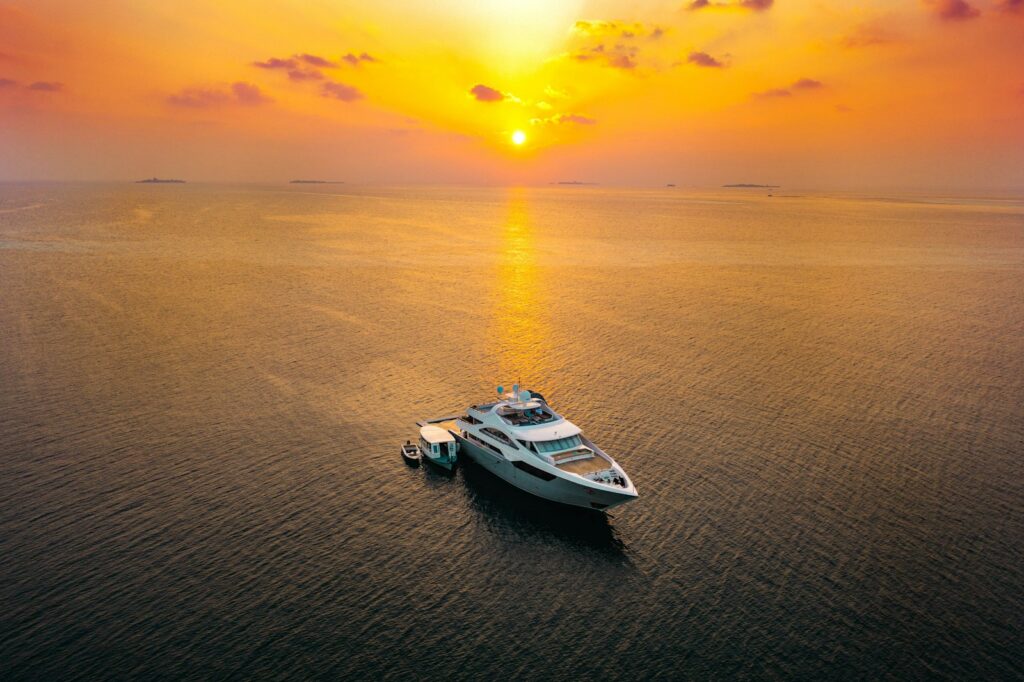
A 2D1N Labuan Bajo phinisi trip fits the Komodo highlights — Padar Island, Komodo or Rinca dragons, Pink Beach, and the Kalong bat island sunset — into roughly 36 hours on the water. Whether that is enough depends entirely on what you are there for. If your goal is to tick the iconic panorama, see a living dragon, and snorkel above a coral reef, two days and one night aboard a decent phinisi will get you there. If you want unhurried mornings, manta ray encounters, a second sunrise, or enough time to feel the rhythm of the Flores Sea, it will not.
What a 2D1N Phinisi Itinerary Actually Covers
The standard compressed route departs Labuan Bajo harbor in the late morning of Day 1. Most operators use the first afternoon for the gentler stops — Kelor Island, perhaps, for a 10-to-15-minute climb to a ridge viewpoint, followed by a reef snorkel near Sebayur Kecil or the fringing corals around Kanawa. Dinner is served at anchor, and the boat repositions overnight toward Padar.
Day 2 starts before dawn. Guests board the tender around 5:00 a.m. and begin the staircase ascent — commonly cited around 800 steps, though the pace varies considerably with fitness. Reaching the Padar summit at sunrise to see the three bays (black, white, and rose-pink sand) arrayed below is the visual centerpiece of any Komodo trip, and a 2D1N itinerary builds the entire schedule around hitting it on time. From Padar, the boat moves to either Komodo Island's Loh Liang ranger station or Rinca's Loh Buaya — the two main points for ranger-led dragon treks. You do not walk in the habitat unaccompanied; that is park policy, not operator preference. After the trek, a mid-morning snorkel at Pink Beach follows: the sand's rose tint comes from crushed Foraminifera shells mixed with the white coral base, making it one of the genuinely unusual beaches in Southeast Asia. The boat returns to Labuan Bajo harbor by early to mid-afternoon, and guests are on the dock by around 2:00–3:00 p.m.
Kalong Island — the bat island sunset — is a common addition. The flying-fox colony there launches in a dense stream at dusk, with estimates running from thousands to upwards of 10,000 individuals. On a 2D1N trip, Kalong is either worked into Day 1's late afternoon or skipped entirely depending on the skipper's routing preference.
The Day-by-Day Breakdown
- Day 1 — departure to first anchorage
- Late-morning departure from Labuan Bajo harbor. Afternoon stop at Kelor Island (short ridge hike) and reef snorkel. Optional Kalong sunset at anchor. Dinner aboard; overnight at anchorage near Padar waters.
- Day 2 — the main events
- Pre-dawn (around 5:00 a.m.) Padar sunrise hike (~800 steps to the viewpoint). Breakfast aboard. Dragon trek at Komodo (Loh Liang) or Rinca (Loh Buaya) with official rangers. Pink Beach snorkel. Return sail to Labuan Bajo, arriving early to mid-afternoon.
What You Will Realistically Miss
This is the section that tour operators rarely write honestly, so let me be direct about it.
Manta Point is almost certainly off the table. Karang Makassar — the reef manta cleaning station — sits in a different sector of the park. Mantas here are predominantly reef mantas (Mobula alfredi), circling at roughly 5–15 metres depth while smaller fish clean their gills and skin. Getting there and back on a 2D1N route eats time the schedule does not have. Some skippers attempt it on Day 2 after Pink Beach, but the return to Labuan Bajo then becomes rushed. If manta rays are specifically why you are making the trip, book three days minimum.
Taka Makassar is another casualty. The tiny crescent sandbar — barely above sea level at low tide, fully walkable end-to-end in minutes — is one of the more quietly arresting spots in the park. It rarely makes a 2D1N route.
You will have almost no buffer for weather. The Flores Sea is not always cooperative. Choppy crossings, a delayed ranger at Loh Liang, or a slow tender can cascade through a tight two-day schedule with no room to absorb the delay. On a 3D2N or 4D3N trip, you simply reorganize. On a 2D1N, you either rush or skip something.
The pace itself is a tradeoff. There is nothing leisurely about a 2D1N Komodo phinisi trip. You are up before 5:00 a.m. on Day 2 and back at the dock before the afternoon light softens. For some travelers, that crispness is exactly the point. For others — particularly those who have come a long way and want the experience of actually being on the water, drifting, swimming off the back ladder, watching the sky change — it can feel like sightseeing by checklist rather than travel.
The Sites at a Glance: What Fits, What Does Not
| Site | Reachable on 2D1N? | Notes |
|---|---|---|
| Padar Island sunrise viewpoint | Yes — core of Day 2 | ~800 steps; depart tender ~5:00 a.m. |
| Komodo Island dragons (Loh Liang) | Yes — Day 2 post-Padar | Ranger-led mandatory; Komodo or Rinca, rarely both |
| Rinca Island dragons (Loh Buaya) | Yes — as an alternative to Komodo | Closer to LBJ; sometimes done instead of Komodo to save time |
| Pink Beach snorkel | Yes — Day 2 after dragon trek | Foraminifera pink sand; reef snorkel off the beach |
| Kelor Island | Yes — typically Day 1 afternoon | ~10–15 min hike to viewpoint; short stop |
| Kalong Island (bat sunset) | Possible — Day 1 late afternoon | Operator-dependent; adds routing time |
| Manta Point / Karang Makassar | Rarely — schedule does not allow it | Requires 3D2N minimum to fit comfortably |
| Taka Makassar sandbar | Rarely | Usually a 3D2N or 4D3N add-on |
| Kanawa Island reef | Occasionally — Day 1 | ~45–60 min from LBJ; shallow fringing reef |
The Honest Cost Picture for 2D1N
Pricing for a 2D1N phinisi charter out of Labuan Bajo runs across a wide band. On a shared open-trip boat, expect roughly $100–250 per person per day depending on vessel quality and whether park fees are bundled. For a private full-boat charter — meaning your group has the vessel exclusively — rates vary from around $1,000 per night on a standard boat up to $5,000 or more per night on a luxury phinisi with ensuite cabins, a proper chef, and a well-maintained dive tender.
Park and ranger fees are almost always charged separately, and this is the single biggest source of confusion for first-time travelers. Budget approximately IDR 600,000–1,200,000 per person for entrance, ranger, and marine fees on a two-day trip through Komodo National Park — and treat that figure as approximate, since fee structures are periodically revised by park authorities. Your operator should itemize these clearly in the booking documents; if they cannot, ask directly before you sign anything.
One additional note: if you are sailing in July or August at the peak of the dry season, rates climb and availability on quality boats tightens. Booking three to six months ahead is not paranoid for that window — it is simply realistic.
Ready to work out the right format and vessel for your dates? Plan your charter with our concierge team, or reach us directly on WhatsApp for a quick conversation about availability — we can usually point you toward the right boat within a day.
Who Actually Gets Value From a 2D1N Trip
Two days and one night is not a compromise position. For a specific type of traveler, it is genuinely the right call.
The time-constrained professional. You have a fixed return flight from Bali, a full work calendar bookending either side, and two free days is what you have. A well-run 2D1N phinisi trip will show you Padar at sunrise, put you face to face with a Komodo dragon under a ranger's watch, and drop you back on the dock with enough time to reach LBJ airport for an evening Bali flight. That is a complete experience, not a diminished one.
The uncertain first-timer. Some travelers are not sure how they will handle sleeping aboard a wooden boat, waking before dawn, or being on the water in unfamiliar conditions. A 2D1N trip is a sensible trial run — low financial commitment relative to a multi-day charter, and short enough that any discomfort is brief.
Part of a longer Indonesia itinerary. If Komodo is one stop among four or five on a three-week trip, spending two nights instead of one feels excessive. A tight 2D1N covers the must-see highlights and frees the rest of the itinerary for other destinations.
The day-before caveat: arrive in Labuan Bajo the evening before your phinisi departs. A morning flight from Bali can be delayed, LBJ security queues during peak season are not always fast, and rushing from the airport to the dock in a taxi with wet luggage is not a great way to start. One night in town first means you board rested and your luggage is sorted before the boat leaves.
When to Upgrade to 3D2N or Beyond
Three days and two nights is the most popular format on the market for a reason: it absorbs the highlights of a 2D1N trip and layers on Manta Point, Taka Makassar, and usually a second reef system — often the outer reefs around Siaba Besar or the northern park waters. You sleep aboard twice rather than once, which means you are not racing a clock every morning.
Four days and three nights makes sense for divers, for travelers who want genuine downtime between excursions, and for anyone whose priority is the marine environment rather than the land highlights. Rated dive sites in Komodo — Batu Bolong, Castle Rock, Crystal Rock — require proper positioning and timing of currents that a two-day schedule simply cannot accommodate.
The rule of thumb I use when advising travelers is this: if you are primarily coming to see the dragons and Padar, two days is enough. If the ocean is the reason — mantas, coral, drift diving, or simply drifting yourself on a sun deck at anchor with no schedule — give yourself three days at minimum. You will not regret it.
Practical Considerations Before You Book
Flights to Labuan Bajo. Komodo Airport (LBJ) receives flights from Bali's Ngurah Rai in roughly 1 hour 10 minutes to 1 hour 25 minutes. Garuda Indonesia, Wings Air, Lion Air, Batik Air, and Citilink all operate the route with varying reliability and frequency. During peak July–August, flight availability fills ahead of schedule — book early.
Dry season matters on a short trip. The core dry season runs April through October, with May–June and October being particularly good for avoiding peak crowds while maintaining calm seas. January and February are rough: rain, choppy crossings, reduced underwater visibility. On a 3D2N or 4D3N trip, rough weather can sometimes be managed by repositioning to sheltered bays. On a 2D1N, there is no repositioning — you sail the route or you cancel it.
Boat quality matters more on short trips. When you have only one night aboard, the difference between a well-maintained cabin with reliable air conditioning and a cramped bunk with a noisy generator is felt acutely. On a longer trip, the vessel's minor imperfections get absorbed into the rhythm of the days. On a 2D1N, every detail of the boat is front of mind. Do not book the cheapest boat you can find for the shortest trip you can take — that combination produces the most complaints.
Rangers are mandatory on land. Komodo Island and Rinca Island dragon treks require official park rangers regardless of the operator, the vessel tier, or the group size. This is non-negotiable park policy, and rightly so — Komodo dragons are genuinely large predators and the habitat is theirs. A reputable operator handles ranger bookings as part of the package; if someone is offering an “unguided” dragon trek, that is a red flag about what else they might be cutting corners on.
Thinking through the specific balance of stops, boat tier, and season for your trip is exactly the kind of conversation our team does well. Plan your charter with us, or message on WhatsApp — it usually takes one short exchange to identify the right fit.
Frequently Asked Questions
Can you see Komodo dragons on a 2D1N phinisi trip?
Yes. Most 2D1N itineraries include a ranger-led dragon trek at either Komodo Island (Loh Liang) or Rinca Island (Loh Buaya) on the morning of Day 2, after the Padar sunrise hike. Rangers are mandatory for all land treks in the park. The two islands are interchangeable for the purpose of seeing the animals; Rinca is slightly closer to Labuan Bajo and is often chosen on shorter itineraries to save transit time.
Does a 2D1N phinisi trip include Manta Point?
Rarely. Manta Point (Karang Makassar) requires a separate sector of the park and adds significant sailing time to a route already under schedule pressure. Most honest operators will tell you that manta encounters are not reliably delivered on a 2D1N trip. If seeing reef mantas is a priority, choose a 3D2N or 4D3N itinerary where Manta Point is explicitly listed as a stop — and even then, wildlife sightings are never guaranteed.
Is 2D1N long enough if I have never been to Komodo before?
It covers the iconic checklist: Padar, dragons, Pink Beach. Many first-time visitors return satisfied. The honest caveat is that the trip moves quickly — you are on deck before 5:00 a.m. on Day 2 and back at the dock by mid-afternoon. If your primary interest is the marine environment rather than the land highlights, or if you want time to simply sit on a phinisi and watch the Flores Sea at your own pace, two days will feel rushed. A 3D2N gives you the same highlights plus breathing room.
What is included in a 2D1N phinisi price?
This varies by operator and vessel tier, so always read the inclusions list carefully. Most packages cover accommodation aboard, three meals a day (breakfast, lunch, dinner) plus snacks, snorkeling gear, a guide or naturalist, and tenders for shore transfers. What is almost always excluded: Komodo National Park entrance fees, ranger fees, and marine/trekking levies — budget approximately IDR 600,000–1,200,000 per person for these, paid cash and usually collected by the operator on your behalf. Alcohol, dive equipment rental, and tips for the crew are also typically excluded.
What time of year is best for a 2D1N Komodo phinisi trip?
May through October is the core dry season window, with May, June, and October offering a useful balance of good conditions and thinner crowds compared to the July–August peak. Avoid January and February if you can — seas are choppy, rain is frequent, and the short schedule of a 2D1N trip gives you no flexibility to wait out bad weather days. The September–October shoulder period is particularly good: the dry-season visibility in the water holds well, and boats are easier to book at shorter notice.