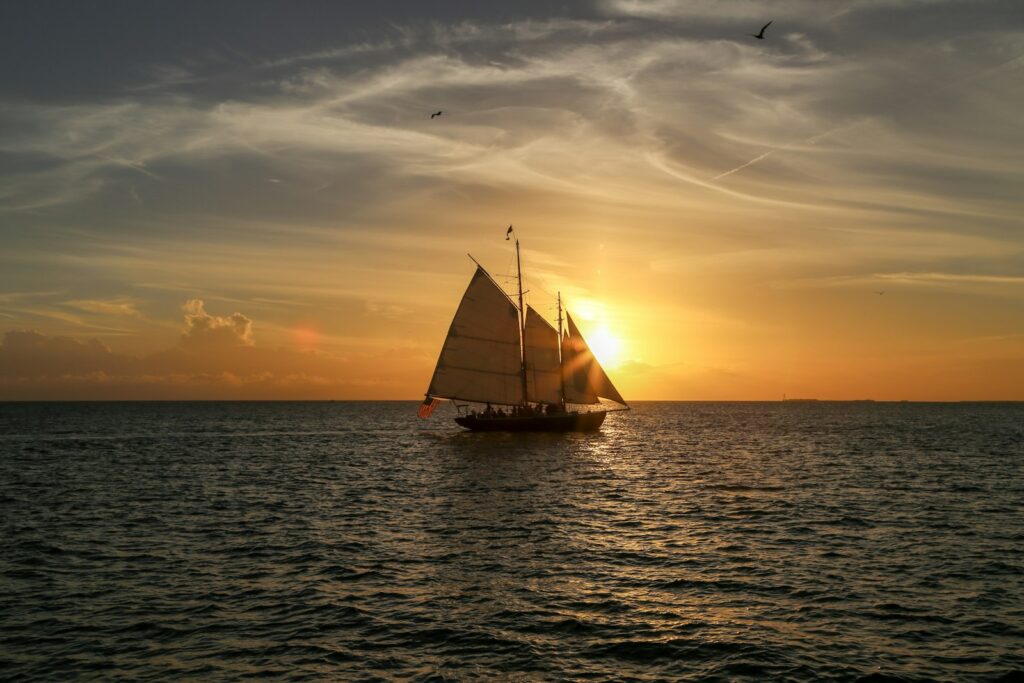
A Labuan Bajo phinisi 3D2N Komodo National Park itinerary is a three-day, two-night liveaboard journey aboard a traditional Indonesian phinisi, sailing from Labuan Bajo harbor through the protected waters of Komodo National Park and returning on the morning of day three. It is, by a substantial margin, the most popular format sold by every reputable operator in the region — and for good reason: three days is the minimum required to reach the park’s most important sites at a pace that does not feel like a forced march.
That said, “3D2N” covers an enormous range of actual experiences. The route on a no-frills open-trip boat sharing four bunks to a cabin and the route on a private luxury phinisi sleeping eight guests across en-suite doubles are technically the same coordinates on a map. The difference is everything in between: when the anchor drops, how long you linger at Manta Point, whether someone onboard notices the light turning gold over Padar before you do. This guide breaks down what the itinerary actually looks like, day by day, along with honest notes on pace, park fees, and who this format genuinely suits.
Why 3D2N Is the Most Popular Phinisi Itinerary in Labuan Bajo
Two nights aboard is the threshold at which the trip stops feeling transactional. On a 2D1N charter, the boat is always moving toward the next stop; on a 3D2N, you get a genuine overnight anchorage in open park waters — waking to silence, flat sea, and no other vessel in sight — plus a second full day to absorb the marine life without clock-watching.
The route also covers the six sites most travelers come specifically to see: the Padar summit panorama, Komodo or Rinca dragons, Pink Beach, Manta Point, the Taka Makassar sandbar, and the Kalong bat colony at dusk. A well-run 3D2N gets you to all six without racing. A 4D3N extends the same route with a weather buffer, more snorkel stops in the northern reefs, and a slower overall pace — worth it if your schedule allows. But 3D2N, done properly, is complete.
The Standard 3D2N Route: Site by Site
The sequencing below reflects the route used by most reputable Labuan Bajo operators, adjusted slightly by each captain for tides, weather windows, and crowd avoidance. This is not a fixed timetable — it is a framework. Private charter guests have far more flexibility to reorder stops or add a reef session; open-trip guests follow the boat’s fixed schedule.
Day 1: Kelor Island, Manjarite, and the Kalong Bat Exodus at Sunset
Departure from Labuan Bajo harbor is typically mid-morning, after guests have boarded and the crew has run the safety briefing. Most boats aim to be underway by 9:00–10:00 a.m., which places the first stop — Kelor Island (Pulau Kelor) — around 45 minutes into the sail.
Kelor is a small, teardrop-shaped island with a steep grassy hill. The hike to the viewpoint takes roughly 10 to 15 minutes and rewards you with a clean panorama of Labuan Bajo bay, the town waterfront, and the chain of islands stretching east. It is not a demanding hike, but the path is uneven and exposed — wear shoes, not flip-flops. Snorkeling off the beach below the hill is genuinely good: the fringing reef starts in shallow water and holds healthy hard coral with a mix of reef fish. This stop sets the tone for what follows; it is relaxed, accessible, and gives first-time guests a moment to find their sea legs.
After Kelor, boats typically sail deeper into the park toward Manjarite Island or an equivalent reef for a second snorkel session and lunch. Manjarite sits in the southern Komodo zone and offers a sheltered beach and a reef wall that drops cleanly to around 10–15 meters. Lunch is served aboard — most boats prepare a full Indonesian spread: grilled fish, rice, vegetables, sambal, with fruit after. On private charters, the chef will have discussed dietary preferences at booking.
The afternoon sailing continues east or southeast as the sun drops. The destination is Kalong Island (Pulau Kalong), sometimes called Bat Island, and arriving by 5:00–5:30 p.m. puts you in position for the main event. At dusk, a colony of large Malayan flying foxes — fruit bats with wingspans that can reach close to a meter — streams out of the island’s trees in a continuous black ribbon against the orange sky. Estimates put the colony at tens of thousands of individuals; the visual is one of those natural phenomena that photographs cannot fully replicate. The departure lasts 20 to 40 minutes depending on the season. It is worth having a drink in hand and a seat on the sundeck.
After Kalong, the boat finds its overnight anchorage — often in a sheltered bay near Rinca — and dinner is served as the stars come out. Day one ends quietly. This is a feature, not an omission.
Day 2: Pre-Dawn Padar Hike, Dragon Trek, Pink Beach, Manta Point, Taka Makassar
Day two is the core of the 3D2N route and, frankly, the reason most people charter a phinisi rather than taking a day-boat tour. It is a full day, and it earns that description.
Padar Island viewpoint — pre-dawn start. The alarm goes before 5:00 a.m. The boat anchors close to the Padar beach by 5:15–5:30, and guests are ashore with headlamps before first light. The hike to the summit lookout covers roughly 800 steps — the commonly cited figure; the actual count varies between about 700 and 900 depending on your stride and the trail conditions after rain. The path is steep and mostly unshaded. Plan 30 to 45 minutes each way at a normal pace, or closer to 60 minutes if you stop frequently for photographs, which you will.
The view from the top is the iconic three-bay panorama: from one position you can see bays with black sand, white sand, and pink sand framed by the island’s ridgeline. Sunrise here, when the light arrives parallel to the ridge and the sea below flickers between silver and rose, is the kind of image that circulates endlessly on travel feeds. What those images do not convey is the wind at the summit — it can be sharp even in dry season — or the physical satisfaction of having earned it before 7:00 a.m. On the descent, the islands are lit warm and the sea is glassy. Breakfast is waiting on the boat.
Komodo or Rinca Island — dragon trek. Most operators schedule either Komodo Island (Loh Liang) or Rinca Island (Loh Buaya) for the morning trek, not both, within a 3D2N itinerary. Rinca is typically closer on the standard route and sees somewhat fewer visitors than Komodo’s main station, which is why many operators default to it on the first trekking day. Komodo Island itself is larger and has the higher profile — the name recognition matters to some guests. If you have a preference, raise it at booking.
Trekking is only permitted with an official ranger, no exceptions, and this is not a formality. Komodo dragons (Varanus komodoensis) are wild predators; adults can reach around three meters in length and over 70 kilograms. They move faster than they look. Rangers carry forked sticks and know the terrain. Do not walk ahead of your ranger, do not approach the animals for photographs, and do not, under any circumstances, attempt to feed or touch one. The park’s rules are not theater.
The standard short trek takes 45 minutes to an hour and passes through open savannah and forest. Dragon sightings near the kitchen and water areas at both Loh Liang and Loh Buaya are common year-round; the animals are drawn by food smells and shade. Longer medium and long trek options exist for guests who want more terrain and a better chance of seeing dragons in the open — these need to be arranged in advance, as ranger availability and departure timing from the boat must align.
Pink Beach (Pantai Merah). After the dragon trek, most itineraries head to Pink Beach on Komodo Island’s southeastern coast. The pink color comes from fragments of red-pigmented Foraminifera shells mixed into the white sand — genuinely subtle in flat midday light, more pronounced in early morning or late afternoon. Pink Beach is one of only a handful of pink-sand beaches globally, which partly explains the consistent foot traffic during peak season.
The snorkeling directly off this beach is some of the most accessible in the park: the reef starts within wading distance of shore, visibility in dry season typically runs 15 to 25 meters, and the fish density is high. Be cautious of currents — the water moves through this zone, and conditions change with the tide. Stay within the rope boundary if one is set, and stay close to the boat’s dinghy if you are not a confident open-water swimmer.
Manta Point and Taka Makassar. The afternoon of day two is reserved for the park’s marine highlights. Manta Point (Karang Makassar) is a shallow reef that functions as a cleaning station for reef manta rays (Mobula alfredi). The mantas circle at depths of roughly five to fifteen meters, rising to be cleaned by wrasse and other small fish before descending again. Wingspans of three to four meters are common; individuals approaching five meters are not unusual. The correct approach is to enter the water calmly ahead of where the mantas are circling, let them come to you, maintain at least around three meters of distance, and do not chase or swim directly above them. These are the park’s guidelines — not suggestions.
Manta sightings are not guaranteed on any single visit; this is a wild marine reserve, not an aquarium. That said, Manta Point has very consistent encounter rates, particularly between May and September when upwelling brings cold, plankton-rich water from the south. Outside that peak window, mantas are still present but less reliably concentrated at the cleaning station.
Taka Makassar is a crescent-shaped white sandbar that partially disappears at high tide and emerges fully at low water. It is located near Manta Point and typically visited on the same afternoon. At low tide, the sandbar is walkable end to end in a few minutes — the colors here, turquoise water on both sides with the white sand strip and the park’s islands as backdrop, are among the most photographed in the park. Boats anchor nearby for a late-afternoon swim and sundowner before the second overnight anchorage.
Day two is long. Guests who are prone to fatigue on early starts may find it heavy, especially if they also snorkeled twice and hiked Padar. That is worth knowing in advance, not as a deterrent, but so you pace yourself on the Padar descent and eat properly at breakfast rather than skipping it to be first on the beach.
Day 3: Kanawa Island and Return to Labuan Bajo
The final morning is deliberately lighter. The boat moves overnight or early morning toward Kanawa Island (Pulau Kanawa), a small island roughly 10 to 15 kilometers northwest of Labuan Bajo with a shallow house reef that begins just meters off the beach. The reef drops from one to two meters depth to around five to ten meters — excellent for snorkeling, manageable for beginning freedivers. The beach itself is clean and relatively quiet in the early morning before day-trip boats arrive.
Most guests snorkel here after breakfast. Some operators also stop at Siaba Besar or another intermediate reef site depending on their return window. By mid-morning or late morning the boat turns back toward Labuan Bajo, arriving at the harbor early to mid-afternoon. Check-out logistics vary: on some boats you clear your cabin before the final stop; on others, you collect bags on return. Confirm with your operator at booking, particularly if you have an afternoon flight from Komodo Airport.
What’s Included and What’s Not
This is where most booking confusion originates. The advertised price for a 3D2N phinisi charter almost always covers the boat itself — accommodation, crew, all meals aboard, snorkeling equipment, and transfers between sites — but it rarely covers the Komodo National Park fees, ranger fees for land treks, or personal expenses. Here is how the typical split looks:
| Included in most charters | Usually charged separately |
|---|---|
| All meals and drinking water aboard | Komodo National Park entrance fees |
| Cabin accommodation (2 nights) | Ranger/trekking fees (Komodo & Rinca) |
| Snorkeling gear (mask, fins, wetsuit on better boats) | Scuba diving costs (tanks, instructor, divemaster) |
| Kayaks or stand-up paddleboards (varies by vessel) | Alcoholic beverages |
| Crew gratuities (some operators bundle, most do not) | Personal extras (souvenirs, medications) |
| Hotel transfers in Labuan Bajo (private charters) | Drone permits (required if flying in the park) |
| Life jackets and safety equipment | Travel insurance |
Park fees deserve specific attention. The current applicable structure — and these figures do change, so verify close to travel — involves separate components: a daily park entrance fee for foreign visitors, a marine and dive/snorkel fee, and ranger fees for each land trek. Budgeting around IDR 600,000 to IDR 1,200,000 per person in total park-related fees for a 3D2N trip is a reasonable working estimate, though this can shift based on how many ranger-guided treks your itinerary includes and whether weekend/holiday rates apply. Fees are almost always collected in cash on the boat; your operator should brief you in advance.
On private charters, the operator typically handles fee collection and ranger coordination. On open-trip boats, guests sometimes pay their own fees directly at the ranger stations. Ask explicitly before you depart — there should be no surprises mid-route.
Pricing: What to Expect for 3D2N in 2026
Price ranges for a 3D2N Labuan Bajo phinisi vary more widely than almost any comparable charter market in Southeast Asia, because “phinisi” spans everything from a 20-meter open-deck wooden boat with six shared bunks to a 40-meter private luxury vessel with air-conditioned cabins, en-suite bathrooms, a professional chef, and a dive compressor. The same three days and the same route.
- Shared / open-trip berth
- Roughly USD 100–250 per person per day, depending on cabin type and boat quality. A 3D2N open-trip berth on a standard-grade boat can be found for around IDR 2.5–3.5 million per person; premium shared cabins on better-spec boats run higher. Park fees are often additional.
- Private mid-range phinisi (4–7 cabins, whole boat)
- Approximately USD 1,000–2,500 per night for the full vessel. At USD 1,500/night, a 3D2N private charter runs USD 4,500–5,000 before park fees. Split across eight guests, this is often competitive with — or cheaper than — booking individual berths on a premium open-trip boat, with the added benefit of a fixed itinerary.
- Luxury private phinisi
- USD 2,500–5,000+ per night for well-equipped private vessels with full crew, en-suite cabins, generator, and proper safety gear. A 3D2N in this bracket runs USD 7,500–15,000 before fees. Most bookings at this level are quoted individually based on season and vessel.
- Ultra-luxury / expedition phinisi
- Top-tier vessels command USD 10,000–25,000+ per night on a quote-only basis. These are purpose-built yachts with stabilizers, satellite communications, dedicated dive tenders, and hotel-grade hospitality. Rates are date- and vessel-specific; there is no fixed public pricing at this level.
No published rate is binding until confirmed in writing with a contract. Book luxury or private charters well in advance for July–September (peak season); last-minute availability shrinks fast and prices do not drop.
Pace and Who This Itinerary Suits
The 3D2N format is physically active but not arduous. Day two is the most demanding — an early start on Padar, a mid-morning trek, two snorkel sessions, and a late afternoon on the water. Guests who are not strong swimmers can participate fully by wearing a life jacket or buoyancy aid for snorkel sections; this is normal and no operator worth their salt will make you feel otherwise. The Padar hike is achievable for most adults in reasonable fitness; guests with knee or mobility issues should communicate this at booking, as the descent is steep and uneven.
This itinerary works particularly well for:
- Couples and honeymooners who want privacy and a dramatic natural backdrop without a resort crowd. A private 3D2N charter on a well-chosen phinisi is one of the more genuinely romantic travel formats available in Indonesia.
- Small groups of 4–10 looking to share a private charter cost — at eight guests, the per-person math on a USD 1,500/night boat is often better than comparable resort packages.
- First-time visitors to Komodo who want the core highlights at a reasonable pace. The route does not shortchange any major site.
- Families with older children (roughly 8+) who can manage the Padar hike and snorkel with flotation assistance. Families with very young children should discuss the boat’s layout and safety provisions in detail before booking.
Who should consider a longer format: those who dive (a 4D3N or dedicated dive liveaboard allows for three to four dives per day and time at sites like Batu Bolong and Castle Rock); solo travelers who want to meet others (open-trip 3D2N boats are a real social experience, for better and worse); anyone with a flexible schedule in shoulder season (October or April) when a 4D3N can be booked at closer to peak-season 3D2N pricing.
If you are comparing vessels and want a sounding board before committing, plan your charter with our concierge — we vet operators independently and can match your group size, budget, and priorities to the right boat. WhatsApp planning is available for those who prefer a direct conversation over email.
Seasonal Notes for the 3D2N Route
The dry season runs roughly April through October, with May through early July offering the appealing combination of green islands (the savannah on Padar is briefly lush after the rains), manageable boat traffic, and good underwater visibility. July through September is peak season — the busiest and most expensive period, with the best visibility (often 20–30 meters) but the most competition for anchorage spots at popular sites.
October is, in my view, an underappreciated window. Crowds thin after the school-holiday rush, the light for photography becomes cleaner, manta encounters remain strong, and some operators quietly drop their rates. November marks the start of the transitional period before the wet season takes hold.
December and January bring heavier swells, particularly in the southern Komodo zone where Pink Beach and Manta Point sit. Many operators continue running trips in these months on northern routes, but the full southern 3D2N circuit is subject to sea conditions. February is the roughest month and several luxury operators suspend sailings entirely. If you must travel in wet season, choose an operator who will give you honest weather briefings and a genuine cancellation policy — not just reassurance.
Mantas are resident year-round at Manta Point. Peak encounter density aligns with the cold upwelling period, roughly May to September, when plankton concentrations at the cleaning station are highest. Outside this window, encounter rates are lower but encounters still happen regularly.
Getting to Labuan Bajo
Labuan Bajo’s Komodo Airport (LBJ) receives direct flights from Denpasar (Bali) year-round with several carriers including Garuda, Wings Air, Batik Air, and Citilink. The flight takes around 1 hour 10 minutes to 1 hour 25 minutes. Connections from Jakarta are also available, typically with a Bali or Surabaya transit. Flight schedules into LBJ tend to cluster mid-morning and early afternoon; most operators recommend arriving on the morning of day one to allow time to board, stow bags, and be underway before noon.
If you are diving on the trip, confirm your last dive date against your no-fly window (standard guideline: 12 hours minimum after a single dive, 18–24 hours after multiple dives or decompression dives). Many guests build in a rest night in Labuan Bajo before boarding, particularly if they have connected through Bali on the same day.
The harbor is central to town and most hotels are within a 10-minute drive. Private charter operators typically arrange the transfer from your hotel to the boat; confirm this at booking.
Frequently Asked Questions
How many sites does the 3D2N itinerary actually cover — is it rushed?
A well-run 3D2N covers six to eight sites across three days: Kelor or another warm-up reef, Manjarite, Kalong at sunset, Padar summit, either Komodo or Rinca for the dragon trek, Pink Beach, Manta Point, Taka Makassar, and Kanawa on the return. The pace on day two is full, but not frantic. On a private charter you have the flexibility to linger; on an open-trip boat, the schedule is fixed. If you find yourself wanting more time at Manta Point or a second snorkel at a specific reef, a 4D3N is the better fit.
Are Komodo dragons guaranteed on the 3D2N route?
Dragon sightings at the main ranger stations on Rinca (Loh Buaya) and Komodo (Loh Liang) are very reliable year-round — the animals are drawn to the ranger kitchen areas by smell and shade. Sightings on the open trail, away from the stations, are more variable and depend on time of day and season. Dry season (May–October) generally offers better visibility across the savannah. You will almost certainly see at least one dragon at close range at either station, regardless of when you visit.
What do Komodo National Park fees cost for the 3D2N itinerary?
Park fees are charged separately from charter prices and are collected in cash, typically on the boat or at the ranger stations. The fee structure includes a daily park entrance fee (higher for foreign visitors), a marine use fee for snorkeling or diving, and separate ranger fees for each land trek. Budget approximately IDR 600,000 to IDR 1,200,000 per person in total for the trip as a working estimate — but verify the current figures with your operator before departure, as park fees are revised periodically and the precise breakdown changes. The significant proposed fee hike to IDR 3.75 million per person that circulated in 2022 was shelved; current rates remain at the lower historical level.
What is the difference between an open-trip and a private 3D2N charter?
On an open-trip boat, you purchase a berth or cabin on a vessel sailing a fixed departure with other travelers — typically 8 to 16 guests total. You have no control over itinerary sequencing, wake-up times, or pace. On a private charter, your group books the entire vessel, sets the route (within reason and sea conditions), chooses when to wake up for Padar, and has the sundeck to yourselves. The cost difference at group sizes of six or more is often smaller than it first appears: a private boat at USD 1,500 per night shared among eight guests costs USD 562 per person for three days, plus park fees — competitive with a premium open-trip berth and incomparably more flexible.
What should I pack specifically for a 3D2N phinisi in Komodo?
A reef-safe, mineral-based sunscreen is mandatory — chemical sunscreen is genuinely harmful to coral and increasingly restricted in the park. Bring a light thermal layer for the Padar summit: wind at altitude before sunrise is cold even in August. Closed-toe shoes or trail runners for the dragon trek; flip-flops do not cut it on Rinca’s uneven paths. A dry bag for your camera gear if snorkeling, since dinghies are often wet. Cash in Indonesian rupiah for park fees and any onshore purchases — card payments are not available at ranger stations. And earplugs if you are a light sleeper: a phinisi engine at anchor sounds different from one underway, but anchor chain movement at night can be a surprise on your first liveaboard.
Ready to match this itinerary to the right vessel? Plan your charter with our concierge — every boat in our vetted selection has been inspected for safety, crew quality, and value across all four price brackets. WhatsApp planning is available for groups who prefer to talk through the details before committing.