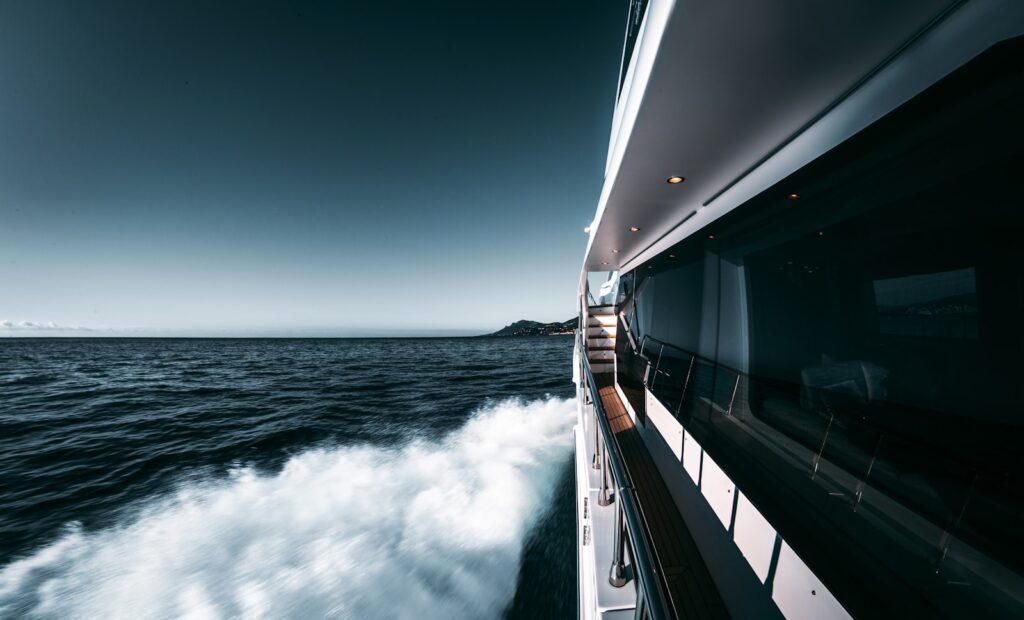
A luxury phinisi in Labuan Bajo is a privately chartered, purpose-built Indonesian wooden sailing yacht that carries between four and ten guests in air-conditioned ensuite cabins, staffed by a professional crew that typically includes a dedicated chef, a dive or snorkel guide, and a captain with deep familiarity with Komodo National Park waters. These are not simply nicer versions of the open-trip boats that depart each morning from the town harbor. They occupy a genuinely different category: purpose-refit or purpose-built hulls ranging from roughly 20 to 35 metres, sometimes longer on the true expedition tier, with generator backup, modern navigation electronics, plunge pools or jacuzzis on the sundeck at the upper end, and a crew-to-guest ratio that makes service feel effortless rather than stretched.
We have been placing clients on phinisi in these waters for more than a decade. What we keep hearing from first-time luxury charter guests surprises them: the timber hull is not a compromise. It is the point. The gentle roll of a well-found wooden ketch at anchor off Padar, the sound of water against planking, the smell of ironwood and teak warming in the afternoon sun — none of that is available on a glass-fibre motor-yacht. The phinisi tradition has roots in the Bugis, Makassar, and Konjo people of South Sulawesi; the boatbuilding craft of the Konjo of Bulukumba was inscribed by UNESCO on the Representative List of Intangible Cultural Heritage of Humanity in 2017. That heritage does not disappear when a builder adds a generator room and a watermaker. It deepens the experience for anyone who pays attention to what they are actually floating on.
This page is for travelers deciding whether to book a luxury vessel versus a mid-range deluxe option, and for those trying to understand what the price difference actually buys. It covers the honest amenity checklist, the ultra-luxury bracket that sits above the standard luxury tier, which travel styles suit each category, and the questions worth asking before you sign a charter agreement.
What Genuinely Qualifies as a Luxury Phinisi Labuan Bajo with Ensuite Cabins and AC
The word “luxury” appears on nearly every boat listing in Labuan Bajo, from budget open-trip boats with shared squat toilets to purpose-built expedition vessels worth several million dollars. That inflation of language is the first problem any serious charter guest has to solve. At Phinisi Atlas we use a specific threshold. A vessel must clear every item in the first column below to earn the luxury designation; the items in the second column define the ultra-luxury bracket.
| Luxury Tier (all required) | Ultra-Luxury / Expedition Tier (typical additions) |
|---|---|
| Private ensuite bathroom in every cabin (not shared) | Master suite with separate saloon or seating area |
| Air conditioning in every cabin, individually controlled | AC in all social spaces including main saloon |
| Dedicated onboard chef (not a crew member doubling as cook) | Chef with formal culinary training; dietary customisation standard |
| Generator with fuel capacity for multi-night charters without shore power | Dual generator for redundancy; solar panels supplementing power |
| Hull length of at least 20 m (comfortable beam, stable at anchor) | 25 m or longer; stabilisers or high-stability hull form |
| Sun deck or sky lounge for outdoor dining and lounging | Jacuzzi, plunge pool, or outdoor shower on sundeck |
| Dedicated tender or inflatable dinghy for shore excursions | Rigid inflatable tender plus kayaks, paddleboards, or dive compressor |
| Satellite or cellular communication and AIS transponder | EPIRB, life raft, and full SOLAS safety equipment suite |
| Crew of at least four (captain, engineer/deckhand, chef, service crew) | Six or more; dedicated dive guide and naturalist on request |
| Clean linen, towels, and bathroom toiletries replaced daily | Name-brand amenities; pillow-menu or mattress topper upgrade |
A vessel that checks most of these but falls short on ensuite bathrooms or lacks a proper backup generator is what the market typically calls deluxe. That is a real category and a reasonable choice for many travelers — but it is not luxury, and the distinction matters when four adults are sharing two bathrooms for four nights in tropical heat.
Luxury vs. Deluxe: Where the Real Differences Live
Deluxe phinisi in Labuan Bajo typically run 16 to 22 metres, carry four to six cabins (sometimes with ensuite, sometimes with a shared bathrooms on the lower deck), and offer an onboard cook rather than a trained chef. Meals are filling and fresh — grilled fish, rice, local vegetables — but menu customisation and presentation are limited. The sun deck exists, though it is often a modest roof platform rather than a designed social space. Air conditioning may run only at night to save fuel, and many deluxe operators rely on a single generator that, if it fails at anchor, means a warm cabin until a fix is found.
On a luxury vessel, the chef is a professional who briefed you on dietary preferences before departure and who can produce a ceviche of locally caught tuna followed by a grilled reef fish with sambal matah for dinner, then an Indonesian breakfast spread with real coffee from Flores highlands. The difference in what ends up on the table over a four-day charter is significant. For guests on a honeymoon, a significant anniversary, or a corporate incentive trip where the evening meal is the social anchor of the day, that gap is material.
The other place where luxury earns its premium is sleep quality. Ensuite bathrooms eliminate the 2 a.m. corridor shuffle to a shared head. Individually controlled air conditioning means a light sleeper who wants 19 degrees Celsius and a heavy sleeper who wants 24 degrees can both wake rested. After a day hiking the roughly 800 steps to the Padar Island viewpoint and snorkelling at Manta Point, that matters more than most guests expect before they arrive.
Price Brackets: What Luxury Actually Costs in 2026
Phinisi pricing in Labuan Bajo is quoted as a whole-boat charter rate — you are not buying individual cabins, you are engaging the entire vessel and crew for the duration. This is an important distinction from hotel logic. A couple taking a six-cabin luxury phinisi to themselves pays the full charter rate; a group of eight sharing the same boat pays roughly an eighth each.
- Deluxe tier (shared bathroom or limited ensuite, basic cook)
- Approximately USD 1,000–2,500 per boat per night for 3D2N or 4D3N private charter; per-person open-trip rates roughly USD 100–200/day
- Luxury tier (full ensuite, AC, professional chef, jacuzzi-optional)
- Approximately USD 2,500–5,000+ per boat per night; most 3D2N private luxury charters fall between USD 7,000 and USD 15,000 total
- Ultra-luxury / superyacht-style phinisi (expedition vessels, plunge pool, large crew, full safety suite)
- Approximately USD 10,000–25,000+ per boat per night; these are quote-only, season-specific rates — no published fixed price. Names circulate in the market but rates fluctuate with season, itinerary length, and operator demand.
Three important notes on what these rates do and do not include. First, Komodo National Park entrance fees are almost always charged separately and are the single most persistent source of budget surprises. Current approximate per-person costs for a 3D2N trip run in the range of IDR 600,000–1,200,000 per person, covering park entrance, marine fees, ranger/guide charges, and modest conservation levies — paid in cash, usually collected by the operator on behalf of the park. These figures are subject to revision; confirm with your operator before you book. Second, alcohol, premium beverages, and some personal activities (dive compressor fees for certified divers, drone permits) are typically additional. Third, the per-night rate assumes the vessel is in Komodo National Park waters; repositioning legs from Bali or Lombok carry a separate fuel and crew surcharge.
The practical implication: a group of eight splitting a luxury phinisi charter often pays per-person rates that are competitive with or cheaper than two cabins on a high-end Bali resort, with infinitely more freedom of movement and a fully exclusive experience.
Ready to see which vessels match your dates and group size? Plan your charter with our concierge — we maintain an actively vetted shortlist and can reach most operators directly via WhatsApp for a fast quote.
Destinations Accessible on a Luxury Phinisi Charter
Komodo National Park covers roughly 1,733 square kilometres of land and sea, a UNESCO World Heritage Site and Marine Protected Area. A 3D2N or 4D3N luxury charter from Labuan Bajo typically reaches a selection of the following, depending on wind conditions, tides, and your priorities:
- Padar Island — The panorama from the top (approximately 800 steps, roughly 30–40 minutes of hiking) shows three differently coloured bays simultaneously: a sight that genuinely justifies the sunrise start. Padar is a pre-dawn departure from anchorage on most itineraries, which means the onboard chef has coffee and a light breakfast ready before 5 a.m. That level of logistical care is the difference between a luxury charter and a bus tour.
- Pink Beach (Pantai Merah), Komodo Island — The pink colouration comes from Foraminifera, microscopic organisms whose red-pigmented shells mix with white sand. Snorkelling directly off the beach puts you over a healthy coral garden. The site has grown crowded during peak season (July–September) — a private phinisi can time its arrival before the open-trip fleet and depart before the midday surge.
- Manta Point (Karang Makassar) — A shallow cleaning station where reef mantas (Mobula alfredi) circle at 5–15 metres depth. Wingspan can reach 4.5 metres. Responsible approach protocol requires maintaining at least roughly 3 metres distance and never swimming directly above or chasing the animals. Mantas are present year-round with the strongest aggregations typically from May through November.
- Komodo and Rinca Islands — Komodo dragon treks — An estimated 3,000 Komodo dragons (Varanus komodoensis) live across the park, with the main ranger stations at Loh Liang (Komodo) and Loh Buaya (Rinca). Trekking is compulsory with official rangers. A luxury charter itinerary typically includes one island for the dragon trek; doing both is possible on a 4D3N or longer trip.
- Kelor Island — A short, steep 10–15 minute climb to the viewpoint; the framing of Labuan Bajo harbour in the distance makes it worth the stop. Often used as the first afternoon anchor on day one to let guests settle in before the bigger hikes.
- Kanawa Island — Roughly 10–15 km offshore from Labuan Bajo, with a shallow fringing reef starting just a metre or two from the beach. Good for less-confident snorkellers and for a first-evening sundowner anchorage given the calm protection of the bay.
- Taka Makassar sandbar — A crescent of white sand that nearly vanishes at high tide. Most memorable at low tide for the quality of the light and the surreal emptiness. Often combined with a Manta Point visit.
- Kalong (Bat Island) — The at-dusk exodus of the island’s large fruit bat colony (estimates range widely, commonly cited at thousands to 10,000+) is a standard overnight anchorage spectacle on most itineraries. The bats stream out in a single direction at sundown; watched from the upper deck with a drink in hand, it is one of those moments that stays with people.
Who the Luxury Tier Actually Suits
Not everyone needs a luxury phinisi. That sounds obvious but it is worth saying plainly, because the charter market in Labuan Bajo has a tendency to sell upward regardless of fit. Here is an honest assessment.
Honeymoons and intimate celebrations
Private charter on a luxury phinisi is the best format for two people who want complete seclusion and a curated experience. No other guests, menus planned around your preferences, a crew who can arrange a candlelit dinner on the sandbar at Taka Makassar if you ask for it. The 20–30 metre hull provides enough space that you never feel confined. The main consideration: a full luxury charter at these rates for just two people is expensive per person. Some operators offer smaller luxury vessels (three or four cabins, 20–22 metres) at lower whole-boat rates that suit couples who still want the full private experience without the per-night cost of a larger vessel.
Families wanting space and privacy
A luxury phinisi with four to six cabins can accommodate a multi-generational family comfortably. Children adapt well to liveaboard life in these waters — the itinerary is inherently activity-based, the snorkelling is shallow and spectacular, and the crew’s experience with young guests is a meaningful differentiator worth asking about when you vet operators. Look for vessels with a wider beam and lower freeboard for easier water access, a dedicated tender for shore transfers so the main vessel does not need to anchor close to beaches, and crew who have handled families before. The ensuite cabin requirement is non-negotiable for families; shared bathrooms with children and teenagers become a daily friction point.
Corporate incentive and small group travel
A boat of eight to twelve guests from the same company or social group makes the per-person economics straightforward and turns the charter into a shared private resort. The sundeck becomes a meeting room or a party deck depending on the evening; meals are a group event rather than a restaurant queue. The standard 3D2N itinerary is feasible but 4D3N is the better format for groups who want a genuine sailing experience rather than a highlights dash. Worth factoring in: the group needs to share the same general comfort level with ocean conditions. Komodo waters can get choppy in certain wind windows, and even a luxury hull is not a cruise ship.
Superyacht style phinisi Labuan Bajo — the ultra-luxury bracket
Above roughly USD 10,000 per night, you enter a bracket that functions more like expedition yacht charter than phinisi rental. These vessels carry larger crews, often include a naturalist or marine biologist as a dedicated expedition guide, offer nitrox diving, have plunge pools or proper jacuzzis, and can extend itineraries to remote sites in northern Komodo, the Sape Strait, or even Raja Ampat on longer bookings. The wooden phinisi character is preserved — the heritage-craft bones remain, with ironwood and teak construction — but the superstructure, safety systems, and service standards sit at the level you would expect from a premium Mediterranean motor-yacht. Rates in this bracket are quote-only and genuinely vary by season, crew configuration, and itinerary; we will not quote fixed prices because they are not fixed. If you are looking at this bracket, get in touch via our concierge and we will make direct introductions to the right operators. A WhatsApp conversation is often the fastest route to a real quote for a specific date window.
Timing a Luxury Charter: Seasons and Sea Conditions
The dry season from roughly April through October is the reliable window. Seas are calmer, underwater visibility reaches 20–30 metres on good days, and the thinner dry-season vegetation makes dragon sightings more reliable because the animals bask openly rather than retreating into dense brush. July and August are peak season — most popular, most expensive, and the busiest on the water around the main sites. A private luxury charter still gives you timing flexibility that open-trip boats lack, so you can arrive at Padar before 5 a.m. and at Pink Beach before the flotilla, but you will share anchorages with more vessels than in shoulder months.
May, June, and the October–November window are the insider preference for luxury charter. Seas are calm, prices are lower than peak, boats are fewer, and in May–June the islands are still green from the wet season rather than brown and parched. The manta aggregations at Manta Point are strong from approximately May through November, with some of the most consistent encounters in September and October when the southern swell eases but the cold upwellings that attract mantas and drive plankton are still running.
January and February are the roughest months. Heavy rain, strong winds, and reduced visibility make them unsuitable for most luxury charter guests, and many premium operators reduce or suspend sailings in February. If your only travel window falls in this period, plan around it: northern Komodo sites are often calmer than the exposed southern passages, and a longer itinerary on a larger vessel handles swell better than a short trip on a smaller hull.
Questions Worth Asking Before You Book
The luxury label is self-applied by operators. Independent vetting requires going beyond the marketing. These are the questions our team asks on your behalf when assessing any vessel for the shortlist:
- Is the chef a dedicated crew member or does a deckhand cook on rotation?
- What is the generator configuration — single or dual? What happens if it fails at anchor?
- Are all cabins ensuite with hot water, or are any shared?
- What is the year and scope of the most recent refit?
- What safety equipment is aboard — life raft, EPIRB, fire suppression, VHF radio?
- Are park fees and ranger fees included in the charter rate or charged separately?
- What is the cancellation and weather-delay policy? Get this in writing.
- Who is the actual operating entity — are you booking direct with the owner or through a broker, and how is your deposit protected?
A reputable luxury operator will answer every one of these without hesitation. Evasion or vagueness on generator backup or safety equipment is a disqualifying signal regardless of how good the photography looks.
The Wooden Phinisi Yacht with Professional Chef: What Meals Actually Look Like
Food is consistently underweighted in phinisi research until guests are actually aboard. On a genuine luxury charter the wooden phinisi yacht with professional chef komodo itinerary typically includes three daily meals plus afternoon snacks, all prepared from provisions loaded fresh in Labuan Bajo. A serious chef will present grilled local catch with sambal and steamed rice for lunch, a composed cold starter and main for dinner, and a full cooked breakfast — eggs any style, toast from a boat oven, tropical fruit, proper coffee. Dietary restrictions (vegetarian, gluten-free, halal) are routine for any operator worth booking.
The galley on a 25–30 metre luxury phinisi is typically a full commercial setup: gas range, oven, cold storage, prep surfaces. The chef shops to your preferences before departure. This is not a minor comfort — over four days at sea, good food cooked for you while you are recovering from a pre-dawn hike and an afternoon of snorkelling is, for many guests, the memory that stays longest.
Labuan bajo Phinisi with Jacuzzi on Deck: The Upper Tier in Practice
The labuan bajo phinisi with jacuzzi on deck category represents the upper third of the luxury bracket and essentially all of the ultra-luxury tier. A plunge pool or jacuzzi is typically fitted into the sundeck or foredeck, running on the vessel’s freshwater maker and heated by a solar or heat-pump system. On a 30-metre vessel with six to eight guests, a sundeck jacuzzi at anchor off Taka Makassar at sunset is as good as it sounds. On a smaller 22-metre vessel the deck real estate is more constrained, and some operators install a well-spec’d outdoor shower as a functional alternative.
A jacuzzi on a wooden vessel requires careful installation to preserve structural integrity — it is not a retrofit you want done cheaply or recently. When we vet a vessel with this feature we ask specifically about the installation date and whether the surrounding deck structure has been inspected since. Teak decking that holds water around a pool fitting will rot. That is not a hypothetical; it is a failure mode we have seen on vessels that were photographed beautifully but had structural compromises that took an experienced eye to spot.
How Phinisi Atlas Vets the Luxury Shortlist
We do not list every phinisi that calls itself luxury. Our shortlist is assembled from vessels we or our network contacts have physically inspected, cross-referenced against crew safety training documentation, guest feedback across multiple independent sources, and operator responsiveness and transparency during the inquiry process. Price is not the filter. We have turned down expensive vessels because the chef was a deckhand with a wok and included mid-range vessels because the owner takes exceptional care of the hull and crew training.
Our model is independent curation: we have no booking commissions from specific operators, no exclusivity arrangements, and no financial interest in steering you toward a particular vessel. What we do have is a current, opinionated view of which boats are genuinely delivering on the luxury label and which are trading on photography from a 2019 refit.
If you want a shortlist matched to your dates, group size, and the specific experience you are after — honeymoon seclusion, family space, corporate event, dive-focused expedition, or simply the best possible 4D3N phinisi charter in Komodo — reach out and plan your charter with our team. We work via WhatsApp for most initial conversations because it is the fastest way to get a real answer from the operators who matter, and we can usually turn a qualified shortlist around within 24 hours of a brief.
Frequently Asked Questions
What is the difference between a luxury and a deluxe phinisi in Labuan Bajo?
The clearest line is ensuite bathrooms and a dedicated professional chef. A deluxe phinisi may have shared bathrooms and a cook who is also a deckhand. Luxury means every cabin has its own private bathroom with hot water, air conditioning is individually controlled in each cabin, and the chef is a separate crew member whose sole role is food preparation. Generator backup, a proper sun deck with seating, and a higher crew-to-guest ratio are further differentiators. The price gap is real — deluxe whole-boat private charters typically run USD 1,000–2,500 per night, while luxury starts around USD 2,500 and runs to USD 5,000+ before the ultra-luxury bracket begins.
Are Komodo National Park fees included in a luxury phinisi charter rate?
Almost never. Park entrance fees, marine fees, and ranger or guide charges are nearly always listed as extras and collected in cash by the operator on behalf of the park. Budget approximately IDR 600,000–1,200,000 per person for a 3D2N or 4D3N charter covering the standard park fee components. These figures are revised periodically by park authorities — confirm the current breakdown with your operator before departure, and verify it is itemised in your charter agreement rather than absorbed into a vague surcharge.
How far in advance should I book a luxury phinisi in Labuan Bajo?
For July and August — the peak season when the best vessels are often fully committed — book three to six months ahead. For shoulder months (May, June, September–November) two to three months is generally sufficient for most vessels, though the very best premium boats fill faster than average. The ultra-luxury bracket (above USD 10,000 per night) can require six months or more notice for specific date windows, particularly around Christmas and New Year, which are the most in-demand dates on the calendar.
Is a luxury phinisi suitable for guests who get seasick?
A larger, heavier phinisi hull — 25 metres or more — is notably more stable than smaller vessels in the moderate swells common during the dry season. That said, no wooden sailing vessel is a cruise ship, and some passages between Labuan Bajo and the outer park sites can be choppy, particularly in the Sape Strait and in the southern sections of the park. For guests with a known susceptibility to motion sickness, we recommend booking a vessel of at least 25 metres, choosing a 4D3N itinerary over a compressed 2D1N (more time at anchor, less rushing through swells), carrying prescription anti-nausea medication, and requesting a lower-deck cabin which moves less than the upper cabins. April through June and September through October tend to have the calmest sea conditions.
Can a luxury phinisi charter be customised for a honeymoon or proposal?
Yes, and it is one of the most natural fits. A private luxury charter means the crew’s entire attention is on your group, which makes special-occasion setups genuinely achievable: a candlelit dinner on the Taka Makassar sandbar at low tide, a private sundeck breakfast after a Padar sunrise hike, or a decorated cabin on boarding night. Discuss your plans with the operator at least two to three weeks before departure so the chef and crew can source what they need in Labuan Bajo. The best crews have done this many times and will suggest touches you have not thought of. What they cannot do is pull off a complex production with 48 hours notice — lead time and communication are the only requirements.