How we stay independent: Phinisi Atlas does not own boats or sell a fixed catalogue. When you book a charter we recommend, we may receive a referral fee from the operator at no extra cost to you. This never changes our vetting or the pricing we publish.
A liveaboard komodo phinisi is a multi-day sailing trip where you eat, sleep, and dive aboard a traditional wooden vessel, anchoring at remote sites that day-trip boats simply cannot reach. Resort-based diving from Labuan Bajo, by contrast, means returning to a hotel each night and taking speedboats out to dive sites — a fundamentally different logistical model with real tradeoffs for any serious diver. Both formats can produce excellent dives in Komodo National Park. Whether one is better depends on your certification level, schedule, budget, and how much you value seamless access to sites like Castle Rock and the Cauldron versus sleeping in a land-based bed.
I’ve dived Komodo waters in both formats. What follows is an honest structural comparison — not a sales pitch for either side.
How Each Format Works
The Phinisi Liveaboard
A phinisi liveaboard departs Labuan Bajo harbor in the morning and you don’t come back ashore until the trip ends — typically two, three, or four nights later. The boat anchors wherever the dive guide wants to be at first light. At Castle Rock in the north of Komodo National Park, that means being in the water during the slack window before the current picks up, a timing advantage that is nearly impossible to replicate by speedboat from town. Dive-focused phinisi itineraries typically run three to four dives a day: a dawn dive on the anchor site, a mid-morning dive nearby, a post-lunch dive as current shifts, and sometimes a night dive back at anchorage.
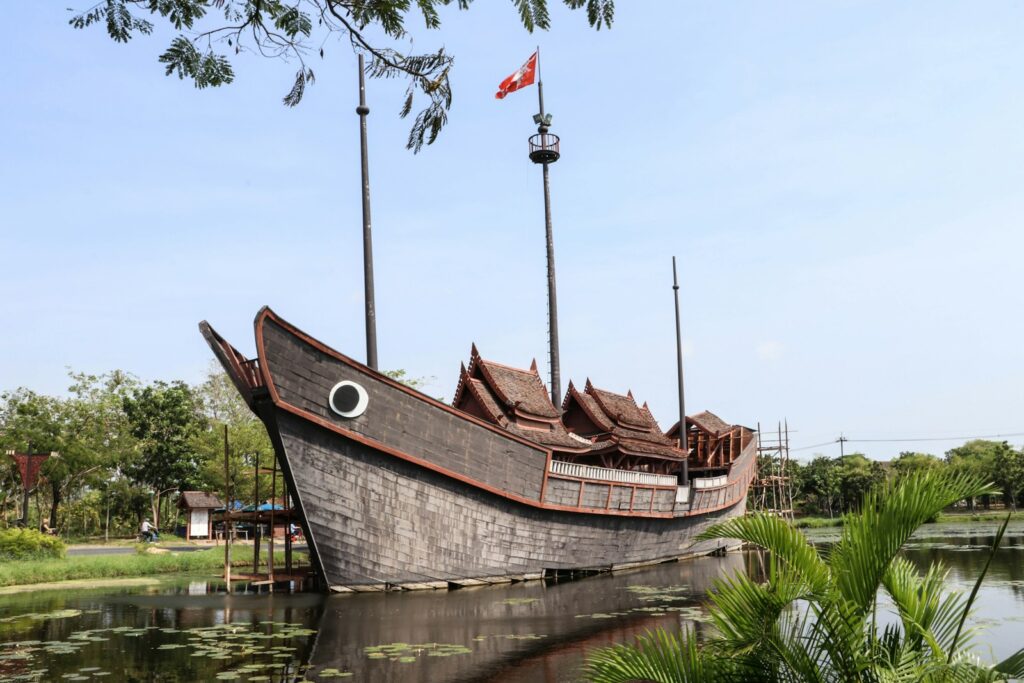
The phinisi as a vessel has deep roots in the seafaring traditions of the Bugis, Makassar, and Konjo peoples of South Sulawesi — the hulls were traditionally built on the beach at Ara, Tana Beru, and Lemo-Lemo in Bulukumba regency, planked before framing, from ironwood and teak joined with wooden pegs. UNESCO inscribed the craft on its Representative List of Intangible Cultural Heritage of Humanity in 2017. Modern dive-configured phinisi carry compressors (many offer Nitrox), a dive tender for site transfers, and gear storage; the better boats are remarkably well-organized for divers.
Resort-Based and Day-Trip Diving
From Labuan Bajo, the standard resort-diving model puts you on a speedboat by 7:30 or 8:00 a.m. and returns you to the dock by late afternoon. A typical day trip fits two dives, sometimes three if the operator structures it well. You reach Manta Point (Karang Makassar) in about 45 minutes to an hour. Getting to the north sites — Crystal Rock, Castle Rock, the Cauldron — takes substantially longer and is often split into separate day trips or reached only by faster, larger vessels. Night dives are rare from land-based operations; they require either an early overnight stay aboard a dive boat or a very cooperative (and expensive) private charter.
There are genuine upsides to staying ashore. Labuan Bajo has grown substantially as a tourism hub: there are comfortable hotels at various price points, good restaurants along the waterfront, and the option to break up diving days with land activities — the Padar Island viewpoint (roughly 800 steps to the summit, three distinctly colored bays below) or a guided dragon trek at Loh Liang on Komodo Island. For divers traveling with non-diving partners, this flexibility matters.
Site Access: The Decisive Factor
This is where the liveaboard format has a structural advantage that no amount of resort comfort can fully offset, and it’s important to say this plainly.
Komodo National Park’s best dive sites fall into two geographic clusters. The central and southern sites — Manta Point, Pink Beach reef (Pantai Merah), Batu Bolong, Tatawa — are reachable as day trips, though the distance means you’re burning around 30–45 minutes of boat time each way. Batu Bolong’s exposed pinnacle can be dived as a day trip with a competent speedboat operator in calm conditions.
The north sites are another story. Castle Rock and Crystal Rock, arguably the most consistently rewarding drift dives in the park, sit deep into Komodo’s northern channel. Getting there from Labuan Bajo harbor by speedboat takes roughly 1.5–2 hours depending on sea state. By the time you arrive, the ideal tidal window may have closed. The Cauldron (Shotgun) — a narrow channel that generates extraordinary nutrient upwellings and concentrates fish in a way few places in Southeast Asia can match — requires precise timing. A liveaboard sitting anchored off Crystal Rock overnight, ready to splash at 6:15 a.m. on the slack, is operating in a fundamentally different league of access.
Manta Point deserves a separate note. Reef mantas (Mobula alfredi) with wingspans reaching 4–5 meters use the shallow cleaning station at around 5–15 meters depth year-round, with the strongest aggregations roughly May through November. Day trips hit Manta Point regularly and successfully. This is one site where the access gap between formats narrows considerably — and a strong argument for resort-based divers who have Manta Point as their primary goal.
Dives Per Day: By the Numbers
| Format | Typical dives per day | Night dives | Dive window timing |
|---|---|---|---|
| Phinisi liveaboard (dive-focused) | 3–4 | Yes, typically included | Anchor site; dives timed to current/tide |
| Day-trip / resort-based | 2, occasionally 3 | Rarely, requires special arrangement | Fixed departure; site arrival may miss ideal window |
On a four-night dive liveaboard, you might log 14–16 dives total. On four days of resort-based day trips, expect 8–10. For a diver visiting Komodo once and wanting maximum time underwater, the math is clear. For a traveler who dives but also wants land time, non-diving excursions, and the ease of checking out whenever they want, the day-trip model loses fewer dives than it might seem — because those land hours are purposefully spent.
Cost: What You Actually Pay
Pricing in Komodo is genuinely complex, so a table of honest ranges serves better than vague approximations.
| Category | Format | Approximate cost (USD, 2026) | Notes |
|---|---|---|---|
| Budget shared phinisi | Liveaboard, shared cabin | ~$100–200 per person per day | Park fees usually excluded; confirm inclusions |
| Dive-focused mid-range phinisi | Liveaboard, shared cabin | ~$200–350 per person per day | Nitrox often included; better dive equipment |
| Private phinisi (whole boat) | Liveaboard, private | ~$1,000–5,000+ per night for the vessel | Splits well across groups of 6–10 |
| Resort-based day trips | Day trip from Labuan Bajo | ~$60–130 per person per day | Typically 2 dives; gear rental may be extra |
| Labuan Bajo hotel (mid-range) | Accommodation cost | ~$50–150 per night | Add to day-trip diving cost for total |
| Komodo NP fees (approximate) | Both formats | ~$40–80 per person for a 3–4 day trip | Frequently revised; verify with operator close to travel |
When you add the accommodation cost to day-trip diving, a four-day resort-based diving itinerary in Komodo can run $600–1,200 per person all-in — not dramatically cheaper than a shared-cabin mid-range dive liveaboard, which bundles accommodation, meals, and three to four dives per day. The cost parity is closer than most travelers expect going in. Where the liveaboard genuinely wins on value is the per-dive cost: at 3–4 dives per day, you’re paying less per dive than almost any day-trip operation can match.
A note on park fees: every operator will tell you fees are excluded and give you a ballpark number. The current per-person fee structure for foreign visitors includes a park entrance levy, a marine/dive fee, and ranger/guide fees for land treks. Budget roughly IDR 600,000–1,200,000 (approximately $40–80) for a 3–4 day trip, paid in cash, usually collected by the operator. These figures are approximate and the park revises them periodically — the headline IDR 3,750,000 annual pass that triggered protests in 2022 was effectively shelved, but always verify current rates close to your travel date.
The No-Fly Window After Diving
This is a planning consideration that catches divers by surprise, and it affects the two formats differently.
After repeated dives over multiple days — the kind of diving a liveaboard produces — standard decompression guidelines from most agencies recommend a no-fly surface interval of at least 18–24 hours after the last dive, sometimes longer depending on dive profiles and whether Nitrox was used. The flight from Labuan Bajo to Bali (LBJ to DPS) is around 1 hour 10 minutes to 1 hour 25 minutes. It seems short. Altitude is still altitude.
A liveaboard that ends on Day 4 morning typically docks back in Labuan Bajo late morning or midday. If you’ve been diving until the previous afternoon, you need to either stay overnight in Labuan Bajo or book an afternoon flight that fits your surface interval. Most operators are explicit about this and build the schedule accordingly — a pre-dawn final dive the night before, or a policy of no diving on the last day, creates a workable 18+ hour gap before a late-morning flight.
Resort-based divers have more control: they stop diving at their own discretion, spend an extra night in a comfortable hotel, and board their flight the following morning. The flexibility here is real. For travelers with tight itineraries or connecting flights, staying ashore gives you an easier buffer to manage.
Comfort and What Living Aboard Is Actually Like
Let’s be honest about this. A phinisi is a wooden boat, typically 20–35 meters long. Even well-fitted dive liveaboards have smaller cabins than most land hotels. The lower deck cabins on a mid-range phinisi are intimate — a generous description for snug. The bunks are fine for sleeping. Personal storage is limited. Showers draw from a freshwater tank that the cook and dive staff also use. Air conditioning runs off a generator that has a duty cycle; the boat is quiet when the engine’s off at anchor, less so when charging overnight.
The upper-tier phinisi — and there are genuinely beautiful ones operating Komodo itineraries — have en-suite bathrooms, proper AC cabins with soundproofing, sun decks with outdoor lounges, and chefs who produce meals that bear no resemblance to what you’d expect from a boat galley. These are not budget experiences. At the luxury end, the per-night cost reflects it.
For most divers on a mid-range shared trip, the honest expectation is: clean, functional, and perfectly fine for people who are spending most of their conscious hours underwater or eating on deck. What the boat delivers that no hotel room can is the moment at 5:45 a.m. when you roll off the dive platform into 27°C water with a school of fusiliers already visible below, anchored directly over the site you came to dive. That’s the trade you’re making.
Resort-based diving offers a proper land bed, a long shower, real restaurant food for dinner, and the ability to walk into town. For divers who find sleeping on boats difficult — or who are prone to seasickness in choppy passages between sites — these are not trivial advantages.
Matching Format to Certification Level
Komodo’s best dive sites are not beginner dives. The north sites — Castle Rock, Crystal Rock, the Cauldron — require solid buoyancy control and comfort in strong, multi-directional current. An Advanced Open Water certification is the formal minimum most operators require for these sites. In practice, Advanced OW divers with limited logged dives will find some conditions challenging. Experienced Open Water divers who have spent significant time in current may do fine; the operator’s dive guide will make the call on the day.
Manta Point, Tatawa Besar, and Pink Beach reef are more forgiving. Manta Point’s shallow cleaning station is accessible to Open Water-certified divers when current is mild; the same site in a strong upwelling is a different experience entirely. Day trips to these central/southern sites are a reasonable match for less experienced divers. Liveaboards targeting the north sites explicitly are oriented toward intermediate-to-advanced divers.
If your goal is specifically the north channel sites and you’re an Advanced diver with current experience, the liveaboard format is the straightforward choice — not just for access, but because the on-site dive briefings and tidal timing that a good live-aboard guide manages are genuinely harder to replicate on a day trip that has one eye on the return schedule.
Conservation and Responsible Diving
Komodo National Park is both a UNESCO World Heritage Site and a Marine Protected Area. Both formats carry responsibilities. For liveaboard operators, the key practices to ask about before booking: do they use mooring buoys rather than anchoring on coral? How is diving waste (tanks, weights, gear wash water) managed? Do their guides enforce distance from manta rays — the generally recommended buffer is at least around 3 meters, without swimming directly above or chasing them?
Day-trip operators in the central sites around Manta Point have faced criticism for overcrowding in peak season, with multiple boats at the same cleaning station simultaneously. A liveaboard operating on a less-fixed schedule can time site visits outside peak windows. This is not a universal advantage — some liveaboards cluster at the same popular anchors — but the better dive-focused operators actively time entries to avoid the crowds. Ask prospective operators specifically how they handle Manta Point and Castle Rock when multiple boats are present. The answer tells you a lot about their approach.
Ready to plan your itinerary? Our concierge can match you with a vetted phinisi or dive operator based on your certification level, group size, and preferred sites — plan your charter or reach us on WhatsApp to start the conversation.
Which Format to Choose
- Choose a liveaboard phinisi if:
- You want the north Komodo sites (Castle Rock, Crystal Rock, Cauldron) with proper tidal timing; you want 3–4 dives per day and night dives; your group is dive-focused; you have Advanced OW certification or above with current experience; or you want the most dives per dollar spent on a multi-day itinerary.
- Choose resort-based diving from Labuan Bajo if:
- Your primary goal is Manta Point and central sites; your travel party includes non-divers who want land flexibility; you need to leave on a specific day without overnight buffer; you find sleeping on boats difficult; or you want the option to adjust your schedule freely after each day.
- Consider combining both:
- A practical approach for two-week Indonesia trips: fly into Labuan Bajo, do a 3–4 night dive liveaboard to hit the north and central sites properly, return to town for a final dinner and land excursion, then fly out. You get the best site access and a comfortable pre-flight night ashore.
Frequently Asked Questions
Can beginners (Open Water certified) do a liveaboard in Komodo?
Yes, but with caveats. Open Water certification is the entry-level minimum for recreational diving, and many liveaboard routes include sites suitable for OW divers — Manta Point at slack water, Tatawa, Pink Beach reef. The north Komodo drift sites (Castle Rock, Crystal Rock, Cauldron) require Advanced Open Water certification at minimum and genuine comfort with strong current. If you’re an OW diver, ask the operator specifically which sites are on the itinerary and whether they can accommodate your level. A good dive guide will not put an under-qualified diver into a site that puts them or others at risk.
How much does a Komodo dive liveaboard cost compared to day-trip diving?
Shared-cabin dive liveaboards typically run around $150–350 per person per day all-in (excluding park fees), depending on boat quality and whether Nitrox is included. Day-trip diving from Labuan Bajo costs roughly $60–130 per person for two dives, plus hotel accommodation of $50–150 per night. For a four-day trip, the total costs end up closer than most people expect. The liveaboard’s advantage on a per-dive basis is significant: at 3–4 dives per day versus 2, you’re getting roughly twice the underwater time for a modest cost premium.
What is the no-fly window after diving in Komodo, and how does it affect my return flight?
After multi-day repetitive diving, most dive agencies recommend a minimum 18–24 hour surface interval before flying. On a liveaboard ending in Labuan Bajo, this typically means planning a buffer night at a Labuan Bajo hotel, or structuring your last dive early enough to make a late-morning flight the next day. Flights from Labuan Bajo (LBJ) to Bali (DPS) run around 1 hour 10 minutes — short, but the altitude exposure is the same as any flight. Resort-based divers have more flexibility here since they control their own last-dive timing and can simply stay an extra night onshore. Build the no-fly window into your itinerary from the start, not as an afterthought.
Is manta ray diving better from a liveaboard or a day trip?
Manta Point (Karang Makassar) is one of Komodo’s most accessible sites — around 45–60 minutes by speedboat from Labuan Bajo — and day trips reach it regularly. Reef mantas are present year-round, with aggregations generally strongest from May through November. For Manta Point specifically, the day-trip format is entirely viable. The timing advantage of a liveaboard matters most at the north current sites; Manta Point’s shallow cleaning station at 5–15 meters is less time-sensitive. That said, a liveaboard can spend more time at Manta Point and can time the entry to avoid the busiest periods when multiple day-trip boats are present simultaneously.
Do I need to bring my own dive gear on a Komodo liveaboard?
Dive-configured phinisi carry rental gear — BCD, regulator, wetsuit, fins, mask, tanks, and weights. Nitrox is available on many mid-range and above boats (confirm before booking). However, frequent divers who own their own gear are strongly encouraged to bring at least their own mask, regulator, and computer for fit and reliability reasons. Check weight limits on the Bali–Labuan Bajo flight (typically 1 hour 10 minutes, on smaller regional aircraft with stricter limits) before packing a full set of gear. A well-maintained rental kit from a reputable operator is perfectly adequate for most divers.
Have specific sites in mind, or diving with a group of mixed certification levels? Reach out to our planning team — we can suggest itineraries and operators matched to your exact requirements, and we’re available on WhatsApp for quick questions before you commit.