How we stay independent: Phinisi Atlas does not own boats or sell a fixed catalogue. When you book a charter we recommend, we may receive a referral fee from the operator at no extra cost to you. This never changes our vetting or the pricing we publish.
When travelers ask about labuan bajo phinisi vs speedboat — which is better for a Komodo trip — the honest answer is: it depends on how many days you have and how much of Komodo you actually want to see. A speedboat day trip will get you to the dragons and back before dinner. A traditional phinisi liveaboard will put you anchored under Padar at 4:45 a.m., watching the sky turn rose gold over three bays before a single tour group has left the harbor. These are not the same experience, and no amount of marketing spin should pretend they are.
We have been placing clients on vessels in these waters for well over a decade — from budget open-trip boats to ultra-luxury expedition yachts. What follows is the candid breakdown we give every traveler who asks us this question in person.
The Four Vessel Types You Will Encounter
Before comparing them head-to-head, it helps to understand what each category actually means in the Labuan Bajo context. Operators use terms loosely; the labels on booking sites can be confusing.
Traditional Phinisi Liveaboard
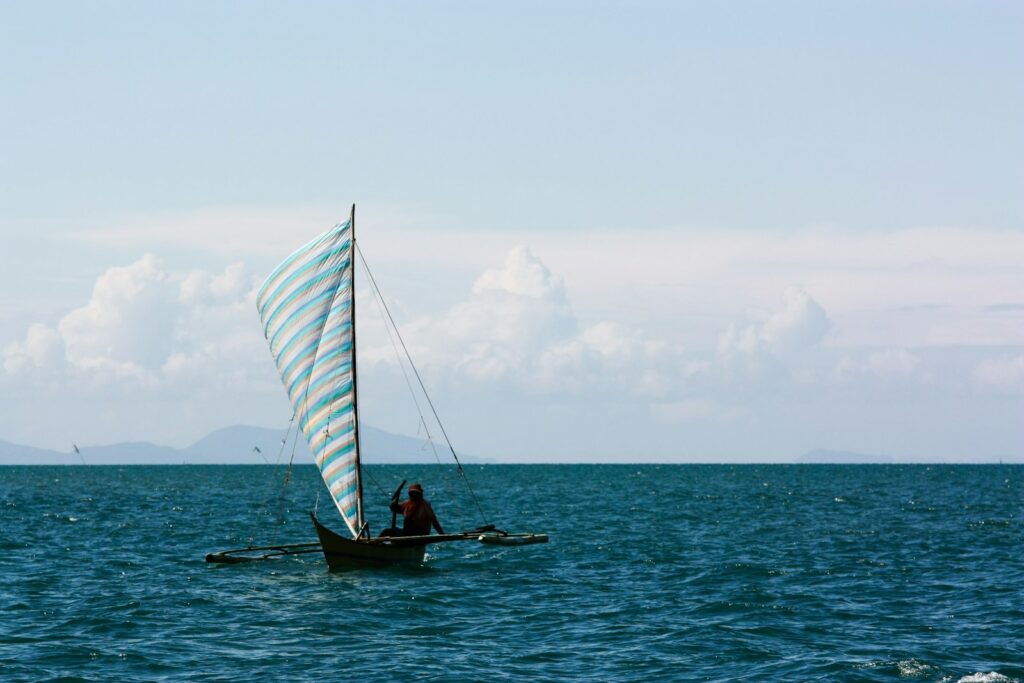
A phinisi is a two-masted wooden sailing vessel originating with the Bugis, Makassar, and Konjo peoples of South Sulawesi. The boatbuilding tradition — centered in villages like Tana Beru, Ara, and Lemo-Lemo in Bulukumba — was inscribed by UNESCO on the Representative List of Intangible Cultural Heritage of Humanity in 2017. That heritage matters, because it is the reason these boats are built by eye, in tropical hardwoods like ironwood and teak, with a structural intelligence that took generations to develop.
Modern charter phinisi range roughly 20 to 35 meters in length. The upper end of the market stretches to purpose-built expedition vessels approaching 50 meters. You sleep aboard, eat aboard, and move between sites overnight — so you wake up already there. This is what liveaboard means, and in Komodo National Park, that matters enormously given the distances involved.
Modern Motor Yacht
A small but growing category in Labuan Bajo. These vessels are purpose-built for charter — fiberglass or steel hulls, twin diesels, no sails. They offer predictable speed and often cleaner hydrodynamics than older wooden hulls. The difference between a traditional phinisi and a modern motor yacht for Komodo trips is primarily feel and aesthetic: one gives you timber, salt air, and handcraft; the other gives you controlled efficiency. Both can be excellent; neither is categorically superior. Budget bracket is similar to phinisi at comparable length and specification.
Speedboat Day Trip
Open fiberglass or rigid-inflatable boats carrying 10 to 30 passengers, operated by day-trip agencies from Labuan Bajo harbor. Departures are typically 7 a.m. to 8 a.m., returning late afternoon. They cover the highlights circuit — usually Kelor Island, Padar viewpoint, Pink Beach, Komodo or Rinca for dragon trekking, sometimes Manta Point — at speed. This is the dominant format for budget travelers and those with only one day to spare.
Budget Wooden Boat
A catch-all term for older, lower-specification wooden motorboats that predate the modern phinisi charter industry. Some are genuinely seaworthy vessels operated by experienced families; others are not. When comparing a budget wooden boat vs phinisi, the gap in safety systems, cabin quality, and onboard catering can be significant. We cover the risk considerations in the comparison table below.
Head-to-Head: Phinisi vs Speedboat vs Motor Yacht vs Budget Wooden Boat
| Dimension | Traditional Phinisi | Modern Motor Yacht | Speedboat Day Trip | Budget Wooden Boat |
|---|---|---|---|---|
| Overnight capability | Yes — purpose-built for it | Yes | No — day trips only | Technically yes; quality varies widely |
| Cabins | Typically 4–7 en-suite cabins on mid-luxury tier; larger vessels more | 3–8 cabins depending on build | None | Basic shared or thin private cabins; rarely en-suite |
| Comfort at sea | High — deep hull, AC, sun deck, chef | High — often smoother ride due to hull design | Low — open, wet, loud above 15 knots | Inconsistent — depends entirely on vessel age and maintenance |
| Seasickness risk | Moderate — deeper hull reduces roll; worse in Jan–Feb wet season swells | Lower — stabilizers common on newer builds | High — exposed craft, hard ride in any chop | Moderate to high — older hulls can be unpredictable |
| Range & site access | Full park — Padar, Pink Beach, Manta Point, Kelor, Kanawa, Kalong, Taka Makassar | Full park — same as phinisi | Partial — time-limited; distant sites often skipped | Partial to full — depends on boat condition and engine |
| Sunrise at Padar | Yes — anchor overnight nearby, hike pre-dawn | Yes | Rarely — most day trips arrive well after sunrise | Sometimes — if boat departs at 5 a.m. from the harbor |
| Price per person (approx. USD) | Shared open trip: ~$100–250/day; private charter: ~$1,000–5,000+/night (whole boat) | Similar bracket to phinisi; quote-based | $30–80 per person per day | $20–60 per person per day on open trips |
| Authenticity / cultural depth | High — UNESCO heritage vessel, handbuilt in South Sulawesi | Low — functional, modern | None relevant | Variable — sometimes old working boats, which have their own charm |
| Safety systems | Mid to high — reputable operators carry life rafts, EPIRB, VHF; verify before booking | Generally high — newer builds have modern systems | Basic — life jackets; operator quality varies | Often minimal — ask specifically about safety equipment |
| Ideal for | 3D2N to 5D4N immersive trips; honeymoons; dive liveaboards; families with time | Travelers who prioritize speed and clean modern finish over heritage aesthetic | Transit travelers; 1-day stopovers; tight budgets | Budget backpackers comfortable with basic conditions |
Park fees — entrance, marine, ranger/guide charges — are typically excluded from all vessel types and paid separately. Budget approximately IDR 600,000–1,200,000 per person for a 3D2N or 4D3N trip (figures approximate; verify close to travel as the fee structure is revised periodically by park authorities).
Speedboat Day Trip vs Liveaboard Komodo: The Real Tradeoff
Speedboats are faster. They are significantly cheaper. For a traveler with exactly one free day in Labuan Bajo between connections, a day trip is a reasonable choice. We say this plainly, because pretending otherwise would be dishonest.
But the limitations are structural, not just cosmetic.
Distance is the first constraint. Komodo National Park stretches roughly 60 kilometers from Labuan Bajo to the southern tip. Komodo Island — with Loh Liang ranger station for dragon trekking — is about 40 kilometers southeast. Manta Point at Karang Makassar, one of the park’s signature snorkel sites, requires navigating to a specific cleaning-station channel. A speedboat doing all of these in a single day is running hard, which means time at each site is compressed. Most operators on day trips make choices: Rinca for dragons (closer, 2–3 hours round trip) over Komodo Island, or Manta Point over Pink Beach. You rarely get both.
Padar at sunrise is genuinely different from Padar at 10 a.m. The hike up roughly 800 stairs to the viewpoint — where three bays in black, white, and pink sand spread below you — is one of the most-photographed vistas in Indonesia. On a phinisi liveaboard, you anchor in the bay the night before, begin the climb at 5 a.m. with a torch, and reach the summit as the sky shifts. You share it with the other guests on your boat. On a day trip, you arrive mid-morning to a viewpoint that by 9:30 a.m. can have dozens of groups climbing simultaneously.
The sea is different at night. Komodo’s waters are biologically exceptional — the mixing of cooler southern ocean upwellings with warmer northern Flores Sea water creates nutrient density that supports mantas, reef sharks, sea turtles, and spectacularly healthy coral. On a liveaboard, you can dive or snorkel the same reef twice: early morning when the currents are calm and the fish active, then again in the late afternoon light. You can drift toward Kalong Island at sunset and watch the flying-fox colony — tens of thousands of large fruit bats — spiral into the sky. You can swim in water that, by 7 p.m., belongs only to your boat.
None of that is available on a speedboat.
Phinisi vs Modern Motor Yacht: Does the Difference Actually Matter?
For a significant portion of travelers, it does not — and we will not pretend otherwise. If you want the fastest way to move between sites with maximum onboard comfort, a well-maintained modern motor yacht delivers it.
Where the difference between a traditional phinisi and a modern yacht for Komodo trips becomes meaningful is in three areas.
The sensory experience of the boat itself. A phinisi at anchor, its teak deck warm underfoot, its masts catching the last of the evening light — this is the image that travelers carry back from Komodo. The boat is not just transport; it is the context. When you are lying in a hammock strung from the forward mast watching reef egrets cross a sandbar at Taka Makassar, the boat is doing cultural and aesthetic work that fiberglass simply does not replicate. Some travelers find this matters deeply. Others, traveling with children or prone to seasickness, may legitimately prioritize the more stable, modern hull.
Cultural meaning. The Bugis and Konjo boatbuilding tradition in Bulukumba, South Sulawesi — the villages of Tana Beru, Ara, Lemo-Lemo — produces vessels that are not manufactured but grown, in a sense. Families apprentice their children in a craft that involves no blueprints, only accumulated knowledge of how ironwood and teak respond to sea stress. UNESCO’s 2017 inscription recognized this as a living heritage under threat. Chartering a well-run phinisi supports the lineage of that trade; chartering a modern motor yacht does not have the same relationship to place.
Ride in mild chop. This cuts the other way. Modern motor yachts, particularly those with stabilizers, deliver a noticeably smoother ride in 1- to 1.5-meter swell — which you can encounter in the strait between Flores and Komodo Island, particularly from July to September when the southeast trades pick up. A deep-hulled phinisi handles this well, but the motion is more present than on a stabilized fiberglass hull. If seasickness is a real concern, factor this in.
Budget Wooden Boat: When the Price Difference Has a Cost
The lower end of the market in Labuan Bajo includes wooden motorboats that predate the charter boom — sometimes family fishing vessels converted for tourism, sometimes older phinisi that have not been maintained to current standards. The pricing can be compelling: open-trip berths from $20–40 per person per day are available. Some of these boats are operated by experienced, safety-conscious crews. Many are not.
The questions worth asking before booking any wooden boat include: Does the vessel carry a life raft sufficient for all passengers? Is there an EPIRB or at minimum a VHF radio? When was the hull last inspected? Does the operator carry liability insurance? These are not hypothetical concerns — wooden boats in Indonesian waters have had incidents, and the regulatory environment for smaller operators is not uniformly enforced.
Budget wooden boat vs phinisi is not purely a comfort comparison. It is also a safety and accountability comparison. A reputable phinisi charter operator — especially one that handles private bookings for international clients — has reputational and commercial incentive to maintain standards. The bottom of the market does not operate under the same pressures.
If budget is the dominant constraint, a shared-cabin open trip on a mid-range phinisi is usually a meaningfully safer and more comfortable choice than the cheapest wooden boat available on arrival at the harbor. The price difference between a $40/day budget boat and a $100/day open-trip phinisi berth is real; so is the difference in what you are likely to experience.
Seasickness: An Honest Assessment by Vessel Type
This question comes up in almost every conversation we have with first-time Komodo visitors, and the answer deserves candor rather than reassurance.
The Flores Sea is not always rough. During the peak dry season — May through September — the waters within the park are frequently calm, with long glassy stretches perfect for swimming off the stern. But the strait between Labuan Bajo and Komodo Island has tide-driven currents, and when the southeast wind runs against the tidal flow, a 1- to 2-meter chop can develop quickly. In January and February, during the heart of the wet monsoon, some passages can see 2 to 3 meters of swell. Many reputable operators reduce or pause sailings during February for this reason.
By vessel type, the risk gradient is roughly: speedboats are the worst — a rigid-inflatable or open fiberglass hull running at 25–30 knots through a 1-meter chop is genuinely uncomfortable and can induce nausea quickly. Budget wooden boats with shallow drafts can pitch unexpectedly. A deep-keeled phinisi or well-maintained motor yacht handles the same conditions noticeably better.
Practical mitigation: book your trip in the dry season (May–October), take seasickness medication the night before and on the morning of departure, choose a phinisi with a deep hull over an open-trip speedboat if you have any history of motion sickness, and avoid eating heavily before the crossing. If you are prone, a private charter where you set the anchor schedule is meaningfully better than a shared day trip where you cannot stop the boat.
Ready to talk through which vessel and itinerary fits your situation? Plan your charter with our concierge — we are also available on WhatsApp for quick questions before you commit to anything.
Which Vessel Wins? The Verdict by Traveler Type
After all of the above, the most useful thing we can do is give you a direct answer by situation rather than a vague “it depends.”
- You have 3–5 days and want the full Komodo experience
- A traditional phinisi liveaboard is the right choice. The combination of overnight access, a professional crew, a chef, and the ability to be at Padar before sunrise while also reaching Manta Point the following morning is simply not replicable on a day trip. A 3D2N itinerary covering Kelor, Padar, Pink Beach, Rinca or Komodo for dragons, Taka Makassar sandbar, and Manta Point is the standard — and it works because you sleep between sites. A 4D3N adds breathing room and better chances at the marine highlights.
- You have one day only
- A speedboat day trip is your only realistic option. Choose an operator carefully — ask which specific sites the route covers and in what order, and whether the boat has adequate life jackets and a ranger permit. Accept that you are getting the highlights version, not the immersive one.
- You want maximum comfort and do not care about traditional aesthetics
- A modern motor yacht delivers this. Comparable price to a quality phinisi; often smoother; less culturally resonant but functionally excellent. Both the difference between a traditional phinisi and a modern motor yacht in Komodo comes down to what matters to you on the water.
- Your budget is very tight
- A shared open-trip phinisi berth — roughly $100–150 per person per day on a reputable mid-tier boat — is the best value in this market. It gives you overnight access and proper crew without the cost of a private charter. Avoid the cheapest budget wooden boats unless you can verify their safety credentials personally, on the dock, before departure.
- You are celebrating a honeymoon or special occasion
- A private phinisi charter, whole boat, 4D3N minimum. The ability to set your own schedule, eat when you want, anchor in a bay without sharing it with other charter groups, and have crew who are focused entirely on your party changes the entire tenor of the trip. It is not cheap — private luxury phinisi charters run roughly $1,000–5,000+ per night depending on vessel specification — but the experience is in a different category from shared travel.
One Final Note on the Park Itself
Whichever vessel you choose, Komodo National Park is a UNESCO World Heritage Site and Marine Protected Area. The park rules exist for real reasons: approximately 3,000 Komodo dragons depend on a healthy, undisturbed ecosystem, and the marine environment — manta rays with wingspans up to 4–5 meters circling the cleaning stations at Manta Point, reef sharks, sea turtles on nearly every snorkel site — is exceptional precisely because it has been somewhat protected from the pressures hitting the rest of the Coral Triangle.
Follow the rules your operator sets: stay on marked trails, keep your distance from the dragons (ranger accompaniment is mandatory for all land treks), and do not touch the coral at Pink Beach or any snorkel site. The pink sand of Pantai Merah gets its color from Foraminifera — red-pigmented shell fragments from microscopic marine organisms — mixed into the white sand. It is not ordinary sand, and the reef immediately offshore is in reasonably good condition because past visitors respected it.
Choose a vessel operated by people who take this seriously. The cheapest option is not always the cheapest in the long run — for the park, or for your own experience of it.
For personalized guidance on operators, itineraries, and timing for your specific travel window, reach out to our curation team. We answer WhatsApp inquiries and can usually give you a straight shortlist within 24 hours.
Frequently Asked Questions
Is a phinisi liveaboard worth it compared to a speedboat day trip for Komodo?
For travelers with three or more days, yes — the liveaboard format unlocks sites and experiences that a day trip physically cannot reach in the time available. The pre-dawn Padar sunrise, overnight anchorage at Taka Makassar sandbar, and a full morning at Manta Point each require being on the water the night before. If you only have one day, a speedboat day trip is a legitimate option; just set your expectations accordingly — you will see the highlights, not the full picture.
Are traditional phinisi boats safe for international travelers?
A well-maintained phinisi operated by a reputable charter company is a safe and seaworthy vessel. The category spans an enormous quality range, however. Before booking, ask specifically about life raft capacity, EPIRB or VHF radio, the captain’s license, and whether the operator carries passenger liability insurance. Reputable operators answer these questions readily; vague or evasive responses are worth noting. A vessel’s age matters less than its maintenance record and the professional standards of the crew.
What is the difference between a traditional phinisi and a modern motor yacht for a Komodo trip?
Both can access the same sites within Komodo National Park and offer comparable overnight cabin comfort at the luxury tier. The core differences are aesthetic and dynamic: a phinisi is a wooden vessel with UNESCO-recognized cultural heritage, a gaff-ketch rig, and a sensory quality — teak decks, rigging sounds, the particular movement of a deep wooden hull — that a fiberglass motor yacht does not replicate. A modern motor yacht tends to offer a slightly smoother ride in chop (particularly if it has stabilizers) and a cleaner, more predictable mechanical experience. Choose based on what kind of travel memory you want, not just on specs.
When is the best time of year for a phinisi trip from Labuan Bajo?
The dry season from approximately April through October is the recommended window, with May–June and September–October offering the best balance of calm seas, good underwater visibility (often 20–30 meters), and fewer boats than the July–August peak. January and February are the most difficult months — the wet monsoon brings stronger winds, heavier rain, and seas that prompt some operators to reduce or suspend sailings. If your dates fall in that window, get a clear weather-cancellation policy in writing before paying any deposit.
How much do Komodo National Park fees cost on top of the phinisi charter price?
Park fees are almost always charged separately from the vessel charter price, which is a frequent source of confusion. The approximate per-person total for a 3D2N or 4D3N trip — covering park entrance, marine activity fees, and ranger/guide charges — runs roughly IDR 600,000 to IDR 1,200,000 (around $40–75 USD at current exchange rates). These figures are approximate; the park fee structure has been revised periodically, and a proposed large increase in 2022 was ultimately not implemented following local protests. Verify the current figures with your operator close to your departure date, and budget for them as a cash expense, as most ranger stations do not take cards.