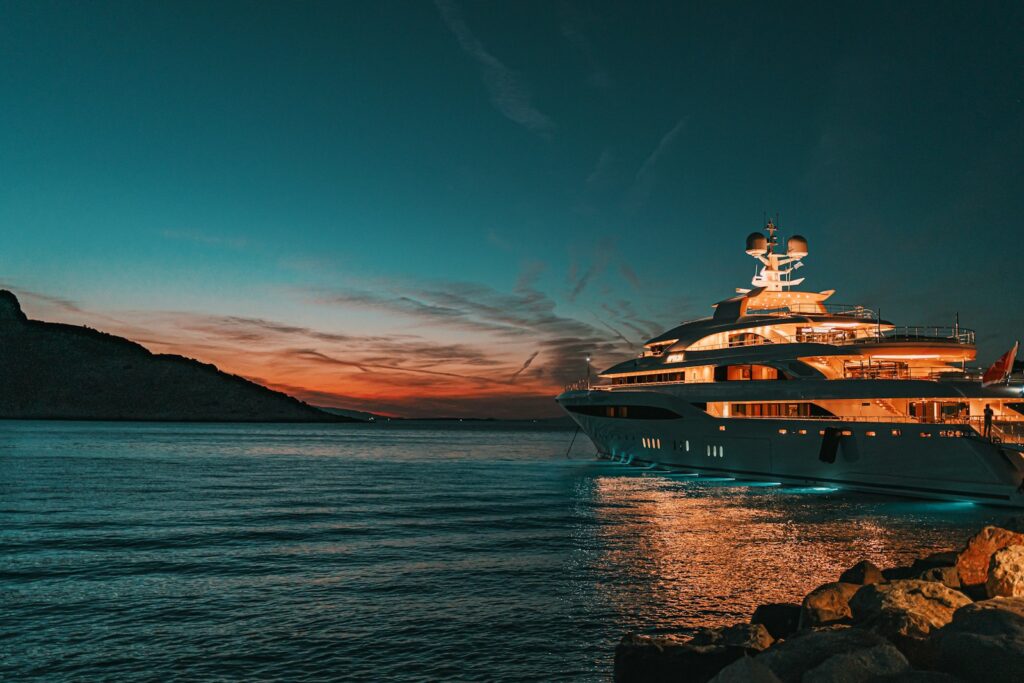
A phinisi labuan bajo charter for dive groups up to 16 guests means reserving the entire vessel under a single booking — no shared cabins with strangers, no compromised itinerary, and a crew focused entirely on your party from the moment you board at Labuan Bajo harbor. For groups of 10 or more, whole-boat charter is not simply a luxury upgrade; it is frequently the most cost-efficient way to sail Komodo National Park, often landing below the equivalent per-person rate of a premium open-trip berth once you do the cabin math honestly.
This page covers everything a group organizer needs to know before sending a charter inquiry: how large phinisi are actually configured, what the per-person math looks like at different group sizes, how dive-team logistics differ from leisure itineraries, and what corporate incentive and celebration groups should ask for that most operators won't volunteer. We present pricing as ranges because any single quoted figure is date- and vessel-specific; what you read here reflects the realistic 2026 market as we understand it.
How Whole-Boat Charter Works on a Large Phinisi
Phinisi vessels operating out of Labuan Bajo range from compact four-cabin boats of roughly 20 metres to purpose-built expedition and luxury vessels stretching 35 metres or more. The upper end of that range — the boats that can sleep 12 to 16 guests in private cabins — tend to be newer builds or recent refits, with generators sized for full air conditioning around the clock, separate crew quarters, and a dedicated dive deck or dive platform at the stern. These are not the historical village-built pinisi of Bulukumba; they are modern interpretations built with the same keel-first tropical-hardwood tradition but fitted out to a standard that international groups actually require.
When you charter the whole boat, your group controls the itinerary within the limits of Komodo National Park regulations, weather, and the captain's safety judgment. That means you decide whether the sunrise Padar hike happens on Day 1 or Day 2, whether Manta Point gets a full two-hour session or a quick snorkel pass, and whether the afternoon is spent drifting over the coral gardens at Sebayur or anchoring at the Taka Makassar sandbar for a cold-water swim. No voting. No averaging preferences across ten strangers.
Cabin Configurations on 12- to 16-Guest Vessels
Most vessels that advertise capacity for 12 to 16 passengers achieve this through a mix of cabin sizes, not a uniform layout. A typical configuration on a larger phinisi might look like this:
| Cabin type | Typical count | Guests per cabin | Common features |
|---|---|---|---|
| Master suite / owner's cabin | 1 | 2 | Private ensuite, larger bed, sometimes a porthole or deck access |
| Double cabin | 3–5 | 2 | Ensuite on luxury tier; shared facilities on mid-tier |
| Twin cabin | 2–4 | 2 | Two single beds; ensuite or semi-private depending on vessel |
| Triple / bunk cabin | 0–2 | 3 | Often on lower decks; suitable for dive-buddy groups or younger guests |
Operators advertising "up to 16" sometimes include fold-out or mattress berths on a sundeck or saloon — ask specifically whether those are enclosed sleeping spaces or open-air arrangements. For a dive team or corporate group, this distinction matters. Exhausted divers finishing three tanks by mid-afternoon need a dark, cool cabin to recover in, not a deck mattress in the afternoon heat.
The Group Cost Math: When Whole-Boat Charter Beats Open Trip
The break-even point where chartering the whole boat becomes cheaper per person than booking individual berths on a shared departure sits around 8 to 10 guests on a mid-tier vessel, and around 10 to 12 on a luxury vessel. Below that threshold, open-trip or partial-charter arrangements can make more financial sense — but they come with itinerary compromise and zero scheduling control.
To give you honest reference figures: private luxury phinisi whole-boat charters in the Labuan Bajo market currently range from roughly $1,000 to $5,000 per night for the vessel, with the upper bracket reserved for the largest and most appointed boats. A 3-night (4D3N) charter on a well-equipped 12-cabin vessel might therefore cost $6,000 to $15,000 in vessel fees before park charges. Divide that across 12 guests and you are looking at $500 to $1,250 per person for the vessel alone — a figure that is competitive with premium shared berths on the same quality of boat, and often below it when you factor in that the shared berth rarely includes all the meals, equipment, and guide services that a whole-boat charter does.
Park and conservation fees are almost always charged separately. Budget approximately IDR 600,000 to IDR 1,200,000 per person for the full Komodo National Park entry, marine, and ranger fees on a 3- to 4-night itinerary — roughly $40 to $80 per person at current exchange rates, though these figures are revised periodically and should be confirmed with your operator close to departure. Rangers are mandatory for all land treks on Komodo and Rinca islands; this is a non-negotiable park rule, not an upsell.
What a Private Phinisi Charter Labuan Bajo for Groups Up to 12 Typically Includes
Inclusions vary by operator, but a well-constructed private phinisi charter labuan bajo for groups up to 12 should cover at minimum: all meals prepared by an onboard chef, drinking water and soft beverages, fuel, basic snorkel equipment for non-diving guests, a bilingual guide or cruise director, and transfers between your Labuan Bajo hotel and the boat. Alcohol, premium dive equipment, nitrox fills, underwater photography services, and gratuities for the crew are almost always additional. Ask for an itemised inclusions list in writing before signing any charter agreement.
Dive Group Logistics: What Changes When You're a Team
I've planned and led a lot of dive departures out of Labuan Bajo, and the biggest practical gap between a leisure group and a dive team is timing. Komodo's currents are tidal and site-specific, which means the difference between a brilliant drift dive at Castle Rock and a washing-machine experience nobody wants is sometimes a 45-minute window. When your group has 10 or 12 divers, getting everyone into the water on schedule requires a dive operation that functions like clockwork: gear rigged the night before, tanks filled and numbered, buddy pairs confirmed, briefing done at anchor before the tender run.
A phinisi configured for dive groups will have some combination of the following: a stern dive platform or swim ladder with easy giant-stride entry, a compressor (and ideally Nitrox capability), a rinse station, a drying rack, personal tank and BCD storage, and a tender large enough to run two or three dives simultaneously. Not every vessel marketed as "dive-capable" has all of these. Specifically ask about tender capacity relative to your group size — if there is only one small tender, getting 12 divers to and from the dive site in rotating groups eats into bottom time and pushes your surface intervals into the heat of the day.
Dive Sites and Certification Requirements
Komodo National Park contains some of the most demanding recreational dive sites in the Indo-Pacific. The sites most commonly accessed on a phinisi liveaboard itinerary break into two tiers:
- Open Water suitable (with site conditions permitting)
- Pink Beach reef wall, Kanawa fringing reef, Sebayur Kecil, Manjarite. Shallow, generally calmer, excellent for mixed groups where some guests are newly certified or snorkelling.
- Advanced / experienced recommended
- Castle Rock, Crystal Rock, The Cauldron (Shotgun), Batu Bolong. Strong thermoclines, fast-changing current, and significant downwash risk at certain tidal windows. These sites ask for honest self-assessment, not just an Advanced card. Tatawa Besar sits in between — beautiful and manageable in the right conditions, exposed and pushy in the wrong ones.
Manta Point (Karang Makassar) deserves its own note. The mantas here are reef mantas (Mobula alfredi), and they use this site as a cleaning station — which means they circle reliably at 5 to 15 metres depth. The park code requires maintaining at least approximately 3 metres distance and prohibits chasing or swimming directly above them. For a group of 12 divers, briefing and enforcing this code is a real logistical task. Choose an operator with a guide who takes it seriously; a feeding frenzy of fins above a manta costs everyone, including the manta.
Nitrox availability varies by vessel. If your group includes divers planning multiple days of three-tank profiles, nitrox is worth specifically negotiating into the charter agreement rather than assuming it will be available.
The Whole-Boat Dive Charter Advantage
On an open-trip liveaboard, dive schedules are fixed to the slowest or most cautious guest. On a whole-boat phinisi charter large group Komodo configuration, your dive leader sets the sites and timing based on your team's actual certification levels and the current tide tables. If six divers in your group want a night dive at a reef off Komodo Island and six prefer to stay aboard, that conversation happens within your group — not with a trip leader managing conflicting expectations from 20 strangers. That is a qualitative difference that experienced divers understand immediately.
Corporate Incentive Trips: Labuan Bajo Luxury Phinisi at Scale
Labuan bajo luxury phinisi for corporate incentive trips occupies a distinctive niche in the regional meetings-incentives-conferences-events market. The experience is genuinely difficult to replicate: a floating private venue, moving between UNESCO World Heritage landscapes, with food and drink at whatever standard your budget dictates. A company that rewards its top performers with four nights on a private phinisi in Komodo is not competing with Singapore hotel packages — it is offering something categorically different.
Corporate groups typically ask for things that leisure groups do not: a defined daily schedule with agenda flexibility, reliable mobile and satellite connectivity (variable by location in the park — be honest with your team about this), branded collateral or welcome gifts, professional photography or videography, and dietary accommodation for diverse teams. Not every phinisi operator handles corporate logistics fluently. When evaluating vessels for a corporate group, probe specifically for prior corporate charter experience and ask for references; a boat that excels at honeymooners may not have the organizational infrastructure for a team of 14 executives.
The labuan bajo luxury phinisi for corporate incentive trips bracket also tends toward the higher end of the nightly rate range — vessels in the $3,000 to $5,000-per-night tier and above, where crew-to-guest ratios are higher, service is more structured, and the onboard chef can manage multi-course menus for groups rather than bulk family-style service. Budget the vessel at $12,000 to $20,000 for a 4D3N charter at this level, park fees additional. That figure looks large until you divide it across 14 participants — at which point it sits favorably against business-class flights plus a luxury resort stay in most Southeast Asian cities.
What to Ask About Connectivity
Komodo National Park is a Marine Protected Area and a UNESCO World Heritage Site. Mobile signal is intermittent across the island group; Labuan Bajo town has reasonable 4G coverage, but once you are sailing into the park interior, connectivity drops significantly. Some larger luxury phinisi carry Starlink or equivalent satellite broadband; most do not, or offer it only in anchor mode. For corporate groups that need reliable video calls, this is a non-starter to overlook. Ask the operator specifically: does the vessel carry satellite internet? What is the real-world performance at anchor near Komodo Island or Rinca? If connectivity is mission-critical, consider building a pre-departure or post-return buffer day in Labuan Bajo for anything time-sensitive.
Celebration Trips: Bachelor and Bachelorette Parties on a Phinisi
A phinisi labuan bajo for bachelor or bachelorette party is an increasingly popular format, and for good reason. The vessel is your venue, your hotel, and your activity platform simultaneously. You are not coordinating across multiple bookings or worrying about who has to leave the restaurant to check into the hotel. The group stays together, moves together, and the sunset happens from the same deck every evening.
For celebration groups, the itinerary flexibility that comes with whole-boat charter pays particular dividends. The sunset at Kalong Island — where a colony estimated in the thousands of flying foxes streams overhead as the sun drops — is a moment that lands differently when you have a cold drink on the bow and no agenda after it. The Taka Makassar sandbar, a crescent of white sand that barely clears the waterline at high tide, is a natural party platform that photographs in a way no rooftop bar ever will.
Practical notes for celebration organizers: alcohol is not included in standard charters and must be arranged separately — work with your operator on how much to provision given no resupply is possible in the park. Noise rules at certain anchorages exist to protect the marine environment and other vessels; a reputable operator will brief you on these. Fireworks are prohibited inside the National Park boundaries. And yes, the sunrises at Padar are genuinely worth waking at 4:30 a.m. for, even the morning after a celebration dinner.
Group Charter Planning: Practical Timeline and Process
The most common mistake groups make is starting the inquiry process too late. High season in Komodo National Park runs roughly May through October, with July, August, and the Christmas–New Year window consistently selling out the best vessels six months or more in advance. If your group has fixed dates — a company trip timed to a financial year-end, a birthday milestone, a wedding party that needs the week of a specific ceremony — get your inquiry in early.
A group charter inquiry should include: your preferred dates (with at least one alternative window), total guest count and the approximate mix of divers versus non-divers, budget range per person or for the whole boat, any specific dietary requirements or accessibility needs, and the nature of the trip (celebration, dive-focused, leisure, corporate). The more specific you are upfront, the faster an operator can give you a meaningful proposal rather than a generic brochure.
If you have a dive team where certification levels vary significantly — say, six Advanced divers and four Open Water guests alongside two non-divers — flag this in your initial inquiry. The right vessel and itinerary for that group is different from a homogenous Advanced team, and a good operator will design accordingly rather than defaulting to the standard route.
Want help structuring a group charter proposal? Our concierge knows the Labuan Bajo charter fleet and can match your group profile to the right vessel tier and itinerary. Plan your charter with us, or reach out via WhatsApp for a faster back-and-forth on availability and vessel specs — we find that the detailed questions a group organizer needs answered move much faster in a real conversation than over email.
Choosing the Right Vessel for Your Group
A few principles that hold regardless of group type:
Prioritize crew-to-guest ratio over boat length. A 35-metre vessel with four crew members and 14 guests is less comfortable than a 28-metre vessel with eight crew and 10 guests. Ask for the full crew manifest: captain, first mate, deckhands, chef, dining service staff, dive guide if applicable. On a luxury charter, a ratio of roughly one crew member per guest is a reasonable benchmark.
Generator capacity matters at anchor. If 14 guests all want hot showers in the morning and air conditioning through the night, a single small generator will not keep up. Larger vessels should carry a primary and backup generator; ask specifically.
Tender logistics for diving groups. A group of 14 divers needs a tender large enough to run full groups, or two tenders, or an operator willing to anchor close to the site rather than mooring at distance. Clarify this before you sign.
Seasickness reality for large groups. Komodo's sea conditions vary. The passages between islands — particularly the crossing between Labuan Bajo and the southern park — can be rough in any season when wind and current oppose each other. At least some members of any large group will feel it. A vessel with a lower centre of gravity and a wider beam handles chop more gracefully than a tall, narrow boat. Ask your operator about the vessel's sea-keeping qualities, not just its aesthetics.
Seasons and Group Charter Strategy
Group organizers should understand the seasonal tradeoffs more concretely than the standard "April to October is best" advice conveys.
July and August offer the best underwater visibility — up to 20 to 30 metres at the top dive sites — and the most consistent surface conditions. They are also the most congested months in the park. Manta Point on a peak-season morning can have 15 or 20 tenders from different phinisi all circling the same cleaning station. For leisure groups this is manageable; for a dive team that wants extended time at Castle Rock undisturbed, it is worth discussing with your operator whether an early morning first-entry window is possible.
May, June, and October offer a genuine sweet spot: similar conditions to peak season, meaningfully fewer boats at popular sites, and often slightly lower charter rates. For corporate groups and celebration parties where the experience quality matters as much as the bragging rights of a specific month, this window deserves serious consideration.
Manta rays are present year-round but show stronger aggregations at Manta Point roughly from May through September, with a second reliable pulse through November. The water temperature in the central and southern park drops to around 24 to 27°C due to cold upwellings that drive the plankton mantas feed on — bring a 3mm wetsuit at minimum, and a 5mm if your group includes guests who run cold.
Conservation and Group Responsibility
Komodo National Park is both a UNESCO World Heritage Site and one of the more intensively visited Marine Protected Areas in Indonesia. Large groups have proportionally larger impacts, and it is worth being deliberate about this. The park's conservation fees — built into the entry charges — support ranger operations and habitat management. Beyond fees, responsible group conduct means: no anchor drops on coral (insist your vessel uses mooring buoys where provided), no collection of shells or coral fragments from the park, and genuine compliance with the manta-ray and Komodo-dragon interaction codes rather than performative compliance.
A group of 14 people at Rinca Island's Loh Buaya ranger station is a significant presence in a relatively small area. Rangers will brief your group before the trek; listen to them, not just because it is the rule but because a Komodo dragon covering ground at speed toward a distracted group is not a theoretical risk. Keep together, follow your ranger, and resist the temptation to drift toward any dragon you see off the main path.
Ready to start planning? Plan your charter with our team, or drop us a WhatsApp message — we work with group organizers across dive teams, corporate incentive planners, and celebration parties, and we will give you honest guidance on which vessels and operators are actually configured for the size and type of trip you have in mind.
Frequently Asked Questions
At what group size does a whole-boat phinisi charter become cheaper per person than open-trip berths in Labuan Bajo?
The break-even point depends on the vessel tier, but as a general rule, groups of 8 or more on a mid-tier vessel and 10 or more on a luxury vessel typically find that whole-boat charter costs the same or less per person than equivalent-quality open-trip berths — and delivers full itinerary control, no shared spaces with strangers, and crew focused entirely on your group. For groups of 12 or more, private charter is almost always the better value once you account for inclusions.
Do dive groups need any special permits beyond the standard Komodo National Park entry fee?
The standard park fee structure covers both diving and snorkeling; there is no separate diver-specific permit at the national level. However, diving requires Open Water certification at minimum (Advanced is recommended for the stronger-current sites like Castle Rock and The Cauldron), and park rules require that certification cards be available for inspection. Permit and fee arrangements are typically handled by your operator; confirm this is included in your charter agreement and ask for receipts. Ranger and guide fees for land treks on Komodo and Rinca are also part of the park fee structure and are mandatory — not optional.
What is a realistic all-in budget for a corporate incentive group of 14 guests on a 4-night phinisi charter in Labuan Bajo?
For a properly equipped luxury vessel at the corporate-appropriate tier — full air conditioning, high crew-to-guest ratio, onboard chef, dedicated guide — budget $3,000 to $5,000 per night for the vessel, giving a 4-night charter cost of $12,000 to $20,000. Add park and conservation fees of approximately $40 to $80 per person for the trip, alcohol provisioning if desired, professional photography, and pre- and post-charter hotel nights in Labuan Bajo. Divided across 14 guests, the total falls in the range of roughly $1,000 to $1,600 per person for the charter itself, exclusive of flights and Labuan Bajo accommodation. Flights from Bali (Denpasar/Ngurah Rai) to Labuan Bajo run approximately 1 hour 10 minutes to 1 hour 25 minutes on Garuda, Wings Air, or Batik Air, typically booked separately.
Can a phinisi accommodate guests who do not dive on a dive-group charter?
Yes, and this is a common configuration on whole-boat dive charters. Non-diving guests snorkel the same sites — most Komodo reefs are excellent from the surface — hike Padar and the dragon sites, kayak, and enjoy the land and sunset stops that form the rhythm of the itinerary. The main practical consideration is snorkel equipment: confirm this is included for non-divers, and ask whether a safety float or tow-line is available for guests less confident in open water. A good cruise director will make sure non-divers have a full, engaging program running parallel to the dive schedule rather than simply waiting on deck.
How far in advance should a large group book a private phinisi charter in Labuan Bajo?
For peak season dates (July, August, Christmas–New Year), the best vessels at the 12- to 16-guest capacity tend to fill 6 months or more in advance, particularly for groups with fixed dates. For shoulder season (May–June, October), 2 to 4 months is generally sufficient for most vessels, though exceptional boats book quickly regardless of season. For corporate groups where the dates are driven by company calendars, the earlier the inquiry the better — even if final numbers are not confirmed, getting a provisional hold on the right vessel before the date is committed to the wider team avoids the situation where your preferred boat is unavailable when you actually commit. A refundable deposit arrangement is standard; confirm cancellation terms in writing before paying.