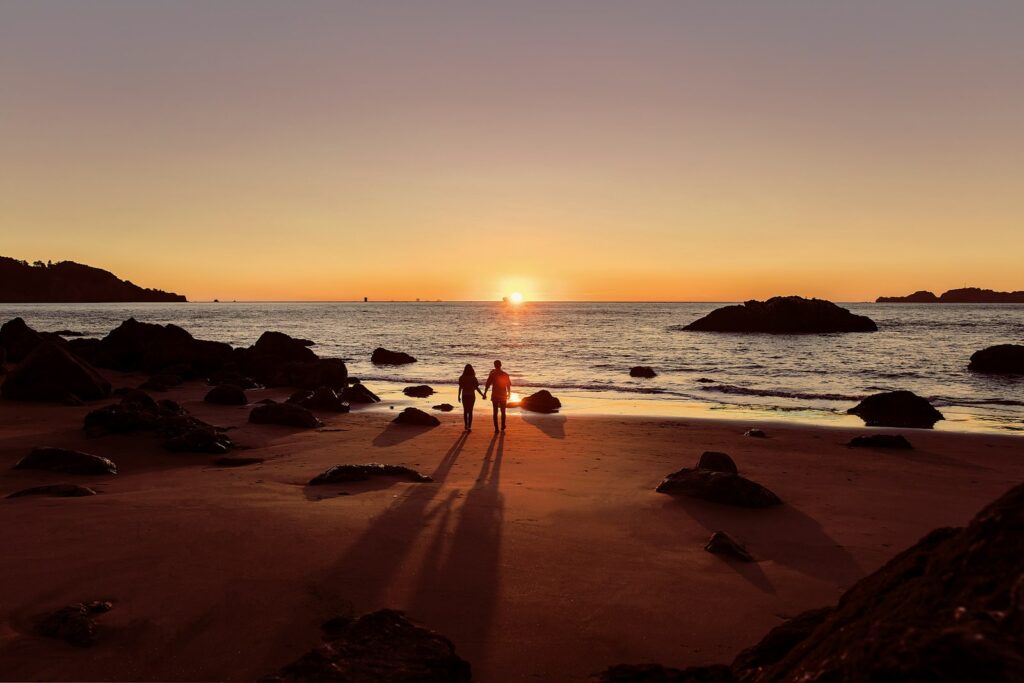
A Labuan Bajo phinisi honeymoon is a fully private charter of a traditional Indonesian wooden sailing vessel through Komodo National Park — a UNESCO World Heritage Marine Protected Area — where a couple occupies the entire boat, often sleeping in a master or honeymoon suite with a private balcony or deck, while a dedicated crew handles every detail from route-planning to candlelit dinners over open water. No other honeymoon format in Southeast Asia quite matches this combination: total seclusion, dramatic landscapes, and the quiet intimacy of waking up to a different anchorage each morning.
We have spent time aboard boats across this range, from stripped-down open-trip phinisi carrying a dozen strangers to purpose-built expedition yachts with fewer than eight guests and a crew of twelve. For couples, the differences matter enormously. This guide explains what separates a genuinely romantic private charter from a generic liveaboard, what to insist on, what to question, and how to read between the lines when an operator markets their boat as “perfect for honeymooners.”
Why Komodo National Park Works So Well for a Honeymoon
The geography is the point. Komodo National Park covers roughly 1,700 square kilometres of sea, islands, and reef — most of it accessible only by boat. There are no roads between islands, no resort corridors, no beach clubs drawing crowds to the same strip of sand every afternoon. A private phinisi is effectively a floating villa that moves. The crew anchors where the wind and tide suggest, not where tour buses deposit their passengers.
From the right vessel at the right time of year, a couple can have Pink Beach entirely to themselves before 7 a.m. — the famous Foraminifera-tinted shore on Komodo Island, where tiny red-pigmented shells of marine organisms blend with white sand to produce that blush-pink colour. By mid-morning the day-trippers arrive by speedboat. On a private phinisi you are already gone, circling up the coast toward a cleaning station where reef manta rays with wingspans approaching five metres spiral at shallow depth, completely indifferent to two humans hovering at ten metres below the surface.
The anchorages define the experience. Kalong Island at dusk produces a spectacle that no photographer fully captures: thousands of Whalberg’s fruit bats lifting off the mangroves into a bruised-orange sky as the boat sits still on glassy water. Taka Makassar — the crescent sandbar in the centre of the park — nearly disappears at high tide and reappears at low tide as a white ribbon you can walk end-to-end in under a minute. These are the moments that end up burned into a couple’s memory. They happen because a private charter gives you the schedule and the silence to be there for them.
The Honest Case for Private Charter Over Open Trip
Open trips are cheaper per person. That’s the whole of their advantage for a honeymoon. You will share the boat — typically with eight to twelve strangers — share the deck space, share meal times, and share whatever ambient noise comes with communal living at sea. Some open-trip couples enjoy the social energy. Most honeymooners do not.
On a private romantic phinisi Labuan Bajo charter, the itinerary is yours. You decide whether to linger at Manta Point for an extra hour or skip the Padar sunrise hike and sleep in. The chef adjusts the menu around your preferences. The crew’s attention is not divided among a group with competing priorities. The cost premium is real — see the pricing section below — but for couples who are pooling honeymoon travel budgets, the math often works out closer than it appears when you price it per person rather than per boat.
What Makes a Phinisi Genuinely Honeymoon-Ready
Not every boat that accepts a honeymoon booking is well-suited to one. Here is what we look for when vetting a vessel specifically for couples.
The Master Cabin and Private Balcony Question
Most luxury phinisi have four to seven cabins. The master or owner’s cabin is typically on the upper deck — larger floor area, its own en-suite bathroom with a hot shower, and on the best boats, a set of sliding or folding doors that open directly onto a private deck or balcony over the stern. This is the labuan bajo phinisi honeymoon suite with private balcony that couples ask about most often.
The practical difference matters. A stern balcony means morning coffee with a view of the anchorage without leaving your room, and evenings watching the islands go dark with genuine privacy. Lower-deck cabins — even comfortable, air-conditioned ones with en-suite bathrooms — do not replicate this. When assessing a boat, ask the operator to specify whether the master cabin’s private deck is accessible only from that cabin or whether crew also use it for operations. On some boats, what is marketed as a “private terrace” is in practice a crew pathway. Verify with photos, ideally a short video walkthrough.
Air-conditioning is standard on mid-range and above phinisi, but performance varies. Wooden hull construction absorbs heat differently from fibreglass, and older units cycle on generators that cut off at anchor to preserve fuel. Ask whether the AC runs overnight when the boat is stationary — for a honeymoon cabin, uninterrupted cool air is not a luxury, it’s a sleep requirement in this climate.
Deck Space and Privacy Architecture
A romantic charter on a small boat rented exclusively by two people still has five to ten crew members aboard. The better operators design their boats so that crew movement stays below decks or forward of the mast, leaving the aft sun deck and dining area as a genuinely couple-private space during leisure hours. This matters more than most travelers anticipate until they are on the boat.
Look for a vessel with a separate crew quarters entry, a defined “guest zone” on deck, and a shaded outdoor dining area that is not the same table where crew eat and prep. The best boats have a covered aft lounge — cushioned, shaded, with unobstructed sea views — plus a sun deck above for lying out. Both should feel removed from engine noise and galley activity.
The Chef and the Private Dinner
Onboard dining is a defining part of the phinisi honeymoon experience and one of the areas where quality diverges most sharply between boats. Every phinisi from budget to luxury carries a cook. On a mid-range open-trip boat, that typically means a rotating menu of grilled fish, rice, and vegetables — competent, fresh, filling. On a higher-tier private charter, the chef is a genuine professional who can execute a multi-course dinner, accommodates dietary requirements without grumbling, and can compose a labuan bajo phinisi sunset dinner cruise for special occasions that actually feels special: tablecloth, candle, sequenced courses, the right soundtrack of nothing but water.
For honeymoons, request — in writing before you book — that the boat can arrange a private deck dinner on at least one evening of your charter. Most operators at the mid-luxury tier and above will do this as a matter of course. Budget boats may technically agree but lack the kitchen equipment or crew skill to execute it properly. Ask for photographs of previous private dinners on that specific vessel. If an operator cannot provide any, that tells you something.
Kayaks, Paddleboards, and the Tender
Romantic anchorages are most enjoyable when you can explore them without asking a deckhand to drive the tender every time you want to move. Boats that carry a two-person kayak allow couples to paddle to a nearby beach or snorkeling spot independently. Paddleboards are better suited to calm bays. Some higher-end phinisi carry semi-rigid inflatables (RIBs) that the crew operates as a water taxi — useful for dragon trekking on Komodo or Rinca Island, where all visitors must be accompanied by official park rangers on land.
Check whether the gear inventory on your shortlisted boat includes snorkel equipment for two, a kayak or paddleboard, and whether the tender is adequate for the anchorage depths you’ll be using. At Kanawa Island, for instance, the reef starts at one to two metres from the beach and drops gently to five or ten metres — ideal for independent snorkeling without a zodiac. But at deeper-entry sites, a working tender is how you access the water.
Planning a Sunset Proposal on Phinisi Labuan Bajo
The setting does most of the work. Komodo sunsets — Padar’s hilltop silhouette at the last light of the day, or the wide open ocean west of the park with nothing between you and the horizon — are the kind of visuals that make a proposal unforgettable regardless of how elaborate the staging. That said, coordination with your crew turns a beautiful moment into a perfect one.
The standard Kalong Island stop on a 3-night itinerary is specifically timed for sunset, when the flying-fox colony departs the mangroves en masse. The light between about 17:30 and 18:15 WITA during dry season (April through October) is exceptional — warm, low, and diffused. The boat is stationary in calm water. If you have communicated to your captain in advance that this is the evening, the crew can set the aft deck with flowers, chill a bottle you have brought aboard, and position the boat for the best angle. They have done it before. They will be discreet.
For a sunset proposal on phinisi labuan bajo that involves a photographer, the logistics require more planning. Drone photography is subject to park regulations and requires prior permitting — your operator must arrange this; do not assume it is included or permitted ad hoc. An underwater videographer for a snorkeling-session proposal is a different category; some boats work with established freelance photographers in Labuan Bajo who can join as a day addition. Confirm costs, insurance, and permit requirements with the operator well before travel.
Practical sequence for a proposal on a private charter: communicate to the captain via WhatsApp before departure day, not on the boat (the partner is listening). Specify which anchorage you prefer and which evening. Confirm what they can provide — flowers, cake, Champagne or local sparkling wine — and what you need to bring. The best captains treat this with the same professionalism they bring to tides and navigation: they will confirm the weather window, adjust the approach time, and not leave you guessing.
Choosing Your Itinerary: 3D2N vs 4D3N for Honeymooners
Most private charters in Komodo run on 3-night/2-day or 4-night/3-day formats. The 3D2N is the most common booking because it fits the standard Bali-to-Labuan Bajo flight schedule (roughly 1h10–1h25 each direction, Garuda, Wings Air, Lion Air, Batik Air, and Citilink cover the route). You fly in the morning, board by late afternoon, and return to the harbour on Day 3 in time for a mid-afternoon flight.
For a honeymoon, we recommend the 4D3N if the budget allows. The extra night produces a qualitatively different trip. The 3D2N schedule is tight — to cover Padar, Komodo or Rinca, Pink Beach, Manta Point, and Taka Makassar within two full days, you move at a pace that leaves little time to simply stay somewhere beautiful without any agenda. The 4D3N absorbs that same route with a slower rhythm, adds a morning at Kelor Island or Kanawa’s house reef, and gives the captain weather flexibility that matters more than most travelers appreciate: if the southerly swell picks up on Day 2, a 4D3N itinerary can hold a calmer anchorage overnight and adjust rather than rushing through rough water to make a schedule.
For special occasions — anniversaries, milestone birthdays, a vow renewal — the 4D3N or a custom 5D4N is where the experience expands into something genuinely memorable rather than a well-executed highlights tour.
- 2D1N
- Minimum format, compressed highlights only. Not recommended for a honeymoon — too rushed, too little overnight time at anchor.
- 3D2N
- Most popular. Covers Padar, Komodo or Rinca, Pink Beach, Manta Point, Kalong sunset. Adequate for a honeymoon if budget is the primary constraint.
- 4D3N
- Recommended for honeymooners. Adds one extra anchorage, reduces daily pace, allows weather flexibility. Better balance of highlights and rest.
- 5D4N or longer
- Ideal for vow renewals or extended anniversaries. Opens access to northern Komodo reefs, Banta Island, and optional Lombok–Komodo crossing for couples who want the full arc of the Lesser Sundas.
Seasons and Timing for a Romantic Phinisi Charter
The dry season runs from approximately April through October, with the core window of May through October offering calm seas, visibility of 20 to 30 metres underwater, and reliable sunny weather. July through September is peak: boats fill up months in advance, prices are at their highest, and popular anchorages — especially Pink Beach by mid-morning — see real crowds from the open-trip fleet. For a honeymoon where seclusion matters, May, June, and October are the sweet spots. The water is clear, the seas are calm, and the park is significantly quieter.
Manta rays are resident in Komodo year-round, with the strongest concentration from roughly May through September, when upwellings bring cold, nutrient-rich water to the southern sites including Manta Point (Karang Makassar). Water temperatures in the central and southern park during this period can drop to 24–27°C — cold by tropical standards, and the reason a wetsuit matters even for snorkelers. Northern Komodo sites, including areas near Kanawa and Banta, stay warmer at 27–29°C, which suits couples who prefer casual snorkeling over thermocline diving.
The wet season from December through March brings rougher seas, reduced visibility, and in January–February, conditions that make a romantic overnight passage genuinely uncomfortable. Some operators reduce sailings during these months. A honeymoon booked in January or February on a private phinisi is a real risk, not a quirky off-season adventure — we have seen enough wet-season charters cut short by weather to say plainly: book dry season.
Pricing: What a Honeymoon Phinisi Charter Costs in 2026
Private whole-boat charter rates for a couple (the crew sails for you regardless of how many guests are aboard) span a wide range. The following brackets reflect 2026 market conditions and are illustrative ranges, not fixed prices — actual rates depend on the specific vessel, season, inclusions, and negotiated terms. Always request a full written quote.
| Tier | Nightly Rate (Private Charter) | What You Get | Notes |
|---|---|---|---|
| Standard / Budget | ~$1,000–1,800 / night | Private charter of an older or smaller phinisi; shared-style cabins; basic meals; limited deck space | Suits couples on a tighter budget; privacy from strangers, but fewer honeymoon amenities; verify AC reliability |
| Mid-Range / Deluxe | ~$1,800–3,000 / night | Ensuite master cabin; dedicated sun deck; professional chef; snorkel gear; kayak; tender | The most common tier for international honeymoon couples; good value if vetted carefully |
| Luxury | ~$3,000–5,000+ / night | Master suite with private balcony; high crew-to-guest ratio; full private deck dinners; premium sound and lighting systems; Nitrox if diving | Best for honeymoons where the boat is a centrepiece, not just transport |
| Ultra-Luxury / Expedition Phinisi | ~$10,000–25,000+ / night | Named expedition yachts (e.g. Aliikai, Lamima category); bespoke itineraries; gourmet kitchen; satellite connectivity; dedicated concierge | Quote-only; price varies by season and configuration; not publicly fixed |
What is almost always excluded: Komodo National Park entrance fees and ranger charges, which you pay as a separate cash component. Practical budget for a 3D2N to 4D3N charter: approximately IDR 600,000 to 1,200,000 per person for park and ranger fees — roughly $40–80 USD per person at current rates, though fee structures are periodically revised by the park authority and should be confirmed closer to travel. Fuel surcharges and alcohol are also commonly excluded; verify in your charter contract.
For couples booking at the mid-range tier, compare the per-person cost of a private charter against a shared open-trip cabin. On a four-cabin boat where you are paying for the entire vessel, the premium over two open-trip berths is often less than people assume — and the difference in experience is not marginal.
If you are ready to start matching boats to your dates, plan your charter with our concierge. We pre-vet vessels specifically for honeymoon suitability and can shortlist options across tiers with honest notes on what each boat does and does not do well.
A Shortlist Checklist for Couple-Focused Boats
Use this as a starting framework when evaluating any boat an operator proposes for a honeymoon charter. These are the questions we ask before endorsing a vessel to couples.
- Master cabin location: Upper deck, with private exterior access? Or mid-ship / lower deck?
- Private balcony or stern deck: Is it exclusive to the master cabin, or do crew pass through?
- AC operation: Does it run overnight at anchor, or only when the engine is running?
- En-suite bathroom: Hot water, functional drainage, adequate ventilation for a humid climate?
- Deck privacy architecture: Is there a defined guest zone separate from crew movement?
- Private dinner service: Has the operator provided photographs of a previous private dinner on this boat?
- Chef skill level: Can they accommodate your dietary restrictions (ask for a sample menu)?
- Crew language: Does at least one crew member speak fluent English (or your language) for the entire charter?
- Safety equipment: Life jackets, fire extinguishers, EPIRB, first aid kit — confirm these are present and current.
- Noise at anchor: Generator noise in the master cabin is a common complaint; ask whether the generator runs overnight or whether the boat switches to shore power or solar.
- Past honeymoon guests: Can the operator share recent feedback specifically from couples? Not generic reviews — couple-specific.
Romantic Anchorages Worth Requesting
Itineraries on private charters are negotiable. A competent captain will adjust the route based on wind, tide, and what you want. These are the anchorages we recommend couples specifically request.
Taka Makassar (Tidal Sandbar)
The crescent sandbar that sits in the middle of the park is purely photogenic and purely quiet. At low tide, the white arc of sand appears from the sea like something imagined. At high tide it vanishes. The timing is tide-dependent and specific to the day of your charter — a good captain will plan the schedule around it. Two people and a bottle of wine on this sandbar at low tide, with the boat anchored thirty metres off, is a reasonable definition of private.
Kelor Island
Close to Labuan Bajo — roughly a short sail from the harbour — Kelor is a small island with a steep hill and a ten-to-fifteen-minute hike to a viewpoint over the bay. It is calm enough for overnight anchoring in fair weather and makes an excellent first-night stop before heading deeper into the park. The reef starts immediately off the beach. For couples who want a gentle introduction to snorkeling before tackling the stronger currents at Manta Point, Kelor is right.
Kalong Island at Sunset
We have mentioned this already because it is genuinely worth singling out for a honeymoon itinerary. The spectacle of the bat exodus is consistent and reliable in dry season. The light during the departure is unusually warm. The boat stays still in calm water. This is the evening to arrange the private deck dinner, after the bats have cleared and before full dark — the transition from golden light to stars over open water, with the archipelago silhouetted on the horizon, is the kind of scene that makes other honeymoon venues feel overdressed.
Kanawa Island
About ten to fifteen kilometres from Labuan Bajo, Kanawa has a shallow house reef running from one to two metres off the beach down to five to ten metres. There is a small resort on the island, which means the beach is occasionally used by day visitors, but at the right time — early morning or late afternoon — it is largely empty. The snorkeling is accessible without current; no certification required, no specialist equipment. For couples where one partner is less experienced in the water, Kanawa removes the anxiety and leaves only the pleasure.
Responsible Charter Practices for Honeymoon Couples
Komodo National Park operates under serious conservation rules that apply to every visitor, charter or otherwise. The reef at Manta Point functions as a cleaning station where the rays need undisturbed approach to the fish that clean their gills and skin. The convention is to keep at least approximately three metres from any manta ray, to not swim directly above them, and absolutely not to chase or intercept their line of travel. The mantas will circle past you repeatedly if you are still and calm; chase them and they leave.
On Komodo and Rinca Islands, all land trekking is conducted with official park rangers — this is mandatory, not optional. The rangers manage the route and the distance from the dragons. Komodo dragons are genuinely dangerous animals: adults reach around three metres in length and carry bacteria in their saliva that complicate wounds significantly. The ranger system works; stay within it.
For phinisi specifically: the better operators use mooring buoys at reef sites rather than dropping anchor on coral. If a boat’s crew is anchoring directly on the reef at a site that has buoys, that is a visible indicator of how the operator treats conservation obligations in general — which is relevant to the quality of everything else they do.
Reef-safe sunscreen is worth mentioning plainly: chemical sunscreens (oxybenzone and octinoxate) damage coral at measurable concentrations. Mineral-based alternatives (zinc oxide, titanium dioxide) are widely available; bring them from home, as reliable options are harder to source in Labuan Bajo.
Booking a Honeymoon Charter: Practical Steps
The best boats fill up for peak-season dates (July–September) months in advance. For a honeymoon in July or August, start conversations with operators in February or March at the latest. Off-peak honeymoon charters in May, June, or October can often be confirmed with six to eight weeks’ lead time, but availability narrows quickly for the most sought-after vessels at the luxury tier.
WhatsApp is the standard communication channel with Labuan Bajo charter operators and crew. Most confirmed bookings involve a deposit paid by bank transfer or via an international payment platform; the charter contract should specify the deposit amount, cancellation terms, and what happens in the event of a weather cancellation initiated by the captain. Read the cancellation clause carefully — policies vary significantly between operators.
Our concierge process works via WhatsApp planning: you tell us your dates, your tier preference, any non-negotiables (private balcony, no-dive trip, specific anchorages, dietary needs), and we match you to a shortlist of vetted vessels with honest notes on the tradeoffs. There is no pressure to book through us; the shortlist is genuinely useful as a vetting baseline even if you end up booking directly. Reach out to start planning your honeymoon charter — and if you can give us at least two to three months before your intended sail date, we have time to find you something worth the trip.
Frequently Asked Questions
Is a private phinisi charter worth the cost for just two people on a honeymoon?
For most honeymooners, yes. The per-person cost of a private mid-range charter split between two is often $900–1,500 per person per night — comparable to a quality resort room in Bali, but with a crew, a chef, and an itinerary that moves. The defining difference is the absence of other guests: no shared deck, no negotiated schedules, no strangers at the dinner table. If privacy is a priority for your honeymoon, the premium over an open-trip berth is money well spent. If you are primarily cost-sensitive and enjoy meeting other travelers, a well-chosen open-trip boat is a legitimate alternative — just not a honeymoon one.
What is the best time of year for a Labuan Bajo phinisi honeymoon?
May, June, and October offer the best combination of calm seas, clear water (visibility 20–30 metres), and fewer crowds than peak July–August. The manta ray concentration at Manta Point is strong through this period. If your dates are fixed in July or August, book well in advance — private charter availability at the luxury tier is limited. Avoid January and February: the wet season brings rough seas, reduced visibility, and some operators suspend sailings during the worst weeks.
Can we arrange a sunset proposal on a phinisi, and what does it involve?
Yes, and the logistics are straightforward on a private charter. Communicate with the captain in advance — before your partner is on the boat — specifying the evening and the anchorage you prefer. Kalong Island at sunset during dry season is the most consistently used setting: flat water, dramatic bat-colony exodus, exceptional light. The crew will set the deck, arrange flowers, and chill whatever you bring aboard. For professional photography or drone footage, coordinate separately: drone use in the park requires permits arranged in advance, and a professional photographer will typically join as an additional day addition with its own cost. The proposal itself requires only calm conditions, prior communication, and a captain who has done this before — most crew who work private charters have.
Do phinisi honeymoon suites always have a private balcony?
No. The term “honeymoon suite” in phinisi marketing varies significantly. Some master cabins have a dedicated private stern deck accessible only from that cabin. Others have a sliding door that opens onto a shared aft deck where crew also move. A few boats use the phrase loosely to describe any larger cabin. Always ask the operator to confirm whether the master cabin’s exterior access is exclusive to that cabin and request a video walkthrough or recent photographs. This is the most common area where marketing language outpaces the physical reality of the boat.
What park fees should we budget for, on top of the charter rate?
Komodo National Park fees are typically excluded from charter rates and paid separately. The total for a 3D2N to 4D3N charter currently runs approximately IDR 600,000 to 1,200,000 per person — around $40–80 USD at current rates — covering park entrance, marine fee, and ranger charges for guided treks on Komodo or Rinca Islands. These fees are usually collected in cash by the operator and paid to park authorities on your behalf. Fee structures are revised periodically by the Indonesian Ministry of Environment and Forestry; confirm the current amount with your operator before departure, as the figures above reflect 2025–2026 conditions and may change.