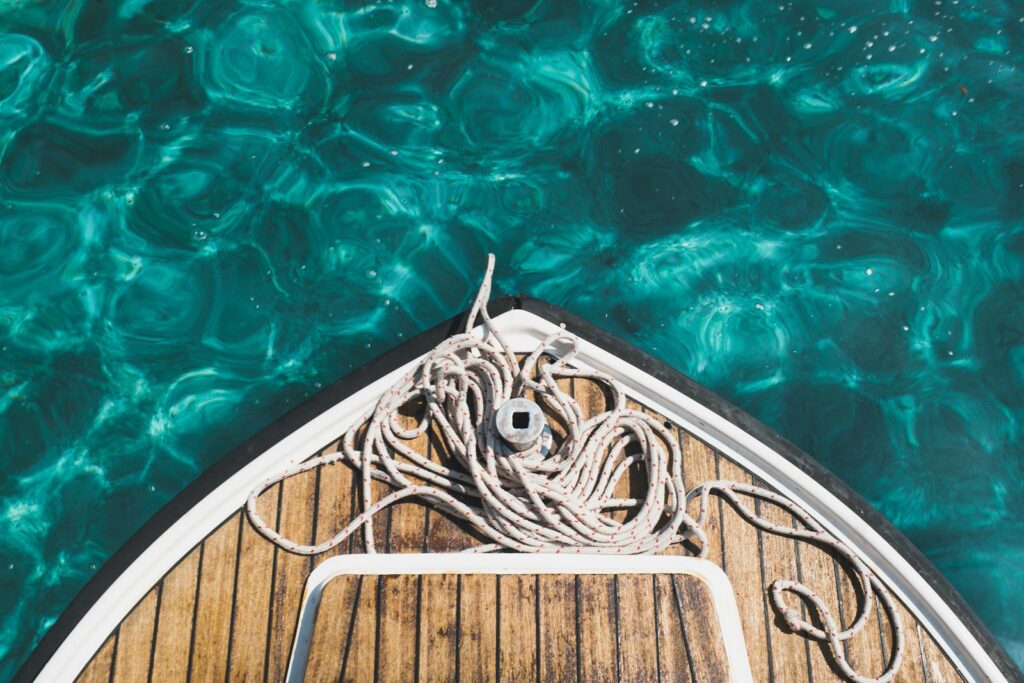
A Labuan Bajo phinisi liveaboard is a multi-day sailing trip aboard a traditional Indonesian wooden vessel — typically covering Komodo National Park’s key islands and reefs while you sleep, eat, and spend most of your waking hours on or in the water. What it is not is a cruise ship. The best way I can describe the experience to someone who has never been aboard: imagine a beautifully crafted wooden boat, somewhere between 20 and 35 metres long, staffed by a tight crew who know these waters intimately, with your day structured around tides and ranger schedules rather than a rigid timetable. That framing will set you up for everything that follows.
The Shape of a Typical Day
Most 3D2N and 4D3N itineraries follow a rhythm that has evolved around the park’s natural windows — tide heights, dragon activity periods, manta feeding schedules, and the practicalities of sharing the water with dozens of other boats in peak season. Once you understand the rhythm, each day starts to make sense on its own terms.
Pre-Dawn: The Padar Ascent
Wake-up calls on a phinisi liveaboard arrive early — often 4:30 or 5:00 a.m. on the Padar day. The boat anchors overnight near Padar Island, and the crew will have the tender ready while most of the world is still dark. The hike from the beach to the summit viewpoint covers roughly 800 steps (the commonly quoted figure; the exact count varies by path condition and season) on a trail of packed earth and loose stone. It is steep in places. Anyone with moderate fitness can do it; anyone with bad knees should move slowly and use the switchbacks.
The reason people drag themselves up in the dark is the view from the top. At first light, you see three distinct bays below you simultaneously — one with black sand, one white, one with a faint pink tinge. The panorama is as wide as anything I have seen in Southeast Asia, and it is genuinely that good. But I will be honest: on a July or August morning, you will share the summit with a lot of people. If that matters to you, book the shoulder months — May, June, or October — or ask your operator whether a departure timing tweak is possible.
Breakfast waits aboard. After the hike you will come back down to the tender, motor back to the phinisi, and find the crew laying out fruit, eggs, fresh bread, and coffee. On a quality boat, this meal is better than most hotel breakfasts in the region. The galley on a liveaboard phinisi is a cramped space, and what comes out of it consistently surprises people.
Morning: Dragon Treks on Komodo or Rinca
After breakfast, the boat moves to either Komodo Island (Loh Liang ranger station) or Rinca Island (Loh Buaya ranger station) for the dragon trek. The decision between the two usually comes down to itinerary logistics — Rinca is closer to Labuan Bajo and is typically used on shorter trips. Both islands have healthy Komodo dragon populations; the park’s total across Komodo, Rinca, Gili Motang, and Nusa Kode sits around 3,000 individuals, though counts are updated periodically.
Rangers are mandatory for all land treks. You do not wander these islands without one, and you should not want to. Komodo dragons reach roughly three metres in length and can weigh more than 70 kilograms. They are not aggressive by default, but they are ambush predators with a powerful jaw and bacteria-laced saliva. The rangers carry forked sticks and know dragon behaviour well. Follow their instructions without question.
A short trek on either island takes 45 minutes to an hour. You will almost certainly see dragons — usually resting near the ranger kitchen on Komodo, or along the mangrove boardwalk on Rinca. A medium or long trail adds another hour and covers more varied terrain. The dry season (May–October) is better for spotting: less vegetation cover, more open paths, and dragons that are slightly more active in the morning cool before the midday heat sets in.
Midday: Pink Beach and Manta Point
After the trek, the boat sails to snorkel stops — this is where the afternoon becomes something different entirely. Pink Beach (Pantai Merah, on Komodo Island’s coast) is the standard first stop. The sand’s rose tint comes from fragments of red Foraminifera shells mixed with white coral sand; it is one of only a handful of beaches like this in the world. The snorkelling directly off the beach is genuinely excellent — healthy hard corals at shallow depth, reef fish in quantity, turtles if you are patient.
Manta Point, formally Karang Makassar, comes next on many itineraries. This is a cleaning station where reef manta rays (Mobula alfredi) circle at roughly 5 to 15 metres depth, waiting for smaller cleaner fish to remove parasites. Wingspans up to 4.5 metres. The experience of swimming alongside a manta ray that is circling slowly and completely unbothered by your presence is not something words serve well. The protocol is clear: stay at least around three metres away, never swim directly above a manta, and do not chase them. They will do their circuit and often come back past you of their own accord. Respect the distance; the close passes happen naturally when you are still.
Lunch is served back aboard — typically rice, vegetables, grilled fish or chicken, and something sweet. The chef will have prepared it during the morning activities. On mid-range and luxury boats, the quality is a genuine highlight of the trip. Dietary requirements (vegetarian, allergies) should be communicated before departure; most crews handle them competently when given notice.
Afternoon: Taka Makassar, Reef Drift, and Kalong
The afternoon is looser — a second snorkel stop, some time on deck, often a visit to Taka Makassar, the tiny white sandbar that emerges fully only at low tide. The boat anchors nearby; you walk its length in a few minutes and feel the peculiar sensation of standing on sand surrounded by open sea on all sides. There are worse ways to spend an afternoon.
Kalong Island — sometimes called Bat Island — marks the end of each day’s sailing. At dusk, a large colony of Sulawesi flying foxes leaves the island in what is best described as a river of bats pouring out of the trees in a continuous dark stream. Estimates vary — the local colony is in the thousands, possibly over ten thousand individuals — and the spectacle takes fifteen to twenty minutes to pass fully. The boat anchors in the channel below; the crew serves cold drinks. It is a quiet, slightly surreal way to end a day.
Dinner comes after that. Overnight anchorage follows. The engines cut, the generator runs until around ten or eleven, and then you are left with boat sounds and stars. On a clear night in Komodo, away from any town lights, the sky is frankly excessive.
Comfort: What You Actually Get Aboard
This is where expectations most commonly diverge from reality, so I want to be precise rather than vague.
Cabins
Phinisi cabins range from small wooden bunks with a ceiling fan and a curtain for privacy (budget open-trip boats) to proper double-bed ensuite staterooms with air-conditioning, reading lights, and hot showers (mid-range and luxury vessels). The difference is real and significant. A shared open-trip cabin at the budget end of the market — roughly $100–250 per person per day — gives you a bunk, a shared bathroom, and the experience of being on a traditional vessel with 10 to 14 other strangers. A private charter on a luxury phinisi at $1,000–5,000+ per night gives you a well-appointed room you would not be embarrassed by in a boutique hotel.
Neither is inherently better. They serve different needs. But know before you book which one you are getting.
Air-Conditioning, Noise, and Sleep
Most mid-range and luxury boats run cabin AC off the generator. Generators typically run until around 10 or 11 p.m. and restart in the morning. This means your cabin will be warm in the small hours if you leave the portholes shut — or breezy and buggy if you open them. Experienced liveaboard travelers bring a light sheet, not a heavy blanket.
Engine noise is a real factor in forward or aft lower cabins on some boats. Ask about cabin placement when you book. Engine vibration is most noticeable during the longer sailing legs between islands, which typically happen in the late afternoon or early morning when you are less likely to be trying to sleep.
Connectivity
There is no reliable WiFi inside Komodo National Park. Indonesian SIM cards (Telkomsel works best in this region) get a signal near Labuan Bajo harbor and occasionally near the larger islands, but the moment you are anchored overnight in a bay between islands, you are offline. This is not a bug; most guests list it among the better parts of the trip. If you have professional obligations that require daily connectivity, schedule your phinisi days accordingly and do not book back-to-back with critical meetings.
Seasickness
The crossing from Labuan Bajo out toward Komodo passes through open water that can be choppy, particularly in the April–May and September–October transition periods when swells are inconsistent. If you are susceptible to motion sickness, take preventive medication the night before departure and again in the morning — do not wait until you feel unwell. Dramamine and similar antihistamine-based remedies work better as prevention than as treatment. Ginger tablets are a reasonable backup. Stay on the main deck during crossings rather than in the cabin.
A well-run phinisi will anchor in protected bays overnight; you will rarely feel motion at anchor. The issue is the transit sailing. On a 3D2N trip, the rough sections typically total three to four hours of sailing across the whole trip.
The Fee Structure: What Your Charter Price Does Not Include
This is the area where most first-time liveaboard guests get surprised, so a clear breakdown matters. Komodo National Park fees are almost always charged separately from the charter or open-trip price.
| Fee component | Approximate amount (IDR) | Notes |
|---|---|---|
| Park entrance (foreign visitor, weekday) | ~150,000–200,000 / day | Higher on Sundays and public holidays |
| Marine/snorkel activity fee | ~50,000–100,000 / day | Applies when entering the water in park zones |
| Ranger / trekking fee | ~50,000–100,000 pp (group charge split) | Mandatory on Komodo and Rinca; ranger assigned per group |
| Local conservation / tourism levy | Modest; varies | Collected at harbor or by operator; subject to revision |
| Practical total (3D2N / 4D3N trip) | ~600,000–1,200,000 per person | Cash; usually arranged through the boat operator |
Your operator should handle fee collection and ranger coordination — that is standard practice. What varies is whether they quote the fee in the upfront price or add it at the point of embarkation. Ask before you pay a deposit. The 2022 proposal to raise fees dramatically to a roughly IDR 3.75 million annual pass triggered protests in Labuan Bajo and was effectively postponed; the park returned to the lower prior structure, but fee schedules in Indonesia are revised by government regulation and can change with limited notice. Confirm the current figures close to your travel date.
The Crew: Who Is Running Your Trip
A well-staffed phinisi will typically have a captain, a first mate and deckhands for sailing and anchoring, a chef, a dive guide or snorkel guide, and on luxury vessels, dedicated service staff. The crew-to-guest ratio on higher-end boats is notably high — you will have more experienced eyes around you than you might expect.
Most phinisi captains working the Komodo route have spent years in these waters. They know where the mantas congregate by season, which anchorages are sheltered in a north swell, and when Taka Makassar will be above water. This local knowledge is not something a GPS map replicates. The best crews make the difference between a good trip and an exceptional one — not through scripted service, but through the kind of attentiveness that comes from genuine pride in the work.
Tipping is customary and meaningful in this industry. A reasonable range is roughly 10 to 15 percent of the total charter cost, distributed by the captain to the crew according to their roles. On open trips, something in the range of USD 5–15 per person per day is appropriate depending on service quality. Bring small-denomination rupiah; ATMs in Labuan Bajo town are accessible but the harbor area has limited options.
If you are planning your trip and want specific vessel recommendations, tailored itinerary advice, or help assessing which tier of boat genuinely suits your group, plan your charter with our concierge. We also handle WhatsApp planning for travelers who prefer a direct conversation — reach us through the contact page.
Logistics: Getting to the Boat
Labuan Bajo is served by Komodo Airport (LBJ), with direct flights from Denpasar (Ngurah Rai, Bali) taking roughly 1 hour 10 to 1 hour 25 minutes. Carriers operating the route include Garuda Indonesia, Wings Air, Lion Air, Batik Air, and Citilink, though the exact schedule changes seasonally. Most operators advise a morning arrival on Day 1 and an afternoon departure on the final day to avoid cutting time on the water.
Boarding typically happens from the main harbor (Pelabuhan Labuan Bajo) or nearby jetties in the same bay. Premium boats sometimes use a private marina. Your operator should arrange the harbor transfer; confirm this when you book. Port and departure fees are generally modest and handled by the operator.
A Word on the Season
The dry season running from roughly April through October is when the Komodo route makes the most sense: calm seas, underwater visibility reaching 20 to 30 metres at the best sites, and vegetation that is dry enough to see dragon tracks in the dust. July through September is peak season — the water is at its clearest, prices are at their highest, and some of the more iconic spots like Padar summit will be noticeably crowded by mid-morning.
May, June, and October hit a useful middle ground: conditions are nearly as good, crowds are thinner, and rates have more flexibility. The wet season, particularly January and February, brings real risk — heavy rain, short choppy swells from the northwest, and reduced park access on rougher days. Some operators stop sailing entirely in February. If your travel window falls in that period, ask specifically about weather cancellation policies before you commit.
Manta rays are resident year-round at Karang Makassar, with strong aggregation peaks roughly from May through September and again in September through November. The cool upwelling from the south in central and southern Komodo keeps water temperatures around 24 to 27°C in season at sites like Manta Point — colder than you might expect in tropical Indonesia, and the reason you will be glad you packed a rash guard.
Ready to move from research to reservation? Plan your charter with our team — we vet vessels across every tier and can match your group size, travel dates, and priorities to boats we have personally assessed. WhatsApp planning available for faster back-and-forth.
Frequently Asked Questions
How many days do I actually need on a phinisi liveaboard from Labuan Bajo?
Three days, two nights (3D2N) is the most common format and covers the core highlights — Padar sunrise, one dragon island, Pink Beach, Manta Point, and Kalong. It is enough for a first visit. Four days and three nights adds meaningful breathing room: a second snorkel site, a full-day buffer for weather, and a slower pace that actually lets you spend time in places rather than moving through them. A 2D1N trip is very compressed and best suited to travelers with a tight schedule who understand they are doing a highlights reel.
What is the difference between an open trip and a private charter phinisi?
On an open trip, you book individual cabins and share the boat with other travelers you have not met — typically 8 to 14 guests total. Costs run roughly $100–250 per person per day depending on boat quality. A private charter means your group has the entire vessel; pricing is per-boat per-night, typically $1,000–5,000+ for mid-range to luxury phinisi. The private option becomes competitive on a per-person basis once your group reaches 6 to 8 people, and it gives you full control over the itinerary, pace, and diet preferences.
Is there WiFi or mobile signal inside Komodo National Park?
No reliable WiFi exists within the park. Indonesian SIM cards (Telkomsel has the best coverage in this region) pick up a signal near Labuan Bajo harbor and occasionally near Komodo and Rinca islands, but anchorages between islands are typically offline. Plan for full disconnection from the moment you leave the harbor until you return. Most guests find this welcome after the first day.
Are Komodo National Park fees included in the charter price?
Almost never by default — they are the most consistently excluded cost in the industry. Budget approximately IDR 600,000 to 1,200,000 per person for a 3D2N or 4D3N trip, covering park entrance, marine fees, and ranger charges. Your operator should arrange collection and payment; ask specifically whether fees are bundled before you confirm your booking. Exact figures are set by the Indonesian government and are subject to revision, so verify current rates close to your travel date.
Can I snorkel at Manta Point if I am not a confident swimmer?
Yes, with caveats. Manta Point (Karang Makassar) involves surface snorkelling in open water with some current, not a sheltered lagoon. The crew will brief you on conditions and most boats carry flotation devices and will have a crew member in the water with less experienced guests. That said, if you are not comfortable in open water with some movement, discuss this with your operator before departure — some itinerary adjustments are possible, and a snorkel vest makes the experience significantly more manageable for anyone who is not a strong swimmer.