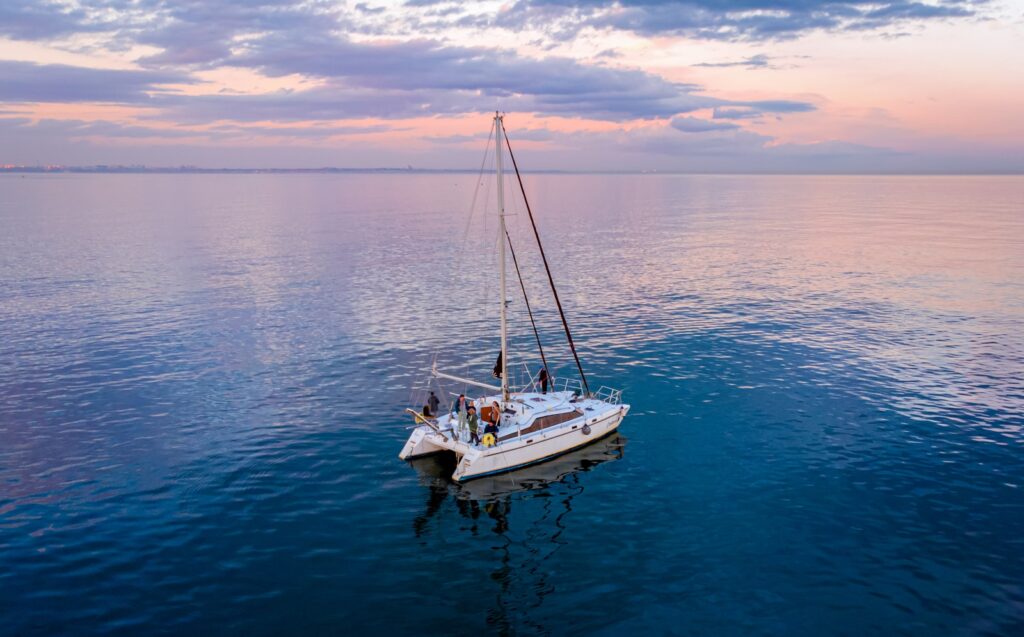
The best 5D4N phinisi liveaboard from Labuan Bajo for slow travel is a five-day, four-night voyage aboard a traditional Indonesian wooden vessel that extends beyond the standard three-night route to reach southern Komodo sites, spend genuine time underwater, and let each anchorage settle before moving on. Where a 3D2N trip rushes from dragon trek to Pink Beach to Manta Point in forty-eight hours, a 5D4N itinerary builds a buffer — two extra nights aboard — that changes the character of the trip entirely.
We’ve spent enough time on phinisi in these waters to know that the format you choose shapes what you actually experience. The boat is the same. The park is the same. The difference is pace, and pace in Komodo National Park is the difference between ticking off highlights and actually understanding a place.
What a 5D4N Itinerary Unlocks That Three Nights Cannot
Most competitive analysis of Komodo liveaboards treats the 3D2N as the default and the 5D4N as a luxury upgrade. That framing undersells what’s actually going on. The extra two days are not filler — they open access to a different tier of experience.
Southern Komodo’s Dive Sites
The well-trodden circuit — Kelor, Padar, Pink Beach, Rinca, Manta Point — fits inside three nights because those sites sit in the park’s northern and central zone, relatively close to Labuan Bajo. The sites that serious divers mention — Batu Bolong, Castle Rock, Crystal Rock, the Cauldron, Tatawa Besar — require longer sailing time south and west. On a 3D2N trip, you’d be turning around before you reached them. On a 5D4N schedule, these are a natural second-day destination.
These sites carry stronger currents. That’s partly what makes them exceptional — cold upwellings from the deeper southern channels push nutrients up, driving the plankton density that attracts reef manta rays (Mobula alfredi), schooling fish, and the macro life that photographers come back for. Water temperatures in the southern zone can run a few degrees cooler, roughly 24–27°C compared to 27–29°C in the calmer north. For divers who’ve done the northern circuit on a previous trip, the south is a genuinely different system.
A Real Manta Encounter, Not a Rushed One
Manta Point — locally known as Karang Makassar — is an extraordinary cleaning station. Reef mantas circle slowly at five to fifteen metres, presenting themselves to cleaner wrasse, paying almost no attention to careful snorkelers or divers who hold still. Wingspans of four to five metres in shallow, clear water. On a 3D2N trip, you get one slot at Manta Point, often shared with a handful of other phinisi jostling for position. Timing is everything: mantas are more active in the morning before surface heat disrupts the thermocline, and if your vessel arrives at ten in the morning because the previous stop ran long, you may get twenty minutes of drift-by sightings.
With five days, you have the flexibility to anchor nearby the previous evening, put snorkelers in the water at first light, and stay until the mantas disperse. That difference — an unhurried two-hour session versus a compressed thirty-minute pass — is the central argument for the longer format. Mantas are resident year-round here, with stronger peaks from May through September and again in October and November.
Second Sunrises and Unhurried Anchorages
The Padar Island sunrise hike is one of the most-photographed moments in Indonesia. About eight hundred steps from the beach to the summit lookout, you reach a crest overlooking three distinctly coloured bays — black sand, white sand, and pink-tinged — spread below in a single panoramic sweep. On a short itinerary, this hike happens once, before dawn on Day 2, then the schedule pulls you on. On a 5D4N trip, the captain has enough flexibility to schedule a second sunrise anchorage elsewhere — Taka Makassar, a crescent sandbar that shrinks at high tide, makes an eerie early-morning setting — or to hold position at a favourite reef rather than motor on immediately after the dive briefing.
Experienced phinisi travellers often describe this as the thing they missed most on their first (shorter) trip: the sense that the boat is visiting places rather than passing through them.
The Practical Case: Who Benefits Most from Five Days
Slow travel is a genuine travel philosophy, not a marketing phrase. It means staying long enough in each place to absorb something beyond what the guidebook says. On a phinisi, that translates to specific traveller profiles for whom the 5D4N format represents the correct choice, not just a nice-to-have.
Divers — Especially Anyone with Multi-Day Dive Plans
If you’re planning four or more dives over the trip, the 3D2N format creates an implicit tension between maximising water time and respecting the no-fly window. Most operators advise against flying within eighteen to twenty-four hours of a final dive, and many travellers fly Labuan Bajo back to Bali (about one hour ten minutes) on the last day. That constraint squeezes the actual number of comfortable dive days on a three-night trip down to two. On a 5D4N schedule, you can do serious diving across three full days, respect the surface interval requirements, and still land at Komodo Airport without feeling like you shortchanged the trip. Advanced and AOW divers targeting the current-exposed southern sites also benefit from the time buffer — if a site is running strong current on Day 3, there’s a Day 4 opportunity to revisit.
Photographers and Videographers
Light on the water changes by the hour. The same beach at 6 AM and 10 AM looks like different places. For anyone travelling with a camera — whether a DSLR rig on an underwater housing or a mirrorless on a drone — the extra two days are not about more locations but about more chances at the right light in the right conditions. Pink Beach (Pantai Merah), whose blush-tinted sand comes from red-pigmented Foraminifera shells ground into the white sand, reads completely differently in golden-hour light versus midday glare. Short trips force you to take what you get. A five-day trip gives you a second chance.
Couples, Families, and Anyone Who Finds Rushed Itineraries Exhausting
Not everyone aboard wants to be up at 4:30 AM for every sunrise hike. On a compressed schedule, missing the Padar trek means missing it entirely. On a five-day itinerary, the crew can adjust: if half the group wants an extra hour of sleep on Day 2, the sunrise hike can shift to Day 3, or replaced with a quieter dawn anchor at Kalong Island (Pulau Kalong) to watch the flying-fox colony disperse from their roost into the morning sky. Families with younger children particularly benefit from this flexibility — a sick child, or one who simply needs a calm day aboard, doesn’t derail the whole itinerary when there’s a buffer day built in.
Understanding Costs: The Real Numbers for 5D4N
Price transparency is something the charter industry broadly avoids, and it frustrates intelligent travellers. Here is what we can tell you honestly, based on current market knowledge, with the caveat that all figures are ranges — individual vessels, seasons, and cabin configurations shift final numbers.
- Shared / open-trip phinisi (per person, per day)
- Approximately $100–250 USD, depending on boat tier, cabin type, and whether park fees are bundled. A 5D4N trip in this bracket runs roughly $500–1,250 per person before fees.
- Private luxury phinisi (whole-boat charter, per night)
- Approximately $1,000–5,000 USD per night. A 5D4N private charter therefore runs in the $4,000–20,000 range for the full boat — spread across a group of eight to ten guests, per-person costs become competitive with high-end resort stays.
- Ultra-luxury superyacht phinisi
- Quote-only, from roughly $10,000 per night upward for expedition-grade vessels with ensuite cabins, onboard dive compressors, and full crew. These rates are date- and season-specific and should be confirmed directly.
- Komodo National Park fees (additional, per person)
- Budget approximately IDR 600,000–1,200,000 per person for a 4–5 day trip, covering park entrance, marine fees, and ranger charges. Foreign visitor entrance runs roughly IDR 150,000–200,000 per day; dive and snorkel fees add IDR 50,000–100,000 per day. These figures change periodically — confirm with your operator before departure. Rangers are mandatory for all land treks on Komodo and Rinca islands.
- Getting there: Labuan Bajo flights
- Denpasar (Bali) to Komodo Airport (LBJ) is roughly 1 hour 10 minutes. Carriers including Garuda, Wings Air, Lion Air, and Batik Air operate this route. Book morning arrivals for Day 1 and plan afternoon departures on Day 6 — this preserves your dive surface interval if you’re diving on Day 5.
A note on park fees: the often-cited 2022 proposal to raise the annual pass to roughly IDR 3.75 million per person (approximately $250) was effectively cancelled after protests in Labuan Bajo. The prior per-day structure remained in place as of 2024–2026. That said, fees in Indonesian national parks do revise — verify the current structure with your operator at least a month before your trip.
Planning a 5D4N voyage? Plan your charter with our concierge — we can match you to the right vessel tier for your group size and diving ambitions, and our team is reachable on WhatsApp for quick questions during the planning process.
Choosing the Right Phinisi for a 5D4N Slow-Travel Itinerary
Not every phinisi is configured for extended liveaboard use. For a five-day trip, certain features move from nice-to-have to genuinely important.
Air-Conditioned Ensuite Cabins
Five nights in a shared-bathroom lower-deck cabin with intermittent AC is a different proposition from the same in a three-night window. For couples and anyone who values sleep quality on a multi-day trip, insist on ensuite bathrooms and verify that the AC operates overnight, not just between ports. Modern luxury phinisi typically range from 20 to 35 metres in length, with four to seven cabins; larger expedition-grade vessels run longer and carry more guests. Length and cabin count are public specs — ask for them before booking.
Dive Infrastructure on Dive-Focused Trips
If the trip is structured around diving, confirm that the vessel carries a working compressor, has a dive platform or easy water entry, and can provide certified guides for southern-zone sites with stronger currents. Many higher-tier phinisi also offer Nitrox fills — useful for divers wanting to extend bottom time on multiple daily dives. This is vessel-specific; confirm explicitly rather than assuming.
Stability and Routing Flexibility
The southern Komodo corridor runs through some of Indonesia’s most dynamic tidal water. Strong currents, channel swells, and afternoon wind chop are normal. An experienced captain who knows the tide windows at each site — and who has the authority to adjust the route based on conditions — is not a luxury on a 5D4N trip. It’s the most important variable. When vetting a vessel, ask specifically about the captain’s experience on southern routes and whether the itinerary is treated as a fixed schedule or a flexible framework.
The Slow-Travel Dividend
Komodo National Park is a UNESCO World Heritage Site and Marine Protected Area. Its conservation rules exist because the ecosystems here are genuinely extraordinary — and genuinely fragile. Reef mantas circling a cleaning station at Karang Makassar have their own behaviour disrupted by overcrowded snorkel groups chasing them. Komodo dragons at Loh Liang on Komodo Island and Loh Buaya on Rinca Island — the park’s approximately 3,000 resident Varanus komodoensis, the world’s largest living lizard — are not zoo animals. They notice how you move.
A five-day itinerary naturally reduces the intensity of each stop. With more time, there’s no pressure to cram three snorkel sites into one afternoon, no incentive to ignore a ranger’s instruction because you’re already behind schedule. The conservation ethic and the slow-travel ethic align: more time means less impact per moment, not more.
The dry season window from April to October gives the clearest conditions for a 5D4N trip. May through June offers the lush, green-island version of Padar; July through September is peak season — busiest and most expensive, with the best underwater visibility of the year (20–30 metres at prime sites). October and November represent a genuine sweet spot: the crowds thin, prices ease, and the seas remain calm. January and February are the months to avoid; heavy rain, strong winds, and reduced visibility in the wet-season months make the southern route uncomfortable and sometimes impassable.
Ready to design a route that matches your pace? Reach our charter planning team — we work across vessel tiers and can advise on current captain recommendations, seasonal availability, and what to realistically expect at each site on your dates. WhatsApp is the fastest way to reach us for time-sensitive questions.
Frequently Asked Questions
How many dive sites can you realistically visit on a 5D4N phinisi from Labuan Bajo?
With three to four full dive days — allowing one day for the Padar sunrise hike and land activities on Komodo or Rinca — most groups complete eight to twelve dives, often including two to three dives per active dive day. The exact count depends on current conditions, your certification level, and whether the itinerary covers southern sites like Batu Bolong or Castle Rock, which require longer transit from Labuan Bajo than the northern circuit.
Is a 5D4N itinerary worth the extra cost compared to a 3D2N trip?
For divers, photographers, and anyone who has already done the standard short loop, the 5D4N format is a straightforward yes — the southern dive sites, the unhurried manta encounters, and the flexibility to adjust for conditions justify the premium. For first-time visitors who simply want to see the highlights and are on a fixed budget, a well-run 4D3N trip covers the core sites at a more accessible price point. The question is what you’re optimising for: efficiency or immersion.
What is the best time of year for a 5D4N phinisi liveaboard from Labuan Bajo?
May through October is the reliable window, with the dry season bringing calm seas and 20–30 metre underwater visibility at the best sites. May and June offer greener landscapes and fewer boats. July through September is peak season — expect higher prices and more vessel traffic at popular spots, offset by the best dive conditions of the year. October and November offer an excellent balance of good weather and thinner crowds. Avoid January and February if at all possible; the wet season brings strong winds and choppy seas that make the southern Komodo route genuinely uncomfortable.
Are park fees included in 5D4N phinisi charter prices?
Almost always excluded from the advertised price, and this is one of the most consistent sources of surprise costs in Komodo. Budget approximately IDR 600,000–1,200,000 per person for a five-day trip to cover park entrance fees, marine fees, and ranger charges. Your operator should itemise these clearly in the booking documentation — if they don’t, ask explicitly before signing. The ranger fee is mandatory for all land treks; rangers must accompany every guest on Komodo and Rinca islands.
Can the 5D4N itinerary be customised for non-divers?
Fully. A slow-travel 5D4N trip built around snorkelling, hiking, and sunset anchorages is a coherent and genuinely rewarding itinerary. Manta Point works beautifully from the surface — reef mantas frequently come within a few metres of snorkellers who hold still. The Padar hike, the Komodo dragon trek, Taka Makassar sandbar at low tide, and an evening at Kalong Island watching the flying-fox colony take flight all translate well to non-diving guests. The pace advantage of five days applies equally: more time at each site, less pressure, more genuine engagement with what the park actually offers.