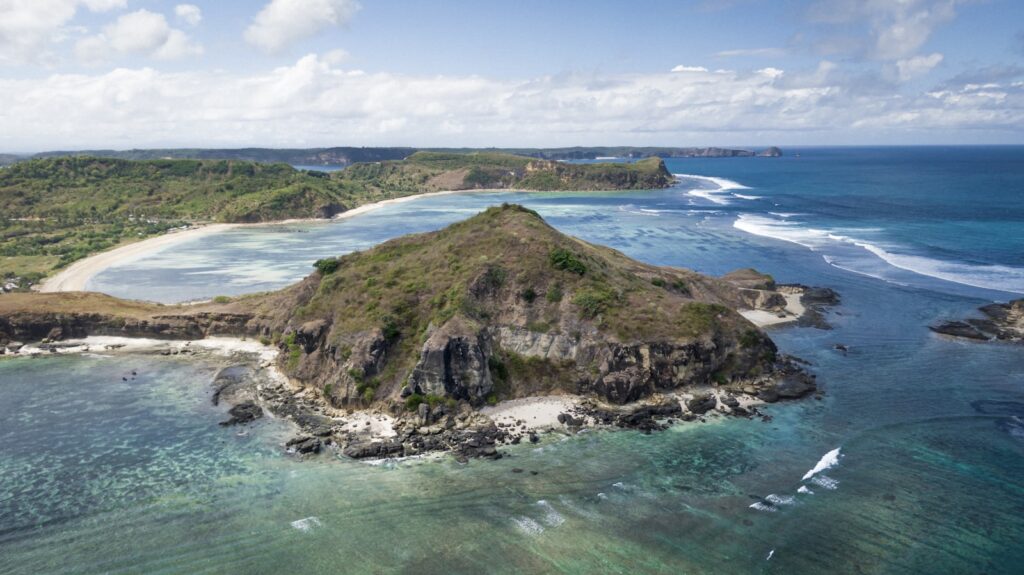
Visiting Kelor Island with a Labuan Bajo phinisi as a half-day stop means spending roughly two to three hours at a compact, steep-sided islet that sits just outside the main harbor — close enough that even the shortest overnight charter can fit it in without rerouting. Pulau Kelor is not a showpiece destination the way Padar or Manta Point are. It is a warm-up act. A calibration. And on a well-run phinisi, it sets the tone for everything that follows.
Where Kelor Sits in a Komodo Itinerary
Kelor lies almost due north of Labuan Bajo town, close enough that you can motor there in under thirty minutes from the harbor. That geography makes it the default first or last anchorage on most phinisi routes — and both positions are useful for different reasons.
As a first stop, Kelor lets the crew run through safety briefings and snorkel gear distribution while guests are still within easy reach of the harbor. If anyone has motion concerns, the water here is sheltered enough that they can find their sea legs before the phinisi turns south toward the choppier central channels. As a final stop on the return leg — particularly on a 3D2N or 4D3N itinerary — it gives everyone one last swim after the long run back from Padar or Manta Point, killing time between the morning anchorage and a midday arrival in Labuan Bajo.
The standard 3D2N leisure route typically runs: Kelor on Day 1 → Manjarite or Rinca (Komodo dragons at Loh Buaya) → Kalong Island for the sunset bat exodus → Padar pre-dawn hike → Pink Beach → Komodo Island at Loh Liang → Taka Makassar → Manta Point → Kanawa or direct return to Labuan Bajo. Kelor fits at either end of that sequence. On a 4D3N charter with more flexibility, some captains anchor off Kelor for the night on Day 1 and leave for the south at first light — the islet is quiet after the day boats head home, and a sundowner anchorage there costs nothing extra.
The Hike: What to Actually Expect
There is one trail. It goes straight up. From the narrow sandy beach to the summit viewpoint takes roughly 10 to 15 minutes at a moderate pace — the hill is steep and the footing is loose dry grass and compacted earth, not maintained steps. Wear shoes with grip. Flip-flops work on the flat; they are a bad idea on the ascent, where the gradient kicks up sharply in the final third.
The summit rewards the effort with a clean 270-degree view across the Flores Sea: you can see the Labuan Bajo waterfront behind you, a scatter of smaller islands in the middle distance, and on a clear day the larger silhouettes of Komodo and Rinca to the south. It is a good view to photograph, and a better view to simply stand in for a few minutes before the weight of the full itinerary has accumulated. Drone operators note that the airspace here is technically within Komodo National Park jurisdiction — check your charter operator’s briefing on drone permits before launching.
One practical note worth stating plainly: the hike is genuinely short, but the steepness surprises people who underestimate it. Guests who struggle with steep terrain or have knee issues should know in advance. A good phinisi captain or guide will mention this during the morning briefing; if yours does not, ask before you beach the tender.
- Hike duration (beach to viewpoint)
- 10–15 minutes at a moderate pace
- Trail surface
- Steep grass and compacted earth; no maintained steps
- Footwear recommended
- Closed-toe shoes with grip; flip-flops inadequate on upper section
- View
- 270-degree panorama: Labuan Bajo harbor, Flores Sea, southern island chain
- Distance from Labuan Bajo harbor
- Under 30 minutes by phinisi motor
- Typical time ashore (hike + beach)
- 1.5–2.5 hours depending on snorkeling
Snorkeling Off Kelor Beach
The reef around Kelor is not the headline act of any Komodo itinerary — you will see better coral at Batu Bolong, more marine life at Crystal Rock, and more manta rays at Karang Makassar (Manta Point). But Kelor’s fringing reef offers an accessible, calm-water snorkel that is genuinely good for beginners and for anyone who wants a gentle first entry into Komodo’s underwater world before facing the stronger currents elsewhere in the park.
The water stays shallow close to the beach — ankle to waist depth for the first ten or fifteen meters — then drops gradually toward a low-lying reef. Visibility fluctuates with tidal exchange but is generally decent in the dry season (roughly May through October), when prevailing conditions across Komodo National Park deliver underwater visibility in the 15 to 25-meter range park-wide. The reef has the usual mix of hard and soft coral, smaller reef fish, and the occasional sea turtle that passes through. Nothing rare. Nothing to make a marine biologist pause. But for a guest snorkeling in Indonesian waters for the first time, it is an honest introduction.
One thing Kelor does particularly well is protected swimming. There is no meaningful current at the anchorage, unlike some of the exposed reefs further south where water rushes through channels at speeds that will push a swimmer well off course in minutes. That makes Kelor a reliable stop for families with young children, weak swimmers, or guests who are cautious in open water. If you are booking a family charter or have guests with limited ocean experience, Kelor as the first snorkel stop is a sensible choice — it lets the guide assess comfort levels before the boat commits to trickier sites.
If you want a more substantial snorkel experience near Labuan Bajo, Kanawa Island is the natural comparison: it sits roughly 10 to 15 km offshore, involves a 45 to 60-minute transfer, and offers a shallow fringing house reef that drops from one to two meters at the sand line to around five to ten meters at the reef edge. Kanawa typically features better coral density and more fish diversity than Kelor. The tradeoff is distance and time — Kanawa is a commitment; Kelor fits inside a half-day without restructuring the rest of the route.
Planning your Komodo charter route? Plan your charter with our concierge team — we’re also available on WhatsApp for quick questions while you’re still putting your itinerary together.
Why Operators Use Kelor as an Anchor Point
Every phinisi captain I have spoken with over the years references Kelor the same way: it is the hinge between Labuan Bajo logistics and open-water sailing. Depart at 8 or 9 in the morning, motor north, let the guests find their feet on the hike and get their first snorkel in, have lunch on board, and then the boat is already oriented and the crew is warmed up before the serious sailing south begins. It absorbs the friction of a first morning without wasting it.
There is also a weather dimension. Komodo National Park’s central and southern zones, around Padar and the Komodo Island channels, can produce genuinely choppy conditions even in peak dry season when the afternoon swells come in. Kelor, sitting in the more sheltered northern bay near Labuan Bajo, is rarely rough. Running a two-to-three-hour Kelor stop in the morning allows the captain to watch the weather, listen to radio reports from boats already south, and make the call about which southern route to take with current information rather than guesswork.
The practical upshot for anyone booking a phinisi: if your first day itinerary shows “Kelor Island” on the schedule, this is not a filler entry. It is deliberate positioning. The boats that skip Kelor entirely and head straight south tend to be doing so because of strong scheduling pressure, a late departure, or a very experienced group that has been through Komodo before and wants to maximize southern reef time. First-timers, families, and anyone arriving from a long flight the night before will generally find the Kelor pace appropriate.
What Kelor Is Not
It would be dishonest to describe Kelor without saying what it lacks. The hill is not dramatic the way Padar’s multiple-bay panorama is. The reef is not pristine. During mid-morning in high season (July through August), day-trip speedboats from Labuan Bajo bring groups that can crowd the small beach and the lower section of the trail. By midday, the anchorage can feel busy. This is worth knowing before you arrive with elevated expectations.
If you are on a private charter and flexibility is part of what you paid for, ask your captain about timing. An early departure from Labuan Bajo — leaving before 7 AM — can put you at Kelor before the day-boat traffic arrives. The beach is quieter, the light on the morning water is better for photography, and the hike up has none of the foot-traffic bottlenecks that appear later. A skilled captain will often build this into the schedule without being asked; a less experienced operator may not think to flag it until you bring it up.
Open-trip charters — shared-boat departures where you book by the cabin rather than the whole vessel — have less flexibility here. If the group consensus is to linger longer at Kelor, or to skip it and push south, a private charter can accommodate that in real time. A shared boat cannot, by definition. This is one of the genuine structural differences between open-trip and private-charter phinisi travel, and Kelor happens to illustrate it clearly.
Fitting Kelor Into Your Overall Komodo Charter
For a 2D1N charter — the minimum viable Komodo itinerary — Kelor often replaces a more distant stop because there simply is not enough time to run south to Padar, loop through the dragon sites, cover Pink Beach and Manta Point, and still include anything further north. A 2D1N itinerary compressed through the southern highlights typically drops Kelor in favor of speed. That is a reasonable tradeoff for some travelers. If seeing dragons and Padar and Manta Point matters most, take the 2D1N and accept that Kelor does not make the cut.
For a 3D2N itinerary — the most popular format on Labuan Bajo phinisi and the one that most independent operators build their standard routes around — Kelor fits cleanly on Day 1 or as the final morning stop before returning to harbor on Day 3. It does not require any rerouting because it sits on the logical line between the harbor and the southern park.
A 4D3N charter gives enough slack to use Kelor at both ends if you want: morning of Day 1 on the way out, and morning of Day 4 on the way back. Some guests find the second visit to feel repetitive; others appreciate having a familiar, low-pressure stop to decompress before disembarking. There is no wrong answer — it is a function of what your group values.
One logistical note for those comparing charter providers: park entrance fees for Komodo National Park are typically charged separately from the phinisi charter rate, and they apply whether you stop at Kelor alone or travel through the full park. Budget approximately IDR 600,000 to IDR 1,200,000 per person for a 3D2N or 4D3N trip to cover park entrance, marine fees, and ranger levies — though the exact structure is revised periodically by the park authority. Verify the current breakdown with your operator before departure; reputable charter providers will itemize this clearly rather than burying it in fine print.
Ready to put together a Komodo itinerary that handles the logistics honestly? Plan your charter with the Phinisi Atlas team, or reach out on WhatsApp — we vet operators so you can ask us the questions your tour agent may not want to answer.
Frequently Asked Questions
How long does the Kelor Island hike actually take?
The trail from the beach to the summit viewpoint takes most people 10 to 15 minutes at a moderate pace. The descent is faster — around 8 to 10 minutes. The path is steep and the surface is dry grass and compacted earth, so grip-soled footwear makes a real difference. Total time ashore including snorkeling is typically 1.5 to 2.5 hours depending on how long the group stays in the water.
Is Kelor Island only for experienced snorkelers?
The opposite, actually. Kelor’s anchorage is one of the calmest and most sheltered snorkel spots near Labuan Bajo, with no significant current close to the beach. It is consistently used as the introductory snorkel stop for first-time ocean swimmers and families with children for exactly that reason. If you want challenging drift snorkeling with strong currents, that comes later — at sites like Manta Point and the central park reefs further south.
Can I visit Kelor Island on a day trip from Labuan Bajo without a phinisi?
Yes. Speedboat day-trip operators run regular departures from Labuan Bajo harbor that include Kelor as one stop on a highlights loop. The tradeoff compared to a phinisi overnight charter is time: a speedboat day trip visits Kelor quickly and moves on, whereas a phinisi can anchor long enough for the hike, a relaxed snorkel, and lunch on board before departing. Speedboats also reach the southern sites faster but with considerably more noise and motion.
Does visiting Kelor Island require a Komodo National Park entrance ticket?
Kelor Island falls within the Komodo National Park administrative zone, so standard park entrance fees apply. These are typically paid on board through your operator and billed separately from the charter rate. Current approximate costs for foreign visitors on a multi-day phinisi trip run to roughly IDR 600,000 to IDR 1,200,000 per person across the full 3D2N or 4D3N itinerary for park, marine, and ranger fees combined — though the park authority revises the structure periodically, so confirm the breakdown with your operator before departure.
Is Kelor Island crowded?
During the peak dry-season months of July and August, the beach and lower trail can feel crowded mid-morning when multiple speedboat day-tour groups arrive at similar times. Private phinisi charters have the advantage of flexibility: an early departure from Labuan Bajo before 7 AM typically puts you at Kelor before the day-boat traffic builds. If crowd avoidance matters to your group, flag this to your captain or ask about an early departure schedule when booking.