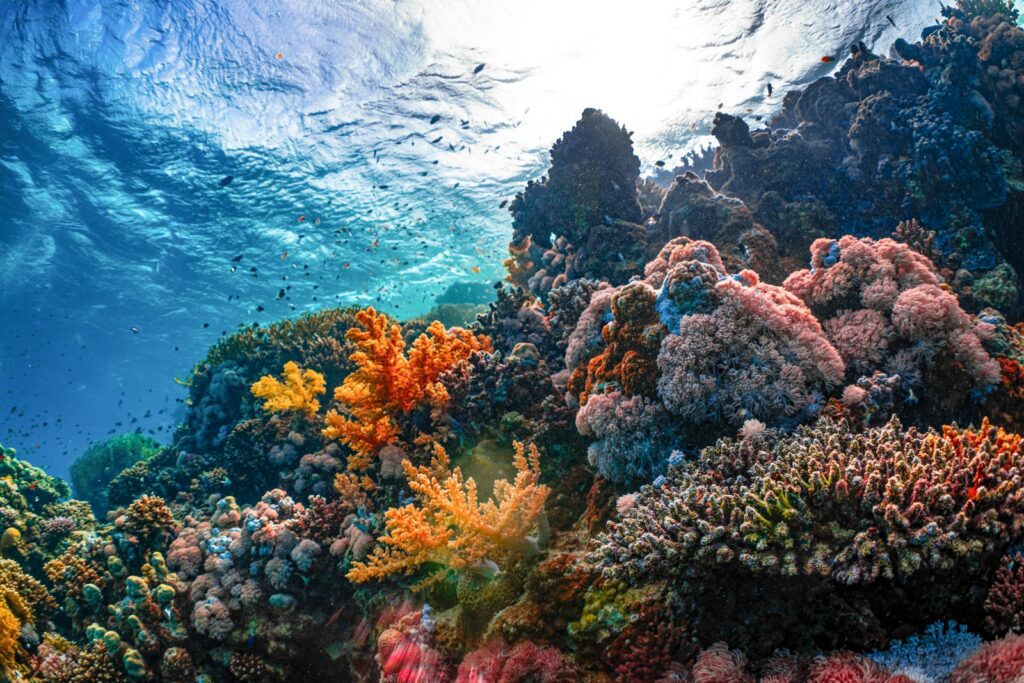
Labuan Bajo phinisi responsible tourism and marine conservation means choosing and behaving aboard a wooden phinisi charter in a way that limits real, measurable harm to Komodo National Park’s reefs, wildlife, and Flores communities. In practice it comes down to two things: picking an operator whose actual onboard practices match their marketing, and following the park’s conservation rules yourself once you are at sea. Komodo is a UNESCO World Heritage Site and a Marine Protected Area, so the stakes are not abstract. What your boat does with its anchor, its sewage, and its plastic affects coral that took decades to grow.
I dive these sites for work. I have watched a careless anchor chain saw a trench through a reef in under a minute, and I have watched the same reef still not recover two seasons later. This guide is the honest version of how to sail Komodo well. None of it is hard. Most of it is just asking the right questions before you pay, and not switching your brain off once you board.
Why “responsible” is a real problem here, not a marketing word
Komodo National Park protects roughly 3,000 Komodo dragons across Komodo, Rinca, Gili Motang and Nusa Kode, plus some of the richest reef systems in the Coral Triangle. The reefs feed the manta rays at Karang Makassar, the fish that draw divers to Batu Bolong and Castle Rock, and the whole visual reason people fly in. Concentrated charter traffic puts pressure on all of it at once.
Here is the candid part. No charter is zero-impact. Every phinisi burns diesel, makes grey water, carries guests who touch things they shouldn’t, and occupies anchorage space. The honest goal is not a clean conscience. It is harm reduction: choosing the boat that does the least damage, and being the guest who adds the least to that total.
The four impacts that actually matter onboard
People worry about the wrong things. Straws are a rounding error next to these four.
- Anchoring on coral. A dropped anchor and a dragging chain are the single most destructive thing a charter does in a day. One anchor on a coral head can flatten a structure that took 20+ years to build. This is why mooring buoys exist, and why anchoring practice is the first thing to ask about.
- Sewage and grey water. Untreated black water and detergent-heavy grey water dumped over a reef feeds algae that smothers coral. On a multi-day trip with 8 to 12 guests, this volume is not trivial.
- Plastic and waste handling. Anything that goes over the side or gets “lost” at an anchorage ends up in the park. Waste has to come back to Labuan Bajo, full stop.
- Fuel and engine discipline. Idling generators all night and leaky bilges put hydrocarbons in the water. Quieter, well-maintained boats pollute less and disturb wildlife less.
Anchor damage versus mooring buoys
If you remember one thing, make it this. Coral is an animal colony, not a rock. An anchor does not “scratch” it; it kills it and crushes the calcium structure underneath, which is what the whole reef is built on. A mooring buoy is a fixed line attached to a sand-screw or a heavy block placed off the reef, so the boat holds position without anything touching coral.
Mooring infrastructure in Komodo is incomplete and busy, so a responsible captain will either use an available buoy, or anchor only on bare sand at depth, never on or near a reef. A bad captain drops anchor wherever is convenient. You usually cannot see this from the sundeck, which is exactly why you ask before you book, and why you can glance over the rail when the boat stops. Anchor chain disappearing straight down into a reef is a red flag you can spot yourself.
Reef-safe sunscreen and the no-touch rules
Oxybenzone and octinoxate, two common UV filters, are linked to coral bleaching and damage even at low concentrations. Hundreds of snorkelers a day at Pink Beach and Manta Point add up. Use a mineral sunscreen based on non-nano zinc oxide, or cover up with a rash guard and let the shirt do the work. Reapply on deck, not in the water.
The no-touch rules in the park are simple and non-negotiable:
- Do not touch coral
- Not with hands, not with fins. Standing on coral to rest breaks it. Control your buoyancy and keep your fins up.
- Keep distance from manta rays
- Stay at least around 3 metres away, do not swim directly above them, and never chase or try to touch one. They feed and get cleaned at Manta Point; crowding pushes them off the station. The exact distance code is set by park authorities and may be updated.
- Do not feed any wildlife
- That includes fish, and absolutely includes Komodo dragons. Feeding changes behaviour and is dangerous for everyone after you.
- Stay with the rangers on land
- Trekking on Komodo and Rinca must be done with official rangers. No wandering off in dragon habitat for a photo.
- Take nothing
- No collecting coral, shells, or sand. No littering, on land or at sea.
How to vet an operator’s actual practices
“Eco-friendly” on a website means nothing on its own. There is no enforced eco-certification standard for Komodo phinisi, so an “eco boat” badge is a design choice, not an audit. What separates a genuinely responsible operator from a greenwashed one is whether they can answer specific operational questions without dancing around them. Vague pledges (“we care about the environment”, “we love the ocean”) are a tell that there is nothing concrete behind them.
Ask these before you pay a deposit. Note whether the answer is specific or evasive.
| Ask the operator | A good answer sounds like | A weak answer sounds like |
|---|---|---|
| Do you anchor on coral, and do you use mooring buoys? | “We use buoys where available and anchor only on sand; the captain checks the depth sounder and bottom first.” | “Our captain is very experienced.” (Doesn’t answer the question.) |
| What happens to sewage and grey water? | “Holding tank / treatment, discharged away from reefs and anchorages, never at a snorkel site.” | Silence, or “it’s fine, it’s natural.” |
| How do you handle plastic and waste? | “Everything comes back to Labuan Bajo; we cut single-use plastic, refillable water onboard.” | “We’re very clean.” (Where does it go?) |
| Are your crew local Flores / Manggarai people, and how are they paid? | Named local crew, fair wages, tips go to crew. | Won’t say, or crew are all flown-in contractors. |
| Do you brief guests on no-touch and manta distance rules? | “Yes, a briefing before the first snorkel, and guides correct people in the water.” | “Guests can do what they like.” |
| Who actually operates the boat, you or a broker? | Direct operator, names the vessel and captain. | Vague middleman who can’t answer boat-specific questions. |
You will learn more from how they answer than from the answers themselves. A real operator gets specific fast because they live with these decisions every trip. A reseller gets nervous.
If you want help reading between the lines on a specific boat, that’s literally what we do as a charter-curation desk. Plan your charter with us and we will tell you straight which operators’ practices hold up, including over WhatsApp if you’d rather just send the questions and the boat name.
Komodo National Park rules and ranger guidance
The park rules are not suggestions, and rangers enforce them. The framework that matters for a sailing guest:
- Rangers are mandatory for every land trek on Komodo (main station Loh Liang) and Rinca (main station Loh Buaya). You do not walk in dragon habitat alone. Listen to them; they read dragon behaviour for a living.
- Park, marine, and ranger fees are real and usually charged separately from your cabin price. Budget roughly IDR 600,000 to 1,200,000 per person for park and ranger fees across a typical 3D2N or 4D3N trip, often paid in cash and usually arranged by the operator. Figures are revised periodically, so reconfirm close to travel. A responsible operator pays these properly rather than dodging them, because those fees are part of how the park is funded.
- Diving requires certification (Open Water or Advanced depending on the site), and permits are normally handled by the boat. Komodo currents are strong; this is not a place to fake your experience level.
Paying the fees honestly is part of responsible tourism. The conservation and ranger components fund the people and patrols protecting the place you came to see. An operator who brags about getting you in “without fees” is not saving you money so much as cutting the park’s budget.
Supporting local Flores crew and communities
Conservation and the local economy are the same conversation here. When charter money flows to Flores crews, Manggarai-owned businesses, and park staff, local people have a direct stake in keeping the reefs and dragons healthy. When it all flows to outside brokers, locals carry the cost of tourism and see little of the benefit, which is how you get resentment and short-term thinking.
What you can actually do:
- Favour operators who employ and fairly pay local Flores crew, not just a foreign-named brand with a rotating contractor pool.
- Tip the crew directly and generously; they keep the boat running and the wages onboard are modest.
- Buy in Labuan Bajo town before and after the trip rather than treating it as just an airport.
- The phinisi itself is Indonesian heritage. The pinisi boatbuilding tradition of the Konjo and Bugis people of South Sulawesi is on the UNESCO Representative List of the Intangible Cultural Heritage of Humanity. Chartering one built and crewed by the people who keep that craft alive is part of the point.
The honest limits of “eco” claims
Let me be blunt about the marketing. Solar panels on a phinisi are good, but they usually run cabin lights, not the main engines, so a “solar-powered” boat is still a diesel boat. “Plastic-free” often means no straws while the kitchen still runs on plastic-wrapped supplies. “Eco” with no specifics behind it is a vibe, not a practice.
That does not mean the better boats are a scam. It means you judge them on the four impacts that matter, anchoring, sewage and grey water, waste, and fuel discipline, plus how they treat their crew. A modest boat with a captain who never anchors on coral and a crew that brings every scrap of trash home is more responsible than a glossy “eco yacht” that does neither. Choose on practice, and accept that you are reducing harm, not eliminating it. That honesty is the whole basis of doing this well.
A quick pre-trip checklist
- Before booking
- Ask the six vetting questions. Confirm the operator runs the boat directly. Confirm park and ranger fees are paid properly.
- Packing
- Mineral (non-nano zinc) sunscreen, a rash guard, a reusable water bottle. Leave the spare single-use plastic at the hotel.
- In the water
- No touching coral, fins up, at least around 3 m from mantas, no chasing, no feeding anything.
- On land
- Stay with rangers, take only photos, leave only footprints on the trail.
- Onboard
- Keep waste sorted and aboard, tip the crew directly, ask where grey water goes if you’re unsure.
Frequently asked questions
Is any phinisi charter in Komodo truly eco-friendly or zero-impact?
No, and be wary of anyone who claims it is. Every boat burns fuel, produces grey water, and carries guests who affect the reef. The realistic standard is harm reduction: an operator who uses mooring buoys or anchors only on sand, manages sewage and waste responsibly, and employs fair-paid local crew is doing the job well. Zero-impact is a marketing fantasy, not an achievable claim.
What sunscreen should I bring for snorkeling in Komodo National Park?
A mineral sunscreen using non-nano zinc oxide, or skip chemical filters and wear a rash guard plus a hat. Avoid products with oxybenzone and octinoxate, which are linked to coral damage. With hundreds of snorkelers a day at sites like Pink Beach and Manta Point, the cumulative load matters, so cover up rather than slather on.
How close can I get to manta rays at Manta Point?
Keep at least around 3 metres of distance, do not swim directly above them, and never chase or touch one. Manta Point is a cleaning and feeding station; crowding makes the mantas leave. The exact distance is set by park authorities and may be updated, so follow your guide’s briefing on the day.
Why are Komodo National Park fees charged separately from my charter price?
Park entrance, marine, and ranger fees fund conservation and the rangers who protect the wildlife, so they are collected by the park, not the boat. Budget roughly IDR 600,000 to 1,200,000 per person for a typical 3D2N or 4D3N trip, usually paid in cash and arranged by your operator. Figures are revised periodically; confirm current rates close to your travel dates.
How do I know if a charter actually supports local Flores communities?
Ask directly whether the crew are local Flores or Manggarai people and how they’re paid, and whether you’re booking the operator or a broker. A responsible operator names the boat and captain, employs and fairly pays local crew, and pays park fees properly. Tipping the crew directly and spending time in Labuan Bajo town also keeps more of the money in the local economy.
Sailing Komodo responsibly is mostly a matter of attention: choose an operator whose practices survive a few pointed questions, and be the guest who doesn’t touch the coral. If you’d like a second opinion on a specific boat’s real practices before you commit, plan your charter with our team. Send us the vessel name and your dates over WhatsApp and we’ll give you the honest read, including which operators actually do what they say.