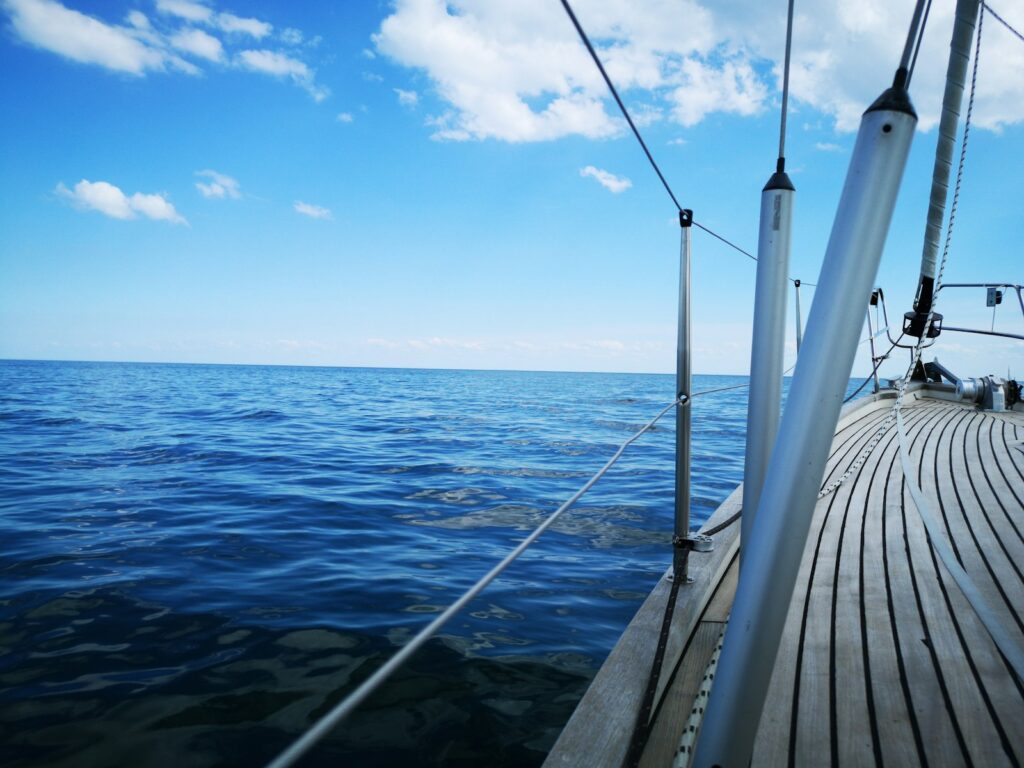
A Labuan Bajo phinisi charter typically includes your cabin accommodation, all meals prepared by an onboard chef, snorkeling equipment, a guide for land treks, and the boat crew for the full duration of your trip. What it almost never includes — regardless of how the package is described — are Komodo National Park entrance fees, dive gear, alcoholic drinks, and crew gratuities. That gap between the headline price and the actual cost of your trip is where confusion, and sometimes resentment, lives. This piece unpacks both sides with the specificity that should have been in every brochure you have already read.
The Standard Inclusions: What You Can Rely On
The phinisi liveaboard format has a logical logic to it: you are paying for a floating hotel that moves, plus the people who run it. Most of what you need to exist comfortably at sea comes with the boat.
Cabin accommodation
Every phinisi charter — budget, mid-range, or luxury — includes your berth for the nights aboard. On a standard boat that might mean a compact double cabin with a porthole and a shared bathroom down the corridor. On a luxury phinisi it means an air-conditioned ensuite with a queen bed, proper storage, and hot water. What varies significantly is the quality, size, and soundproofing. A budget open-trip cabin at roughly $100–250 per person per day and a luxury private charter at $1,000–5,000+ per night are both technically “included cabin accommodation.” Read the cabin specs carefully before booking, not after boarding.
All meals and drinking water
Three meals a day, prepared onboard, are standard across the market. The food ranges from basic Indonesian rice-and-fish setups on economy boats to multi-course menus developed by trained chefs on the higher-end vessels. Snacks and fruit between stops, afternoon coffee and tea — these are generally included too. Drinking water is provided throughout.
Two caveats worth knowing: first, dietary requirements need to be communicated well in advance (a remote phinisi cannot restock mid-trip). Second, alcoholic beverages are almost universally excluded from the package price, which I will cover in the exclusions section.
Snorkeling equipment
Masks, snorkels, and fins are included on virtually every phinisi. The quality varies — a basic boat carries shared equipment that has seen better days; a well-run operation has fitted, cleaned sets and can usually size fins properly. If you have a prescription mask or strong preferences about fit, bring your own. That is not a criticism of operators, just physics: one set of rental fins in a size 42 is not going to work for everyone aboard.
Snorkel vests or buoyancy aids are also typically available for guests who are less confident in the water, though the standard is inconsistent. Ask your operator specifically if this matters to your group.
Guide for land excursions
For the dragon treks on Komodo Island (Loh Liang) and Rinca Island (Loh Buaya), an official National Park ranger accompanies every group — this is a legal requirement, not optional. The cost of that ranger service is usually bundled into what operators describe as “guide fees,” though the actual ranger payment is part of the park fee structure and is technically separate from your boat guide. Your boat will provide a local guide or crew member who coordinates the shore logistics, translates, and manages the practical side of each stop. This person is included in the charter.
For Padar Island’s summit hike — roughly 800 steps to the viewpoint with the famous three-bay panorama — your boat crew will accompany you. Same for the short hill climb on Kelor Island near Labuan Bajo.
The boat and crew
The captain, deckhands, chef, and service staff are included in your charter. Crew-to-guest ratios vary; quality luxury phinisi maintain high ratios that are noticeably different in service attentiveness from budget vessels. The tender (the small dinghy used to transfer guests from anchor to shore) is included. Safety equipment — life jackets, flares, radio — should be standard; on a reputable charter this is non-negotiable, but “should be” and “verified” are different things, so ask about safety equipment during your booking conversation.
The Exclusions: What You Will Pay Extra For
This is the section most operators underplay and most travelers underestimate. Budget accordingly.
Komodo National Park entrance and conservation fees
Park fees are excluded from almost every charter price on the market. They are also the single most confusing line item, partly because the fee structure has been revised multiple times and a widely publicized proposed hike in 2022 to roughly IDR 3,750,000 per person was effectively cancelled after protests. The current structure (approximate, as of 2026 — verify close to your travel date) includes several components stacked together:
- Park entrance fee (foreign nationals)
- Approximately IDR 150,000–200,000 per person per day; historically around IDR 150,000 on weekdays and IDR 225,000 on Sundays and public holidays.
- Marine/snorkel activity fee
- Approximately IDR 50,000–100,000 per person per day for snorkeling and in-water activities.
- Ranger and trekking fee
- A group ranger charge split among guests, sometimes plus an additional per-person component; roughly IDR 50,000–100,000 per person for each land trek.
- Local conservation or tourism levy
- Modest additional amount; varies and is collected separately.
In practice, for a 3-day/2-night trip covering Komodo Island, Rinca, Padar, and marine sites, budget approximately IDR 600,000–1,200,000 per person in total park and ranger fees. That is roughly $40–80 USD at current exchange rates. Your operator typically collects this in cash at the start of the trip and handles the permits on your behalf — but confirm this arrangement when booking, since the exact amount fluctuates.
Scuba diving equipment and dive guide
Snorkeling gear is included; scuba gear is not, unless you have specifically booked a dive-equipped charter. Dive-focused phinisi carry compressors (many offer Nitrox on request), tanks, BCDs, regulators, and wetsuits, and the charter price on a dedicated dive boat will reflect that. On a leisure/snorkeling charter, bringing your own gear or renting it separately is the norm.
Komodo National Park requires Open Water certification minimum for recreational diving; some of its stronger sites — Castle Rock, Crystal Rock, the Cauldron — are Advanced Open Water territory at minimum and require genuine experience managing currents. A dedicated dive phinisi will include a dive guide; a non-dive charter will not. If diving is your primary purpose, be explicit about this before booking so you are not discovering the gap on Day 1.
Alcoholic beverages
Indonesian law and the Muslim background of much of the crew make alcohol a near-universal exclusion. Some operators will allow you to bring your own wine or beer aboard, others have a strict no-alcohol policy, and a small number of luxury charters maintain a paid bar service. Find out the policy before departure. There is nothing worse than a sunset at Kalong Island — watching thousands of flying foxes stream overhead — without a drink in hand, if that matters to you.
Crew gratuities
Tips are not included in your charter price and are genuinely appreciated by the crew, who work long hours in challenging conditions. A useful benchmark for a 3D2N trip: USD 10–20 per guest per day shared among the full crew, weighted toward the captain and chef. This is a guide, not a rule — your experience and the charter tier should inform the amount. Collect it as a single pooled envelope handed to the captain at the end of the trip.
Flights and pre/post accommodation
Getting to Labuan Bajo is your own cost. Flights from Denpasar (Bali) run around 1 hour 10 minutes to 1 hour 25 minutes; carriers as of 2026 include Garuda Indonesia, Wings Air, Lion Air, Batik Air, and Citilink. Fares vary widely by season — July and August are the peak, and prices reflect that. Most operators include a hotel transfer from your Labuan Bajo accommodation to the harbor departure point, but an airport transfer on the day before embarkation is usually your own arrangement.
Drone permits
Flying a drone in Komodo National Park requires a permit, and the process for obtaining one has been inconsistently enforced. Some operators handle this on your behalf; many do not. If photography from above is part of your trip plan, raise this at booking stage and get a clear answer.
Inclusions vs. Exclusions at a Glance
| Item | Typically Included | Typically Excluded | Notes |
|---|---|---|---|
| Cabin accommodation | Yes | — | Quality varies widely by tier |
| All meals (3x daily) | Yes | — | Communicate dietary needs in advance |
| Drinking water, tea, coffee | Yes | — | Standard across all tiers |
| Snorkeling gear (mask, snorkel, fins) | Yes | — | Quality inconsistent; bring own if fussy |
| Land trek guide / crew escort | Yes | — | Mandatory NP ranger is separate (see fees) |
| Tender (shore transfer dinghy) | Yes | — | Check that it is motorized for longer stretches |
| Komodo NP entrance fees | — | Yes | ~IDR 600k–1.2M pp for 3D2N; collected in cash |
| Scuba dive gear and dive guide | Dive boats only | Leisure boats | Specify dive focus when booking |
| Alcoholic beverages | — | Yes | Policy varies; ask before boarding |
| Crew gratuities | — | Yes | ~USD 10–20 pp/day is a reasonable benchmark |
| Flights to Labuan Bajo | — | Yes | ~1h15m from Bali (DPS→LBJ) |
| Hotel transfers (harbor to boat) | Usually yes | Airport pick-up often excluded | Confirm at booking |
| Drone permits | Rarely | Usually | Ask operator; NP permit required |
A Note on What “All-Inclusive” Actually Means
Some operators market their packages as “all-inclusive,” and the term is used loosely enough to be nearly meaningless without a specifics check. In every case I have reviewed, “all-inclusive” covers accommodation, meals, and snorkeling gear. It does not automatically cover park fees, alcohol, or tips. A handful of premium operators do fold park fees into the charter price — that is worth paying a slight premium for the simplicity — but it needs to be confirmed in writing, not assumed from marketing language.
When you get a charter quote, the right question is not “is this all-inclusive?” It is: “What is excluded from this price? Specifically, does it include park and ranger fees?” A good operator will answer that without hesitation.
If you want help mapping the right charter tier to your group size and itinerary priorities, plan your charter with our concierge team — we can also walk you through the current park fee structure and what to budget for the full trip, including via WhatsApp for real-time questions.
Diving Charters: A Separate Conversation
Dive-focused phinisi operate under a different cost logic. The gear onboard — tanks, compressors, BCDs, regulators, wetsuits, potentially Nitrox fills — adds real operating cost, and dive guides who know Castle Rock’s thermocline and how to read the currents at the Cauldron are not interchangeable with a general crew member. Expect the per-night rate on a proper dive charter to sit noticeably above a leisure snorkeling boat of equivalent cabin standard.
What the dive rate includes on a reputable dive phinisi: guided dives (commonly 3–4 per day), tanks and fills, lead weights, dive briefings, and emergency oxygen aboard. What it still excludes: your own wetsuit and fins if you have specific preferences, rental of a dive computer if you don’t own one, Nitrox certification top-ups if required, and park fees. The dive guide is on the boat; the ranger on Komodo Island is still a separate fee.
If you are planning a dedicated dive trip, Komodo’s north sites run warmer (roughly 27–29°C) while the central and southern sites experience cold upwellings that push water down to around 24°C — those cold columns are exactly why Manta Point and Castle Rock are so consistently productive, but a 3mm wetsuit will not be sufficient for multiple dives a day in that water. A 5mm suit is the practical minimum; some divers prefer a 7mm for comfort. Whether your charter provides rental suits in those thicknesses is a very specific question worth asking.
Realistic Total Budget for a 3-Day/2-Night Trip
To give you a working number rather than a marketing abstraction: a mid-range private phinisi at roughly $2,500–4,000 per night (whole boat, 4–6 guests) on a 3D2N trip runs $5,000–8,000 for the charter itself. Add park fees of approximately $40–80 per person, crew tips of roughly $60–120 per person over the trip, flights from Bali at $60–150 per person round-trip, and one night’s accommodation in Labuan Bajo before departure at $80–200 depending on preference. A group of four on a mid-range boat is looking at roughly $1,500–2,500 per person all-in, depending on season and alcohol spend.
At the luxury end — a high-specification private phinisi at $4,000–8,000+ per night — the per-person math changes for larger groups, but the exclusions remain the same. Park fees are still paid per person regardless of what the boat costs.
Budget open-trip boats at $100–250 per person per day put the arithmetic within reach for independent travelers, but those prices assume shared cabins and the full park fee exclusion still applies. Three days at $200/day per person is $600, plus $60–80 in park fees, plus tips. Still an excellent value for what Komodo delivers.
Questions Worth Asking Before You Commit
After reviewing dozens of operator packages, these are the five questions that tend to surface the most meaningful differences between a charter that looks good on paper and one that delivers in practice:
- Are Komodo National Park fees included, or do I pay these separately? And if separately, does your crew collect and handle the payment, or do I need to arrange it myself?
- What is your alcohol policy? Can I bring my own? Is there a corkage fee?
- Is the tender motorized, and how far does it operate from the anchorage? (Relevant for Manta Point and sites with surge.)
- What safety equipment is carried onboard? Specifically, is there an EPIRB, fire extinguishers rated for engine compartments, and a first-aid kit with emergency oxygen?
- If I have a dietary restriction, what is the realistic menu scope? (Vegan, celiac, and nut allergies require confirmation, not assumptions.)
A strong operator answers all five without deflection. An evasive or vague response to any of them is useful information.
When you are ready to move from questions to reservations, plan your charter with us directly. We vet operators on these specifics so you do not have to discover the gaps mid-passage.
Frequently Asked Questions
Do phinisi charters in Labuan Bajo include park fees for Komodo National Park?
Almost never, even when the package is described as “all-inclusive.” Komodo National Park entrance, marine activity, and ranger fees are paid separately per person — approximately IDR 600,000–1,200,000 per person for a 3D2N trip covering the main sites (Komodo, Rinca, Padar, marine areas). Your operator typically collects this in cash and handles the park permits on your behalf, but the cost is not absorbed into the charter price. Confirm this arrangement explicitly when you book.
Is snorkeling gear included in all Labuan Bajo phinisi packages?
Yes — masks, snorkels, and fins are included across the full market from budget open-trip boats to luxury private charters. Quality varies considerably. On economy boats the equipment is basic and shared; on well-run premium charters you will typically receive cleaned, well-maintained gear sized to fit. If you dive or snorkel frequently and have strong preferences about mask seal and fin stiffness, bring your own equipment regardless of what is provided.
What does a phinisi guide actually do, and is one always included?
Your boat provides a guide or senior crew member who coordinates each shore stop, manages the practical logistics, and accompanies you on land excursions to Kelor, Padar, and other accessible sites. For dragon treks on Komodo Island and Rinca Island, an official National Park ranger is mandatory by law — this ranger is separate from your boat guide and their fee is part of the park fee structure. The boat guide and the ranger work in tandem on those treks; you will always have both present at Loh Liang (Komodo) and Loh Buaya (Rinca).
Are diving and scuba gear included on a standard phinisi charter?
No, unless you have specifically booked a dive-equipped charter. Snorkeling gear is the standard inclusion; scuba tanks, BCDs, regulators, and a dive guide are only included on boats set up for diving, which carry compressors (often capable of Nitrox fills) and dedicated dive staff. These boats cost more per night than leisure/snorkeling phinisi of equivalent cabin quality, and with good reason. If scuba diving is your priority, specify this from the first conversation with your operator — do not assume a standard leisure package covers it.
How much should I budget for extras beyond the phinisi charter price?
On a 3-day/2-night trip, plan for approximately: IDR 600,000–1,200,000 per person in park and ranger fees ($40–80 USD), USD 10–20 per person per day in crew gratuities ($30–60 for the trip), and alcohol if your operator allows BYO or runs a paid bar. Beyond that, your main costs are getting to Labuan Bajo (flights from Bali are roughly $60–150 round-trip per person) and one or two nights of accommodation in Labuan Bajo before or after. The charter price covers accommodation, meals, snorkeling gear, and your crew and guide — those extras are the honest additions every budget needs to account for.