How we stay independent: Phinisi Atlas does not own boats or sell a fixed catalogue. When you book a charter we recommend, we may receive a referral fee from the operator at no extra cost to you. This never changes our vetting or the pricing we publish.
The best-value luxury phinisi in Labuan Bajo for families are mid-tier private charter boats — roughly 22 to 30 metres in length — that offer genuine air-conditioned en-suite cabins, a dedicated on-board chef, and enough deck space for children to move freely, priced in the $1,500–$3,000 per night whole-boat range rather than at the top of the ultra-luxury bracket. That bracket is real, and it is genuinely different from a budget shared-trip boat, but for most families of four to eight people who want comfort and privacy without the Aliikai price tag, there is a sweet spot that many planners overlook.
We have been placing families on phinisi out of Labuan Bajo for years. The questions we hear most often are some version of: Do we really need the most expensive boat, or is there something honest in the middle? The honest answer is yes — the middle tier exists, it is significant, and if you time it right, you can sail Komodo National Park on a proper luxury boat for what a mid-range resort room costs per person per night.
What Makes a Phinisi “Best Value” for Families?
Value is not the cheapest boat. Value is the ratio of what you actually need to what you pay. Families have different priorities from solo travelers or dive groups, and those priorities change the calculation entirely.
The non-negotiables for most families with children — especially those with kids under 12 — come down to four things:
- Private cabins with a door that closes. On open-trip boats, cabins are shared with strangers. That is fine for a solo traveler. For a family, it is a deal-breaker. A true private charter means your family has every cabin on the boat, the main deck, the sun deck, and the kitchen for the duration. Nobody else boards.
- En-suite bathrooms. Mid-tier and above luxury phinisi have private bathrooms attached to each cabin. Lower-tier boats share one or two bathrooms among all guests. With children, shared bathrooms create real friction.
- A functioning chef and child-friendly menu flexibility. Komodo is remote. There are no restaurants once you leave the harbor. The cook is your only option for three days. Good boats have real galleys and cooks who will prepare rice dishes, simple pasta, fresh fish cooked plainly, and fruit plates for children who are skeptical of anything unfamiliar. Ask specifically about this before booking.
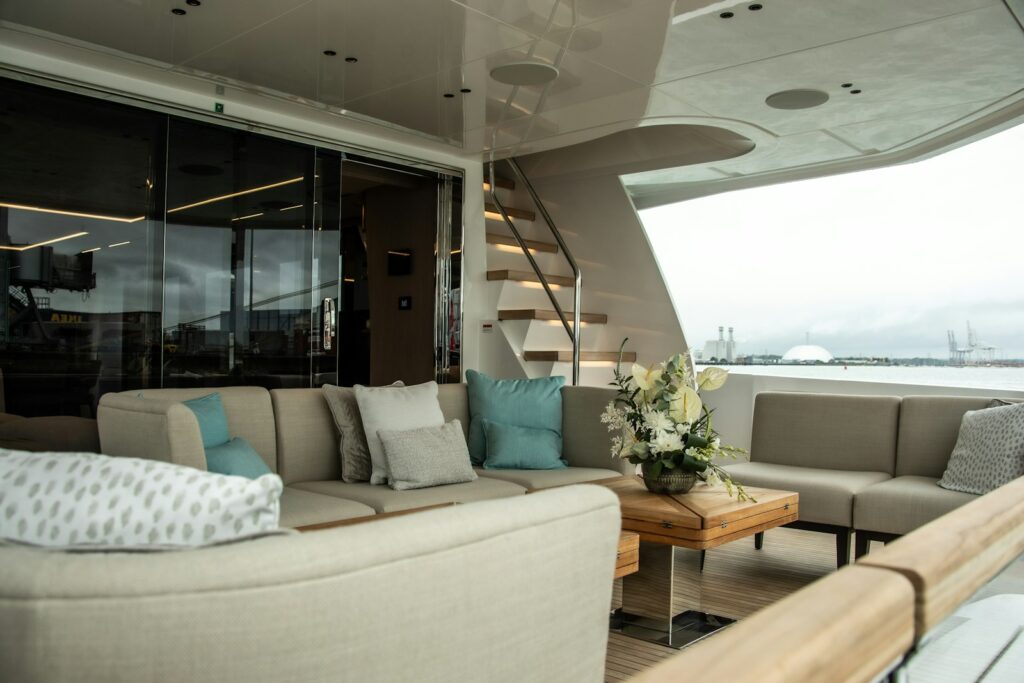
- Enough deck space for the family to spread out. A cramped sun deck or a boat where the only common area is a narrow indoor saloon will exhaust children quickly. Look for boats with a proper bow deck or fore-deck seating in addition to the stern, and a shaded area where younger children can play without being in direct Flores sun.
Ultra-luxury phinisi — think $8,000 to $20,000 per night — add a layer of bespoke finishes, larger master cabins, and higher crew-to-guest ratios. They are extraordinary. But for a family spending three or four days at sea, a well-maintained mid-luxury boat with good cabins, a chef who is used to feeding children, and a calm, experienced captain covers all genuine needs at roughly one-third of the price.
The Price Brackets, Plainly Stated
Charter pricing in Labuan Bajo is quote-based — it moves with the season, the duration, and how far in advance you book. That said, the 2026 market breaks down into readable tiers for whole-boat private family charters:
| Tier | Approx. per night (whole boat) | Typical cabins | En-suite bathrooms | Best for |
|---|---|---|---|---|
| Budget / Standard | $500–$1,000 | 4–6 shared or basic | Rarely | Solo travelers, backpackers |
| Mid-Luxury | $1,000–$2,000 | 4–6, private, AC | Most boats, yes | Small families, couples |
| Luxury | $2,000–$4,000 | 5–8, private, AC, larger | Yes, all cabins | Families of 4–8, multi-gen |
| Ultra-Luxury | $8,000–$25,000+ | 6–10, suite-grade | Yes, premium fit-out | High-net-worth, special occasions |
A 3-night private charter at the $2,000–$3,000 per night mark works out to $6,000–$9,000 total for the whole boat. Divide that by a family of six — two adults and four children — and you are looking at $1,000–$1,500 per person for three days and three nights of accommodation, all meals, a crew, guided dragon treks, snorkeling, and sailing through one of the most biodiverse marine environments on earth. The comparison to a comparable land-based resort with that level of all-in experience rarely favors the land option.
What those rates typically exclude: Komodo National Park entrance fees, the ranger fees for land treks, and alcohol. Budget roughly IDR 600,000 to IDR 1,200,000 per person (approximately $40–$80 USD) for park and ranger fees over a 3-night trip. Operators almost always handle fee collection and paperwork; the money is passed through to the park authority. Verify this explicitly with your operator before signing.
Shoulder Season: The Family’s Best-Kept Secret
Peak season in Komodo — July, August, and the Christmas-New Year window — means maximum crowds at Padar Island, Pink Beach, and Manta Point, as well as maximum prices. Boats book out months ahead and operators have little incentive to negotiate.
The shoulder windows are different. April to early June and October to early November are among the most pleasant times to sail Komodo. The sea is calm, the islands are greener, and the boats are not stacked six deep at every anchorage. For families, this matters beyond price: a Padar sunrise with ten other groups is very different from one with two.
During shoulder season, operators are generally willing to:
- Negotiate 10–20% off high-season rates for direct bookings
- Extend itineraries slightly at the same price (adding an extra half-day at Kanawa or Taka Makassar)
- Lock in a specific boat rather than a category, which matters if you have researched individual vessels
What to avoid for families with young children: January and February. Seas in the Flores region can be genuinely rough during the wet season, with winds that make the boat’s movement uncomfortable for anyone prone to motion sickness. This is especially true of the Komodo crossing. Children are not immune, and a seasick six-year-old on day one sets a difficult tone for the whole trip. Most reputable operators will tell you this honestly if you ask.
Cabin Configurations That Work for Families
This is where a lot of family bookings go wrong. Families assume that a four-cabin boat means four separate bedrooms — but phinisi cabin configurations vary significantly, and the layout matters as much as the count.
Here is what to ask for specifically:
- Master cabin
- Usually the largest cabin on the boat, often in the bow or stern depending on design. Typically a queen or king bed. This is the natural cabin for two parents. Confirm the bed configuration — some masters have two singles pushed together, which matters if you want actual space.
- Twin or bunk cabins
- Ideal for siblings. A cabin with two separate single beds — or a proper set of built-in bunks — means children share a room but have their own sleeping space. Not all boats offer this. Specifically ask whether any cabin has two singles rather than one double.
- Triple configurations
- Rare but they exist: a double plus a single pull-out or Pullman berth, allowing a parent to sleep in the same cabin as a young child who may need supervision overnight. Worth asking about if you have a toddler or a child with separation anxiety.
- Cabin position relative to the engine
- On most phinisi, the main engines are located in the center-rear of the hull. Cabins above or adjacent to the engine room are noticeably louder and can vibrate during cruising. Ask which cabins are furthest from the engine — typically the bow cabins — and put light sleepers there. On a well-maintained boat this is a minor issue, but it is worth asking.
A practical setup for a family of four (two adults, two children aged 8 and 11) on a five-cabin luxury phinisi: master cabin for parents, twin cabin for children, and three spare cabins that give everyone storage, space to spread out gear, and the psychological comfort of not feeling cramped. You are not wasteful for chartering a six-cabin boat for four people. You are buying living room.
Ready to talk through specific boats and dates? Plan your charter with our concierge — we can help you match cabin layouts to your family’s exact needs, or reach us directly via WhatsApp for a faster back-and-forth on availability.
What the Itinerary Actually Looks Like for Families
The standard 3-night, 4-day private charter itinerary out of Labuan Bajo hits the core Komodo National Park highlights at a pace that families handle well. A typical structure:
Day 1 (afternoon departure): Board at Labuan Bajo harbor mid-morning, sail west toward Kelor Island for a short 10–15 minute hike to the viewpoint and a first snorkel session in shallow, clear water. Kelor’s reef begins right off the beach at 1–2 metres depth — accessible to any child who can wear a mask. Overnight anchorage at Kalong Island (Bat Island) for the sunset exodus of fruit bats, which children universally find spectacular.
Day 2 (early start): Pre-dawn departure for Padar Island. The hike to the summit viewpoint — approximately 800 steps, most children manage it in 30–45 minutes — rewards with the iconic three-bay panorama in morning light. Families with very young children (under 5) sometimes stay on the boat for this one; the boat anchors close and the sunrise is visible from the deck. Then: ranger-led dragon trek on Komodo Island at Loh Liang, the main ranger station. Rangers are mandatory and good operators will brief children specifically on dragon safety before the walk. Afternoon snorkeling at Pink Beach, where the Foraminifera-pink sand is genuinely striking and the current is mild. Overnight anchorage in the protected waters near Komodo.
Day 3: Manta Point (Karang Makassar), where reef manta rays circle the shallow cleaning station at 5–15 metres depth. Children snorkeling will see mantas from the surface — the wingspans can reach 4–5 metres and they are close. No diving certification required for snorkeling. The afternoon can flex to Taka Makassar (the disappearing sandbar at low tide) or a reef site depending on conditions. Slower pace, more time on deck.
Day 4 (morning return): Early sail back toward Labuan Bajo, with a possible stop at Kanawa Island — approximately 45–60 minutes offshore, with a house reef that starts meters from the beach. Arrival at the harbor by late morning for afternoon flights.
For families with teenagers or diving-age children, a 4-night version of this itinerary adds a second full day with dive-focused sites in the central park (Batu Bolong, Castle Rock, Crystal Rock) and removes the rush from every stop. It is the version we would choose.
What to Actually Prioritize When Comparing Boats
Given the number of phinisi operating out of Labuan Bajo — and the number of agents selling them — it is easy to get lost in specification sheets. Here is the short list of things that matter most for families, in order:
1. The cook. Over three days at sea, the quality of on-board meals affects family morale more than nearly anything else. Ask operators specifically: how many meals per day? Can the cook prepare mild, child-friendly options alongside more complex dishes for adults? Is fresh produce loaded at departure? A good boat cook in this region can produce extraordinary seafood, fresh rice dishes, and proper fruit plates. A bad one produces the same reheated noodles three times a day.
2. The captain’s experience and communication. You want someone who has been sailing these routes for years, who monitors conditions and is willing to adjust the itinerary when weather or swell warrants it, and who communicates clearly with the group in English. Ask your operator how long the captain has been on the vessel and on this route specifically.
3. Safety equipment. Life jackets in every adult and child size. A working radio. An emergency tender (inflatable or rigid) in functional condition. Ask explicitly. Good operators will answer without hesitation. An operator who is vague about safety specifications or dismisses the question is telling you something important.
4. AC reliability. Daytime temperatures around Komodo can reach 32–35°C with high humidity. The AC is critical for sleeping, particularly for children. Ask whether the generator runs through the night or only on a schedule. Some boats switch off the generator — and therefore the AC — at midnight to save fuel. This is worth knowing in advance, especially for families traveling in peak season.
5. Shade on deck. A full sun deck with no shade structure is uncomfortable for families with children in the middle hours of the day. Look for boats that have a bimini cover or a shaded area on the main deck in addition to the open sun deck above.
Multi-Generational Travel: A Few Extra Notes
Families traveling with grandparents or guests with mobility considerations face additional factors. The Padar Island hike — approximately 800 steps on a steep, rocky trail — is not accessible for guests who have significant knee or joint limitations. The good news: none of the on-water activities require it. Snorkeling at Pink Beach, watching dragons from a ranger-guided flat walk at Rinca Island (Loh Buaya, which has a shorter and easier trail than Komodo), and being present at Manta Point all work independently of the Padar hike. Rinca’s main trail is substantially flatter than Padar and most guests with moderate fitness complete it without difficulty.
The boarding and disembarking from the tender (the small inflatable that ferries guests from the phinisi to shore when the boat cannot anchor directly) requires stepping down from the main deck into a moving dinghy. This is the moment that catches elderly guests off-guard. A good crew will assist; ask your operator whether they carry a boarding ladder and whether the crew is accustomed to helping older or less mobile guests.
Booking Logistics Families Often Miss
A few practical notes that do not appear on most booking pages:
Flights: Labuan Bajo’s Komodo Airport (LBJ) is served from Bali (Denpasar, DPS) on a roughly 1h10–1h25 flight. Carriers vary — Garuda, Wings Air, Lion Air, Batik Air, and Citilink all operate the route, though schedules are seasonal. Book flights early in peak season; the route sells out. For a family charter that departs the afternoon of Day 1, a morning arrival in Labuan Bajo is ideal. For the return, most itineraries arrive back at the harbor by midday on Day 4, giving you a comfortable window for afternoon departures.
Pre- and post-trip nights: Budget for one night in Labuan Bajo on either end. The town has genuinely good boutique hotels on the hilltop overlooking the harbor. Arriving a day early removes the stress of a delayed flight costing you a charter day.
Park fees: Operators typically collect these aboard and pay them to the rangers when the boat enters the park. The current approximate total for a 3–4 day trip runs IDR 600,000–1,200,000 per person — roughly $40–$80 USD — for entrance, marine, ranger, and conservation components. Exact figures change; confirm the precise amount and payment method with your operator before departure. Always ask for a receipt.
Drone flying: Padar and several other sites require a permit for commercial drone use; recreational drone use has been subject to changing rules in the park. If photography from the air matters to your family, clarify this with your operator before arrival rather than discovering a restriction at the viewpoint.
Have a specific departure window in mind, or a family configuration you want help matching to the right boat? Plan your charter with our team — a five-minute WhatsApp conversation usually covers the key questions faster than any booking form.
FAQs: Families on Labuan Bajo Phinisi
What age is appropriate for children on a Komodo phinisi trip?
Most luxury phinisi operators accept children from around four or five years old, and many welcome younger children at the parents’ discretion. The primary consideration for very young children (under three) is the tender transfer from the boat to shore — a small inflatable dinghy in open water that requires holding a child and stepping across a moving surface. Older children from around seven upward typically handle the full itinerary easily, including the Padar hike and the dragon trek. Teenagers find the trip genuinely engaging, particularly if there is snorkeling or beginner diving involved.
Is motion sickness a real concern on a Komodo phinisi?
It depends on the season and route. In the dry season between April and October, seas in the Labuan Bajo area are generally calm and most guests, including children, have no issues. The roughest crossings tend to be in the wet season (December through March), particularly in the open stretches between islands. If any family member is prone to motion sickness, travel during the shoulder season — April to early June, or October — bring standard over-the-counter medication as a precaution, and choose a boat with a wide, stable beam rather than a narrow, faster hull. Your captain will also know which anchorages offer the best protected overnight holds.
Do children need to know how to swim for a phinisi trip?
Snorkeling is a core activity on every itinerary, but it is not compulsory. Children who are comfortable in water with a mask and fins will get the most from stops like Pink Beach and Manta Point; children who prefer to watch from the tender or boat can do so safely. Life jackets are standard equipment and most operators carry multiple child sizes. For diving, a minimum age of around 10–12 and Open Water certification (or Junior Open Water for younger teens) is required by most operators. Non-certified older children can snorkel alongside divers at most sites.
How do I compare phinisi boats as an independent buyer without using a single operator’s website?
The most reliable approach is to request detailed specification sheets from multiple operators for the same date window and compare cabin dimensions, bathroom configurations, generator hours, and crew composition side by side. Ask specifically for photos of the actual cabins (not only the master cabin) and the galley. Request references from previous family groups — operators who serve families regularly will have these readily available. An independent curation service like Phinisi Atlas vets boats without commercial allegiance to any specific vessel or fleet, which means the shortlist reflects actual inspection outcomes rather than commission structures.
What is genuinely included in a luxury phinisi charter, and what will be billed extra?
Inclusions vary by boat and operator, but a legitimate luxury charter in this bracket typically covers: the vessel and all cabins, all meals and non-alcoholic beverages, snorkeling equipment, a qualified guide for dragon treks, and the crew (captain, deckhands, cook, and often a guide). What is almost always excluded: Komodo National Park entrance fees and ranger fees (paid separately per person, collected by the operator), alcoholic beverages, any certified diving equipment or dive guide fees if diving is not part of the package, and tips for the crew (a gratuity is standard and appreciated, typically around $10–$20 USD per guest per day for a well-run charter). Confirm the complete inclusions and exclusions list in writing before paying any deposit.